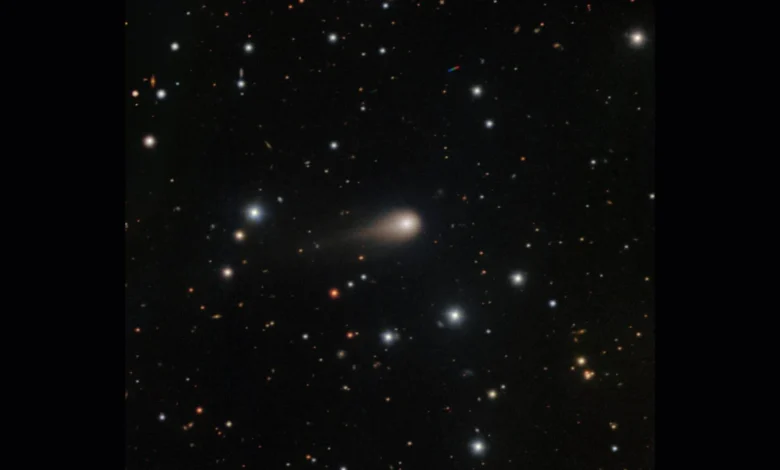
More than a year after the celestial visitor known as 3I/ATLAS first breached the boundaries of our planetary neighborhood, cementing its status as only the third confirmed interstellar object ever detected passing through the solar system, astronomers continue to decode its enigmatic origins. In a scientific milestone, researchers have successfully studied charged particles within the tail of an interstellar comet for the very first time. This unprecedented achievement has revealed that 3I/ATLAS harbors a significantly higher concentration of nitrogen than native comets originating within our own solar system, offering a compelling window into the extreme conditions of its formation light-years away.
The groundbreaking findings, published in the peer-reviewed Monthly Notices of the Royal Astronomical Society, illuminate the profound chemical diversity hidden among extrasolar bodies. By examining the ionic signature of the comet’s tail, researchers have gained direct insight into the primordial nursery where 3I/ATLAS coalesced, expanding human understanding of planetary system formation across the galaxy.
Chronology of a Cosmic Visitor: From Discovery to Deep-Space Analysis
The journey of 3I/ATLAS began long before human instrumentation registered its presence, traversing interstellar space for millions, if not billions, of years before entering our cosmic territory. When automated sky surveys first flagged the object, it immediately sparked intense global interest among professional and amateur astronomers alike, placing it in an elite category alongside its predecessors: ‘Oumuamua, discovered in 2017, and Comet 2I/Borisov, which arrived in 2019.
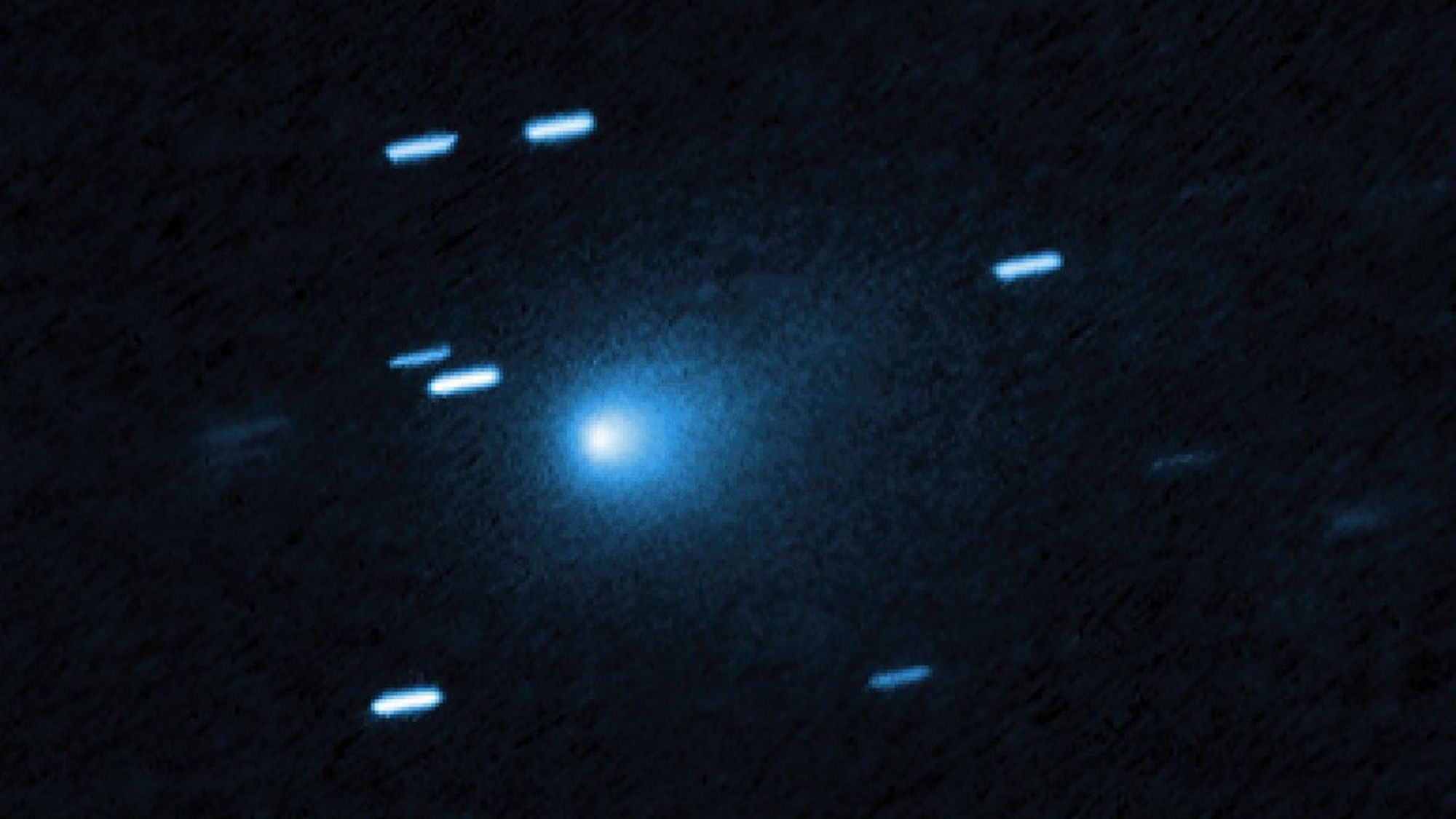
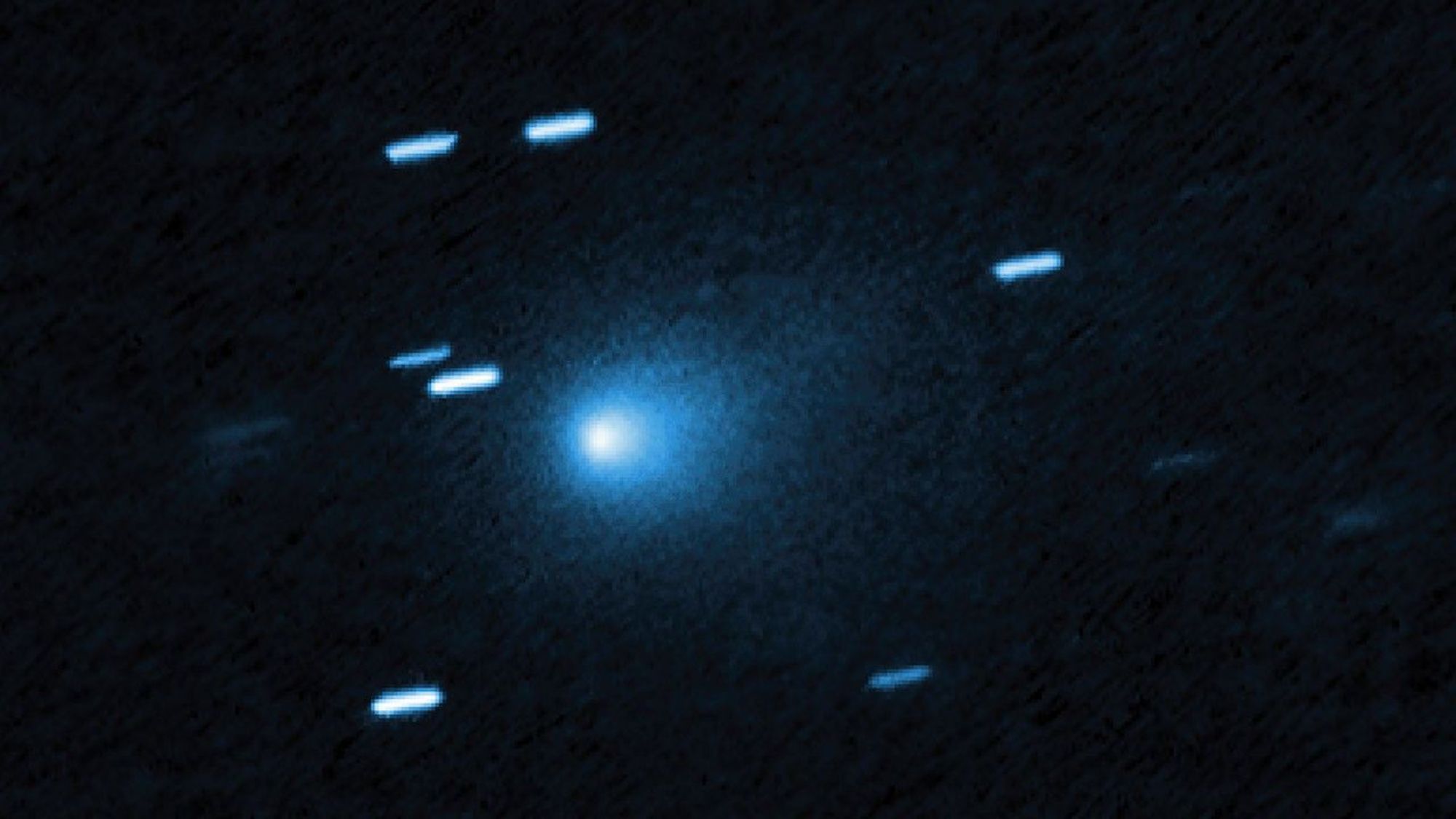
Following its initial detection, telescopes worldwide scrambled to track its trajectory and capture its physical properties. By July 2025, the Hubble Space Telescope targeted the object, imaging a distinct, teardrop-shaped cocoon of dust streaming from its solid, icy nucleus while the comet was still 277 million miles from Earth.
However, capturing imagery was only the first step. To truly understand the composition of 3I/ATLAS, researchers needed to look past its glowing cloud of gas—known as the coma—and examine the solar-wind-driven tail. This ambition was realized in late 2025 when a team led by Lea Ferellec, a research fellow at Northumbria University, directed advanced observational instruments toward the interstellar traveler. Utilizing the William Herschel Telescope situated in Spain’s Canary Islands, the research team leveraged a cutting-edge fiber-optic instrument known as WEAVE to perform high-precision spectroscopy.
The Power of Spectroscopy and the Breakthrough of WEAVE
Spectroscopy remains one of the most powerful tools in modern astrophysics. By splitting incoming stellar or reflected light into its component spectrum, scientists can identify the unique chemical fingerprints left behind as various elements and molecules absorb and emit specific wavelengths of light.
While previous studies of 3I/ATLAS successfully analyzed its coma—the vaporized shell produced as the sun’s heat warms the comet’s icy exterior—analyzing the tail presented a far greater technical hurdle. As comets venture closer to the sun, they are subjected to continuous bombardment by solar winds. These high-energy solar particles strip molecules away, ionizing them and sweeping them backward to form a luminous tail.
During the 2019 passage of interstellar comet 2I/Borisov, astronomers managed to detect faint traces of ions within its tail, but the technology at the time lacked the sensitivity required to accurately identify the specific chemical constituents. The activation of the WEAVE instrument in 2023 fundamentally altered this dynamic. Its immense light-gathering power and high-density fiber-optic array allowed Ferellec’s team to count and categorize specific ions—including nitrogen, carbon dioxide, and carbon monoxide—within the tail of 3I/ATLAS with unprecedented clarity.
Deep-Space Deep Freeze: Decoding the Nitrogen Signature
The identification of elevated nitrogen levels within 3I/ATLAS serves as a cosmic thermometer, pointing directly to the environmental conditions of the comet’s birthplace. Comets rich in volatile compounds and boasting high ratios of nitrogen to carbon monoxide typically indicate formation pathways occurring in exceptionally frigid regimes.
Based on the spectroscopic data compiled by WEAVE, Ferellec and her colleagues estimate that 3I/ATLAS formed in an environment plunging below -240 degrees Celsius. In the context of a distant star system, such temperatures are found exclusively in the outermost, primordial fringes—far beyond the warming influence of the system’s host star, where volatile elements could remain frozen in the building blocks of early planetesimals.
This stark chemical variance sets 3I/ATLAS apart from the native population of comets residing in our Oort Cloud and Kuiper Belt. While our solar system’s icy bodies formed under a specific set of local protosolar disk dynamics, 3I/ATLAS carries the distinct chemical signature of an entirely different stellar ecosystem.
Broader Implications for Astrophile Research and Planetary Formation
The study of interstellar objects represents a rapidly evolving frontier in astronomy. Because these bodies are dynamically unbound to our sun, they act as cosmic messengers, delivering physical samples of distant star systems directly to our doorstep without the need for interstellar spaceflight.
"This object gives us a rare chance to study material that formed somewhere completely different to our own solar system," Lea Ferellec noted in a research statement. "Every one of these objects we study helps us understand a little more about how planets form around other stars."
The implications of these findings extend far beyond cometary science. By confirming that extrasolar bodies possess unique chemical fingerprints tied to their birth environments, astronomers can better model the universal distribution of elements necessary for planetary construction. As ground-based observatories continue to upgrade their capabilities and space-based assets survey the skies for future interstellar interlopers, the data gathered from 3I/ATLAS will serve as a foundational baseline for comparative planetary chemistry.
With the publication of these findings in the Monthly Notices of the Royal Astronomical Society, the scientific community moves one step closer to mapping the chemical diversity of the Milky Way, transforming a fleeting visitor into a lasting key to the universe’s origin stories.
Related posts: