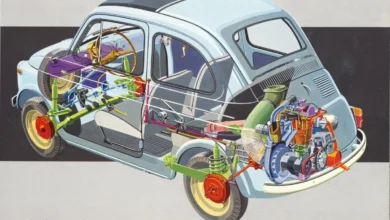
When consumers think of Subaru, they generally picture a quintessential Japanese automaker deeply rooted in the industrial history of its home country, sharing cultural resonance with traditional practices like origami and seasonal cherry blossoms. Established officially in 1953 following the corporate restructuring of its parent company, Fuji Heavy Industries, Subaru quickly made its mark on the global automotive landscape. The firm revealed its inaugural passenger car, the 1500, in 1954, followed by the highly successful, mass-market 360 microcar in 1958. However, despite its deeply Japanese origins and identity, the company’s manufacturing footprint extends far beyond the borders of Japan. Unlike major domestic competitors such as Toyota, which maintains vast manufacturing networks spanning Thailand, India, Canada, Mexico, France, Poland, Brazil, and beyond, Subaru maintains a more streamlined international production strategy. Today, the automaker manufactures its passenger vehicles in only two countries worldwide: its home market of Japan and the United States.
The Genesis of Subaru in America and the Shift to Local Manufacturing
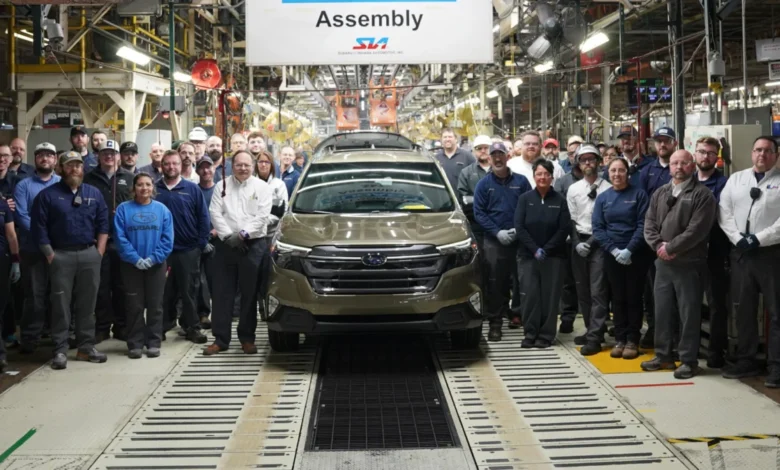
Subaru’s formal entry into the United States market occurred in 1968, a modest beginning that eventually blossomed into widespread consumer popularity throughout the 1970s, largely driven by the appeal of rugged, fuel-efficient, and affordable four-wheel-drive vehicles. As demand for Subaru models surged across American states experiencing heavy snowfall and rugged terrain, corporate leadership recognized the logistical and economic benefits of localizing production. This strategic realization culminated in the establishment of Subaru of Indiana Automotive, Inc. (SIA), located in Lafayette, Indiana, which officially opened its assembly lines in 1989. Over the intervening decades, the Lafayette facility has evolved into a critical operational hub, producing more than six million vehicles. For contemporary American consumers driving a modern Subaru, the statistical probability that their vehicle was built domestically by American workers is remarkably high.
American Assembly Lines: Core Vehicles Produced at SIA
The operational scope of the Subaru of Indiana Automotive plant encompasses several of the brand’s most critical and high-volume nameplates. While historical operations included sedans like the recently discontinued Legacy, current production lines focus heavily on versatile sport utility vehicles and crossovers designed specifically to meet the preferences of North American drivers.
The Subaru Ascent: Flagship Three-Row Utility
The largest passenger vehicle assembled by Subaru in the United States is the Ascent. Introduced in 2018 as a spiritual and functional successor to the ill-fated Tribeca, the Ascent is a spacious three-row SUV configured to seat either seven or eight passengers. The vehicle is built exclusively at the Lafayette facility, anchoring Subaru’s presence in the fiercely competitive midsize three-row utility segment. Despite nearing the end of its initial decade on the market, the Ascent continues to demonstrate surprising sales resilience and consumer demand. Market performance data through the first nine months of the year highlights a 3.9% year-over-year sales increase, with 32,556 units delivered to customers, proving that American-made family haulers remain central to the brand’s financial health in the region.
The Subaru Crosstrek: Compact Crossover Dominance
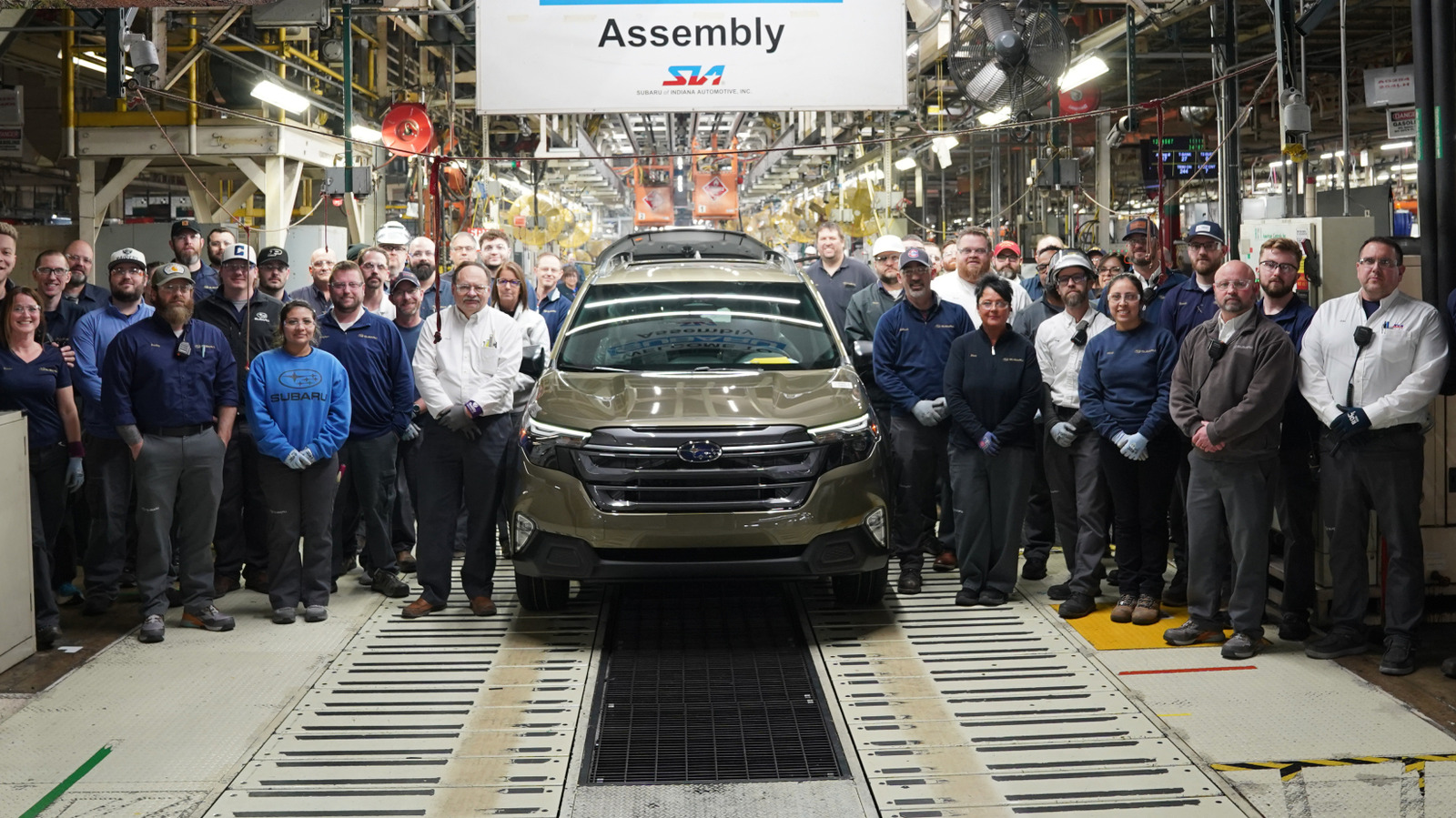
In addition to the flagship Ascent, the Indiana plant serves as a primary production hub for the Subaru Crosstrek. As one of the company’s top-selling products in the United States, the Crosstrek has captured the imagination of adventure-seeking commuters and outdoor enthusiasts alike. Now in its third generation, the subcompact crossover commands significant volume within the brand’s lineup. During the January-to-September reporting period, Subaru retailed 142,725 units of the Crosstrek, cementing its status as the brand’s second best-selling model nationwide, trailing only the Forester.
The Evolution of Forester Production in the U.S.
The Subaru Forester has undergone a significant geographical transition regarding its manufacturing provenance. Historically, all preceding generations of the Forester were imported directly from assembly plants located in Japan. However, responding to evolving supply chain dynamics, regional demand fluctuations, and shifting product allocations, Subaru initiated local production of the gas-powered Forester in Indiana. This was followed closely by the rollout of the new hybrid Forester variant, which officially commenced assembly at the SIA facility in February. This strategic pivot to domestic Forester manufacturing was designed, in part, to absorb industrial capacity and fill the operational void left by the Outback, which previously enjoyed a long tenure of American production before its manufacturing mandate was shifted back to Japan. Concurrently, the legendary Legacy sedan concluded its domestic manufacturing run in September, closing a notable chapter in the plant’s history.
Economic and Industrial Implications of Transnational Manufacturing
The operational model utilized by Subaru offers vital insights into modern automotive economics, trade policy, and risk mitigation. By establishing a robust manufacturing footprint inside the United States, foreign automakers insulate themselves against potential currency fluctuations, maritime shipping disruptions, and shifting geopolitical tariffs. The Subaru of Indiana Automotive facility represents a multi-billion-dollar capital investment that directly employs thousands of American workers, contributing significantly to the local economy of Tippecanoe County and the broader Midwest industrial corridor. Furthermore, localized sourcing of automotive components helps streamline supply chains, reducing lead times and ensuring that vehicles can be tailored rapidly to meet the specific safety and aesthetic preferences of North American buyers.
Chronological Milestones of Subaru in North America
1953: Fuji Heavy Industries establishes the Subaru automotive division in Japan.
1954: Subaru unveils its first-ever passenger car, the 1500.
1958: The mass-market Subaru 360 microcar launches, cementing the brand domestically.
1968: Subaru officially enters the United States automotive market.
1970s: Sales surge across the U.S. due to increasing demand for affordable four-wheel-drive vehicles.
1989: Subaru of Indiana Automotive (SIA) officially opens its Lafayette assembly plant, beginning local U.S. production.
2018: Subaru launches the Ascent, a three-row SUV built exclusively at the Indiana facility.
2024: Local production of the gas-powered Forester begins in Indiana to supplement traditional Japanese imports.
2025: Production of the traditional Legacy sedan concludes at the Indiana plant; hybrid Forester production ramps up at SIA.
Current Era: SIA continues to produce over six million total vehicles, maintaining strong domestic sales led by high-volume models like the Crosstrek and Ascent.
Industry Outlook and Future Manufacturing Strategy
As the global automotive industry navigates the complex transition toward electrification, autonomous safety systems, and sustainable manufacturing practices, the role of regional assembly plants like SIA becomes increasingly pivotal. For Subaru, maintaining a dual-hemisphere manufacturing ecosystem allows the company to balance localized assembly efficiency with specialized engineering expertise concentrated in Japan. The ongoing success of American-built models such as the Ascent and Crosstrek, paired with the integration of advanced hybrid powertrains into domestic assembly lines, ensures that Subaru’s American manufacturing presence will remain a cornerstone of its corporate strategy for decades to come. Through strategic adaptation and deep investment in domestic infrastructure, the brand has successfully bridged the cultural gap between its Japanese heritage and the distinct demands of the American consumer market.