Beyond the Ballot: How Climate Change, Rising Living Costs, and the Data Center Boom Intersect for Black Voters


Growing up in the predominantly Black, low-income community of Roanoke Rapids, North Carolina, Elijah Lee learned early that environmental issues were rarely abstract concepts. His daily reality was shaped by a local paper mill sitting right next to his school, filling the air with industrial pollution while serving as virtually the only major employment option for local families. This stark juxtaposition—between environmental degradation and economic survival—forged an early understanding of how systemic inequities manifest in everyday landscapes.
Now 18 years old and living in Virginia, Lee finds himself confronting a similar paradox on a much larger scale. As Virginia has rapidly evolved into the data center capital of the United States, drawing massive technological infrastructure to its suburbs and rural fringes, Lee harbors deep skepticism regarding the political promises of economic prosperity attached to them. Like many young Americans preparing to cast their ballots, he views climate policy as foundational to his generation’s future. Yet, he is acutely aware of why a neighbor struggling to pay utility bills or buy groceries might place environmental concerns lower on their priority list.
Recent comprehensive polling underscores this complex psychological and economic tension. While Black voters across America do not frequently rank "climate change" at the very top of their electoral concerns when using traditional polling terminology, a vast majority overwhelmingly support aggressive government action on environmental issues, clean energy, and corporate accountability. This dynamic reveals not a lack of care for the planet, but a profound skepticism toward elected officials and corporations, driven by decades of broken promises, disproportionate pollution, and skyrocketing costs of living.
The Kitchen Table Calculus: Cost of Living Versus Environmental Policy
The intricate relationship between economic survival and environmental politics is mapped out clearly in a recent seven-state survey conducted by HIT Strategies on behalf of the Climate Equity Action Fund and the League of Conservation Voters (LCV). The poll surveyed 2,000 Black and Latino registered voters across crucial swing states heading into the midterms, including Arizona, Georgia, Michigan, Nevada, North Carolina, Ohio, and Pennsylvania. Approximately 70 percent of respondents indicated they were highly likely to participate in upcoming elections.
When asked to rank the top issues motivating their vote, only 9 percent of Black registered voters placed climate change among their top three choices. By contrast, an overwhelming 74 percent selected the cost of living. This data point is frequently misinterpreted as political apathy or indifference toward environmental stewardship. However, further probing by pollsters reveals a much more nuanced reality.
When questions are reframed around concrete, daily hardships—such as the price of electricity, access to safe drinking water, and air pollution—the percentages shift dramatically. Across the surveyed demographics, 89 percent of respondents stated it was vital for political candidates to prioritize lowering energy costs, 86 percent emphasized reducing air and water pollution, and 82 percent wanted candidates to prioritize addressing climate change. Notably, this concern transcended strict partisan lines. Even among Black Republicans surveyed, 79 percent agreed that candidates must prioritize addressing climate change, highlighting a shared lived experience of environmental burden that defies simple political categorization.
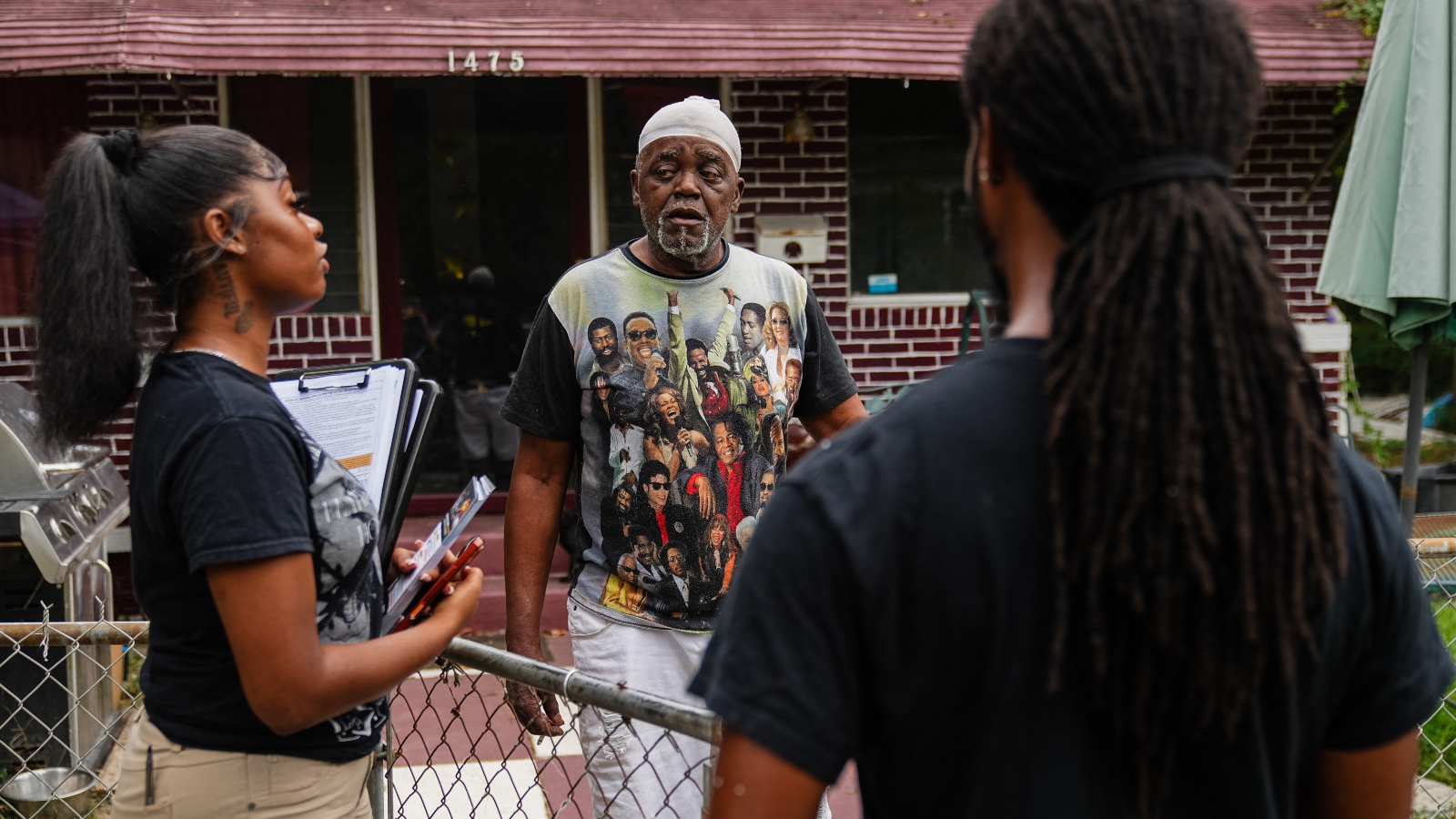
Erica Tebbs, a senior analyst at HIT Strategies, emphasizes that the barrier is not convincing marginalized communities that environmental and climatic threats exist. Instead, the hurdle is establishing trust.
"The proof that is needed is that their concerns will be addressed and responded to by elected officials and that a vote will result in a real impact in their community," Tebbs explains. "That’s where the doubts lie."
The Physical and Economic Footprint of the Data Center Boom
Nowhere is the collision between local economic pressures and industrial expansion more visible than in the rapid, nationwide proliferation of data centers. Driven by the explosive growth of cloud computing, streaming services, and artificial intelligence, technology companies are constructing massive server farms at an unprecedented pace. These facilities require staggering amounts of electricity and water, fundamentally altering local power grids and municipal resources.
Bill Hairston, the national field director for the League of Conservation Voters, sees this dynamic playing out on the ground as communities grapple with the arrival of these digital fortresses. Hairston grew up in Charleston, West Virginia, where his grandparents’ home was located in a low-income Black neighborhood frequently blanketed by soot from passing coal trucks. He vividly recalls that the grass surrounding his family’s home was never green, permanently stained by industrial fallout.
Today, Hairston sees historical parallels in how data center developments are sited. Far from bringing clean, equitable tech economies, these developments frequently trigger community anxieties over soaring electricity bills, strains on local water infrastructure, construction-related air pollution, and rapid gentrification that prices legacy residents out of their homes.
"I think it’s actually just putting the two and two together," Hairston notes. For community organizers, the data center boom provides a tangible framework to connect corporate expansion with questions of public health, energy affordability, and governmental oversight. Rather than treating pollution, high utility bills, and zoning decisions as disconnected issues, advocates are pushing for an integrated approach that questions who ultimately bears the costs of technological progress.
The Burden of Energy Costs and Corporate Accountability
The economic anxieties surrounding data centers are well-founded. These facilities operate 24 hours a day, seven days a week, consuming massive baseline loads of electricity that can strain local utility grids and drive up wholesale power prices.
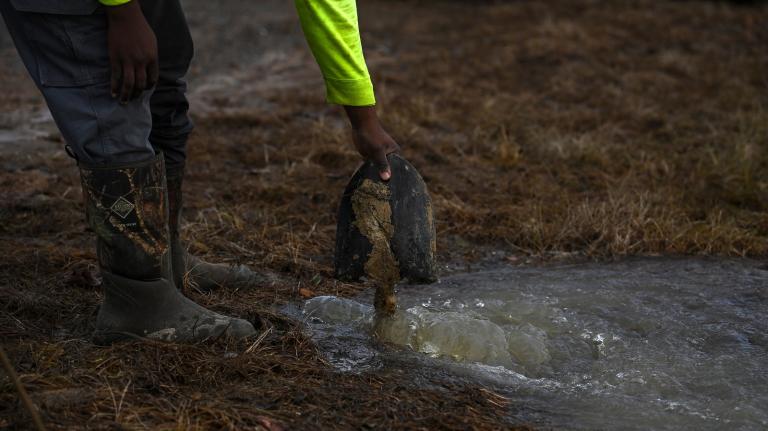
Recent federal legislative proposals in Congress have attempted to address this imbalance by weighing policies that would legally require data center developers to shoulder the direct financial burden of the electricity they consume, rather than passing those infrastructure upgrade costs onto everyday residential ratepayers. Yet, despite the introduction of such protective measures, skepticism remains deeply entrenched. In the HIT Strategies polling, 52 percent of Black voters stated they still expected data centers to raise electricity costs for ordinary Americans, even when informed about proposed federal regulations designed to shield consumers.
"They don’t necessarily trust that this type of policy will really protect the public from taking on these costs," Tebbs notes.
This distrust is compounded by local tax incentive packages. State and local governments frequently court tech giants with multi-million-dollar tax breaks and promises of high-paying jobs, arguing that the long-term economic stimulus justifies the initial concessions. However, residents in regions transformed by these facilities often report a stark reality: the promised employment opportunities for local workers are frequently fewer than advertised, temporary construction jobs dominate the initial phases, and the permanent technical positions require specialized training that local populations are rarely recruited or trained to fill.
Andrea Cristina Mercado, executive director of the Climate Equity Action Fund, argues that these structural failures illustrate why climate policy cannot be divorced from the broader economy.
"We actually believe that climate policy has to address the needs of working people," Mercado says, pointing to the phenomenon as the primary catalyst behind "the emergence of a massive organic movement against data centers."
A Legacy of Systemic Environmental Injustice
The hesitation of Black voters to fully trust political platforms regarding the environment is rooted in a long, well-documented history of environmental racism and systemic planning biases. For decades, industrial facilities, chemical plants, highways, landfills, and waste incinerators have been disproportionately sited in or adjacent to Black and brown neighborhoods.
This legacy of disparate impact means that communities of color are already experiencing the compounding effects of climate change—such as severe urban heat island effects, inadequate stormwater infrastructure leading to chronic flooding, and higher rates of respiratory illnesses like asthma caused by localized air pollution. When politicians offer sweeping, abstract "climate action" platforms without addressing immediate local harms or offering guarantees of economic relief, voters recognize a disconnect.

Furthermore, the polling revealed a profound sense of political fatalism among a significant portion of the electorate. Nearly half of the respondents expressed a belief that powerful corporate interests and wealthy entities will always succeed in blocking meaningful environmental regulations, regardless of grassroots mobilization, and that systemic ecological damage has already progressed too far to reverse.
Despite this cynicism, a resilient counter-current exists. Approximately 45 percent of Black voters surveyed maintained that collective civic engagement—including voting, community organizing, petitioning, and consumer boycotts—remains an effective tool for holding corporations and government agencies accountable and mitigating environmental harm.
Intergenerational Urgency and the Path Forward
For the emerging generation of young voters, this tension between systemic frustration and activist hope defines their political outlook. First-year college students and high school activists across the country are increasingly stepping to the forefront of local zoning battles, challenging unbridled data center expansions, and demanding a seat at the table where municipal futures are decided.
In places like Spartanburg County, South Carolina, student-led and community-driven coalitions have actively pushed back against proposed data center developments, demanding comprehensive environmental impact reviews and protections for local resources. These localized resistance movements demonstrate that younger demographics do not automatically view technological expansion as synonymous with progress.
Elijah Lee, reflecting on the political landscape he and his peers are inheriting, emphasizes that the urgency felt by his generation is driven by necessity rather than partisan idealism. From the rising costs of housing and food to the degradation of local air and water quality, young people recognize that environmental policy dictates the viability of their future daily lives.
"We know that this is the future that we’re inheriting, the markets that we’re inheriting, the housing that we’re inheriting, the food prices that we’re inheriting," Lee reflects. "And so I think more than anything, I’m being driven by deep concerns, but also by a deep hope that we can turn this around."
As policymakers and political campaigns refine their strategies ahead of upcoming elections, the data suggests that winning the trust of Black voters will require more than symbolic commitments to global climate targets. It necessitates a fundamental integration of economic justice and environmental protection—ensuring that lower utility bills, clean water, transparent corporate accountability, and community-level protections are delivered directly to the kitchen table.
Related posts: