Elon Musk’s AI Promises Historically Accurate "Odyssey" Film, Sparking Fierce Debate with Hollywood Directors

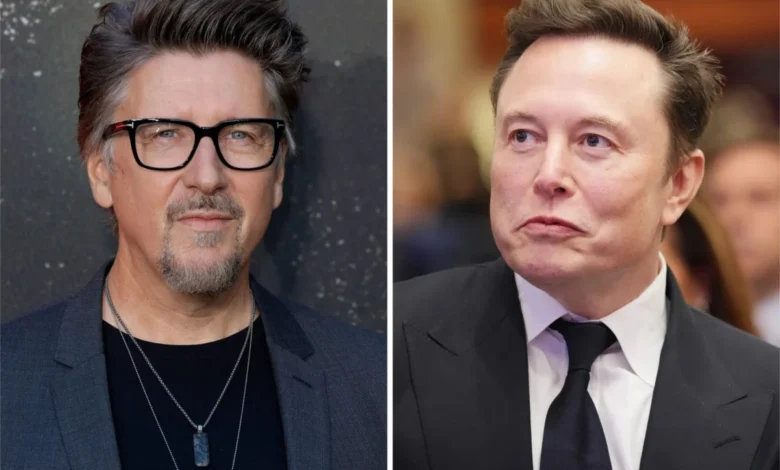
Elon Musk’s ambitious declaration that his artificial intelligence tool, Grok, will produce a full-length, historically accurate film adaptation of Homer’s "The Odyssey" before the year’s end has sent ripples of both intrigue and contention through the film industry. The tech magnate, who recently achieved trillionaire status, not only announced this unprecedented AI-driven cinematic endeavor but also shared a three-minute AI-generated clip of a scene from the epic poem, reportedly created by a user on Grok. This bold assertion has ignited a firestorm of debate, particularly drawing sharp criticism from established figures in Hollywood, who question the artistic merit and feasibility of such a project.

The controversy escalated when Scott Derrickson, the acclaimed director behind "Doctor Strange" and "The Black Phone," publicly rebuked Musk on the social media platform X, formerly Twitter. Derrickson, a respected voice in the directorial community, did not mince words in his assessment of Musk’s pronouncements on cinema. "Clearly @elonmusk doesn’t know shit about cinema & he stopped reading in his 20s," Derrickson posted, directly addressing Musk. He further elaborated, stating, "His opinions on art are worthless." This direct confrontation highlights a growing schism between technologists venturing into creative domains and traditional artists who emphasize human authorship and artistic nuance.
Musk’s critique of cinematic adaptations is not new, and his recent focus on "The Odyssey" appears to be an extension of a broader pattern of vocal opposition to what he perceives as "woke" ideologies influencing mainstream entertainment. His criticism of Christopher Nolan’s hypothetical "Odyssey" film predates its release, stemming from what Musk described as problematic casting decisions. In March, Musk publicly accused Nolan of being an "anti-White racist" for casting Lupita Nyong’o as Helen of Troy. He posited that Nolan’s choice was driven by a desire for awards, alleging that the director "has lost his integrity" and that the casting was an "insult" to Homer’s original work. Musk also extended his criticism to Elliott Page, who was reportedly cast as Sinon in Nolan’s "Odyssey," by reposting comments that allegedly mocked the transgender actor’s masculinity. These statements reveal a deeply entrenched ideological stance that Musk applies to his evaluation of contemporary films and their creative choices.

This pattern of criticism extends beyond "The Odyssey." Musk has previously expressed disdain for films like Greta Gerwig’s "Barbie," which he derided for its perceived feminist themes, and Disney’s live-action reboot of "Snow White," slated to star Rachel Zegler, which he has also criticized. Despite the vocal "anti-woke" backlash that has often accompanied these productions, many of them, including the purported "Odyssey" film that sparked this debate, have achieved significant commercial success. The Matt Damon-led epic, presumably the target of Musk’s initial ire, reportedly opened to a global box office of $264 million and continues to draw large audiences. This commercial resilience suggests that audience reception and artistic merit are not always aligned with Musk’s particular ideological critiques.
The AI Frontier in Filmmaking: Promises and Perils
Elon Musk’s announcement represents a significant moment in the ongoing discourse surrounding artificial intelligence’s role in creative industries. The prospect of AI generating entire feature films raises profound questions about authorship, originality, and the future of filmmaking as an art form. Musk’s claim of "historical accuracy" and fidelity to "the art of Homer" is particularly audacious, given the complex interpretive nature of ancient texts and the inherent subjectivity of artistic expression.

Timeline of Events and Declarations:
- Pre-Release Criticisms: Elon Musk began voicing his objections to perceived "woke" casting in a hypothetical "Odyssey" film, specifically targeting hypothetical casting of Lupita Nyong’o as Helen of Troy and Elliott Page as Sinon.
- March [Year]: Musk publicly labeled Christopher Nolan an "anti-White racist" for these hypothetical casting choices, accusing him of seeking awards and compromising artistic integrity.
- Early July [Year]: Musk announced his AI tool, Grok, would produce a historically accurate "Odyssey" film by year-end.
- Mid-July [Year]: Musk shared a three-minute AI-generated clip of an "Odyssey" scene produced by a Grok user.
- Late July [Year]: Director Scott Derrickson publicly criticized Musk’s pronouncements on cinema via X.
The Case for AI in Storytelling: Musk’s Vision
Musk’s vision for AI-generated cinema, as articulated through his statements about Grok and "The Odyssey," appears to be rooted in several key assumptions:

- Algorithmic Accuracy: Musk seems to believe that AI can process vast amounts of historical data and literary analysis to produce a rendition that is objectively "historically accurate" and faithful to the source material, potentially surpassing human interpretation. This suggests a belief in the power of data and computation to resolve artistic and historical ambiguities.
- Efficiency and Scalability: The ability to generate a full-length film with AI implies a potential for unprecedented speed and scalability in content production. This could democratize filmmaking or, conversely, flood the market with AI-generated content.
- Challenging Established Narratives: Musk’s criticisms of Nolan’s hypothetical film suggest a desire to counter or re-interpret narratives that he believes have been corrupted by contemporary social and political agendas. AI, in his view, might offer a "pure" or "unbiased" alternative.
Hollywood’s Response: Protecting Artistry and Authenticity
The backlash from figures like Scott Derrickson underscores a deep-seated concern within the film community about the implications of AI-generated content. The arguments against Musk’s initiative often center on:
- The Essence of Human Creativity: Cinema, at its core, is an art form driven by human emotion, lived experience, interpretation, and creative intent. Directors and writers bring their unique perspectives, cultural understanding, and artistic sensibilities to bear on storytelling. AI, proponents of this view argue, lacks genuine consciousness, emotional depth, and the capacity for nuanced artistic expression.
- The Value of Interpretation: Homer’s "Odyssey," like any classic work of literature, is subject to myriad interpretations. The choice of actors, the visual style, the thematic emphasis – all are directorial decisions that reflect a specific artistic vision. Musk’s demand for a single, "historically accurate" rendition risks flattening the rich complexities of the epic and imposing a rigid, data-driven interpretation.
- The Role of the Artist: Directors are not merely technicians; they are storytellers who imbue their work with personal meaning and cultural commentary. The collaborative process of filmmaking, involving writers, actors, cinematographers, and editors, is a testament to human ingenuity and shared creative endeavor. AI-generated films, if fully automated, could undermine the livelihoods and artistic contributions of thousands of individuals in the industry.
- The Danger of Devaluation: If AI can churn out films at an unprecedented rate, there is a concern that the value of human-crafted cinema could be diminished. The effort, skill, and passion that go into making a film might be overshadowed by the sheer volume of AI-generated content.
Broader Implications and Future Trajectories
The clash between Elon Musk and Hollywood directors like Scott Derrickson is emblematic of a larger societal debate about the impact of AI on various sectors. For the film industry, this encounter highlights several potential future trajectories:

- AI as a Tool, Not a Replacement: Many in the industry acknowledge that AI can be a powerful tool to assist filmmakers, from script analysis and pre-visualization to special effects generation. However, the idea of AI replacing human creative leads is met with significant resistance.
- The Ethics of AI Art: The legal and ethical frameworks surrounding AI-generated art are still in their nascent stages. Questions of copyright, ownership, and the definition of authorship will need to be addressed as AI becomes more sophisticated.
- Audience Perception: It remains to be seen how audiences will respond to fully AI-generated films. While novelty might attract initial viewers, the emotional resonance and connection that audiences seek in cinema may prove difficult for AI to replicate. The success of films like Nolan’s "Odyssey" suggests that audiences still value human artistry and narrative depth.
- The Future of Epic Adaptations: Musk’s stated goal of historical accuracy in adapting "The Odyssey" brings to the fore the challenges and opportunities of bringing ancient epics to life for modern audiences. While AI might offer novel approaches to historical reconstruction, the human element of storytelling, which allows for empathy and understanding, is paramount.
The debate ignited by Elon Musk’s AI-driven "Odyssey" project is far from over. It forces a critical examination of what we value in art, the role of technology in creative expression, and the very definition of storytelling in the 21st century. As AI capabilities continue to advance, the dialogue between technologists and artists will only intensify, shaping the future of cinema in profound and perhaps unpredictable ways. The coming years will likely see further innovation, but also continued resistance from those who believe that the soul of filmmaking lies in the human touch.