Warwilding: How Restoring Ancient Ecosystems Has Become Poland’s New Border Defense Strategy

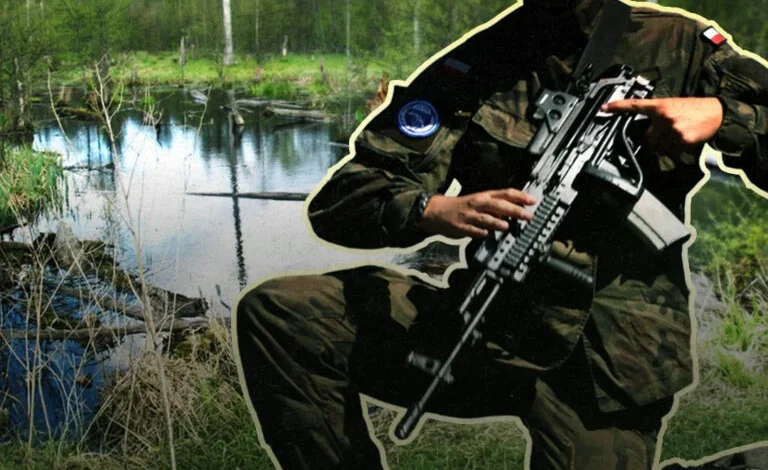
The Białowieża Forest, a sprawling UNESCO World Heritage site and one of the last remnants of the primeval woodland that once covered the European Plain, is undergoing an unlikely transformation. Straddling the border between Poland and Belarus, this ancient landscape—home to the European bison and centuries-old oaks—is being re-evaluated not merely as a site for biodiversity conservation, but as a critical component of national security. Amidst rising geopolitical volatility and the escalation of tensions between Warsaw and Minsk, Polish military planners and ecological scientists have formed an unprecedented alliance. They are exploring a concept dubbed “warwilding”: the intentional restoration of wetlands, bogs, and dense, untamed forests to serve as natural, impenetrable barriers against heavy military hardware.
The Geopolitical Context of the East Shield
The impetus for this strategic pivot is the “East Shield” (Tarcza Wschód), a massive infrastructure initiative launched by the Polish government in 2024. Following Russia’s full-scale invasion of Ukraine in 2022 and the subsequent rise in hybrid threats along the Polish-Belarusian border, the Polish Ministry of National Defence committed to fortifying its eastern frontier. The project, valued at billions of zlotys, involves a complex network of bunkers, anti-tank ditches, minefields, and sophisticated electronic surveillance systems.
However, the proposal to implement such traditional military hardening in the heart of the Białowieża Forest sparked immediate alarm among environmentalists. Critics argued that clearing swathes of ancient woodland to build concrete fortifications would be an ecological catastrophe, destroying the very ecosystem that makes the region unique. It was in this atmosphere of competing priorities that a group of Polish scientists proposed a paradigm shift: rather than clear-cutting for concrete, the military should embrace the forest’s inherent, difficult terrain as a tactical asset.
A Chronology of the Warwilding Concept
The integration of environmental science into military strategy did not occur overnight. The trajectory of this development can be tracked through several key phases:
- Pre-2022: The Białowieża Forest faced systemic degradation due to decades of land drainage intended for forestry and agricultural efficiency. Artificial ditches and straightened riverbeds accelerated water runoff, turning once-impenetrable marshes into dry, accessible land.
- Early 2022: Following the invasion of Ukraine, the Polish government announced plans to dramatically increase border security.
- 2023: Scientists, led by figures like Michal (a prominent voice in the conservation community), began mapping areas where ecological restoration—specifically the re-wetting of peatlands—could serve as a natural “anti-tank” barrier.
- 2024: The Polish Ministry of Defence formally acknowledged the potential of this “green shield.” A shift in discourse occurred, moving from viewing nature as an obstacle to viewing it as a defensive ally.
- Late 2024 – Present: Initial pilot projects, such as the restoration of river meanders in the Białowieża Clearing, have been completed. However, large-scale implementation remains hindered by bureaucratic inertia and ongoing road construction projects that contradict the goal of a closed, impassable frontier.
Supporting Data and Ecological Mechanics
The viability of warwilding rests on the physical properties of a healthy, saturated forest. A well-hydrated bog or alder carr—a type of swamp forest—is notoriously difficult for heavy armored vehicles to navigate. When water tables are high, the soil loses its bearing capacity, causing tanks and personnel carriers to become mired.
Data from the region’s water management history shows that the drainage network, constructed over the last 50 years, has significantly lowered the groundwater table. In some parts of the forest, water levels are currently measured at 28 centimeters below the threshold required to maintain healthy, impassable wetlands. By blocking drainage ditches and reconnecting ancient river meanders, scientists estimate that the forest could return to a state where large-scale ground maneuvers would be tactically impossible for an invading force. This approach mirrors techniques used by the Ukrainian military, which successfully flooded areas around Kyiv early in the 2022 invasion to halt Russian armored columns.
Official Responses and Tactical Integration
The Polish military’s willingness to consider ecological restoration is a significant departure from traditional military doctrine. Spokespeople from the Ministry of Defence have indicated that the East Shield project and environmental protection can, in principle, coexist. The military recognizes that while concrete barriers are effective, they are also easily identified, mapped, and targeted by an adversary. A natural, shifting landscape of marshes and dense, overgrown thickets, by contrast, offers a more dynamic and unpredictable defensive perimeter.
However, the transition from theory to practice remains fraught with challenges. While the Ministry of Climate and Environment has successfully diverted approximately $120 million in European Union funds toward water retention projects, the pace of implementation is slow. Conservationists argue that the government’s actions have not yet matched its rhetoric.
The Road Infrastructure Paradox
One of the most significant points of contention is the continued development of road infrastructure within the forest. There are approximately 2,000 kilometers of roads cutting through the Białowieża ecosystem. Local and regional authorities have recently moved to widen several of these routes.
From a military perspective, these roads are a strategic vulnerability; they provide clear, high-speed corridors for potential hostile forces to penetrate deep into the border region. Scientists and conservationists find the expansion of these roads fundamentally incompatible with the concept of warwilding. If the goal is to create a natural, impassable barrier, the construction of modern, wide-access roads serves only to undermine the forest’s defensive potential while simultaneously fragmenting its habitat. This contradiction suggests a lack of coordination between the national security apparatus and regional development authorities.
Broader Impact and Global Implications
The concept of warwilding has implications that extend far beyond the Polish-Belarusian border. As climate change increases the frequency of both droughts and floods, the management of landscapes is increasingly being viewed through the lens of national resilience. If successful, the Białowieża model could provide a blueprint for other nations to leverage ecosystem services—such as natural flood retention and terrain management—to enhance security without resorting to destructive engineering.
Furthermore, the initiative highlights a potential future for UNESCO sites and protected areas in conflict zones. By framing conservation as a matter of national survival rather than merely an aesthetic or biological preference, advocates may be able to secure the political will and funding that have previously been elusive.
Future Outlook: A Race Against Time
The situation in the Białowieża Forest remains precarious. The geopolitical environment in Eastern Europe is described by analysts as “highly unstable,” leaving little room for prolonged bureaucratic delays. The scientists advocating for warwilding emphasize that the forest cannot wait for five more years of legislative debate.
The immediate priorities identified by experts are clear:
- Immediate closure of drainage ditches: To halt the outflow of water and restore the forest’s natural sponginess.
- Moratorium on road expansion: To stop the fragmentation of the habitat and remove potential invasion corridors.
- Coordination between ministries: Aligning the objectives of the Ministry of Defence, the Ministry of Climate and Environment, and local authorities.
As the East Shield project continues to evolve, the forest remains at a crossroads. Whether the ancient trees and wetlands of Białowieża will eventually serve as a silent, natural bulwark or fall victim to the pressures of modern military expansion depends on whether the Polish state can reconcile its security needs with the ecological requirements of one of Europe’s most valuable natural treasures. For now, the concept of warwilding serves as a fascinating, if urgent, experiment in the intersection of nature and geopolitics, suggesting that the most effective way to defend a nation may, in some cases, be to let the wild reclaim its ground.