Japan Deploys Self-Defense Forces to Indonesia in Historic Mission to Combat Catastrophic Wildfires

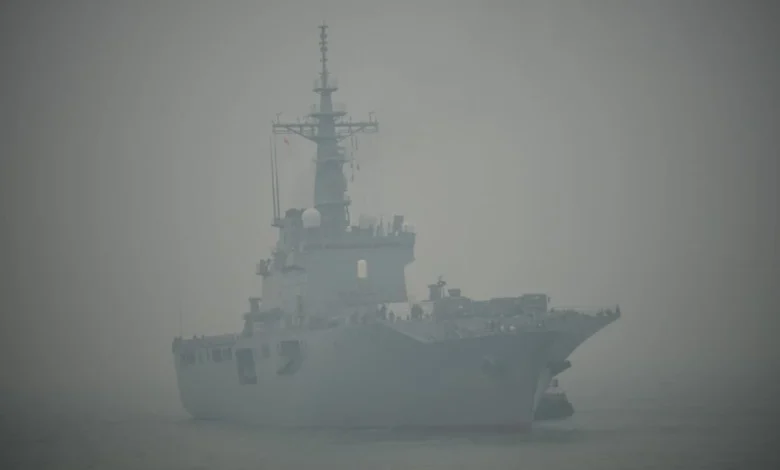
The arrival of the Japanese Maritime Self-Defense Force (JMSDF) landing ship JS Kunisaki at Kijing Port in the Mempawah district of West Kalimantan marks a watershed moment in regional disaster diplomacy. Docking on the island of Borneo this past Thursday, the vessel serves as the centerpiece of a significant international intervention aimed at suppressing the ferocious wildfires that have decimated vast swaths of Indonesian forest and blanketed the region in a hazardous, toxic haze. This deployment, involving 300 crew members and three CH-47 Chinook heavy-lift helicopters, represents the first time in the history of the Japan Self-Defense Forces (JSDF) that the military has been tasked with an overseas firefighting operation.
The mission is not merely a logistical exercise in fire suppression; it is a strategic manifestation of deepening bilateral ties between Tokyo and Jakarta. As the Indonesian archipelago struggles with the dual pressures of a prolonged dry season and the intensifying El Niño weather phenomenon, the arrival of Japanese assets provides critical aerial capabilities to reach remote, inaccessible peatland blazes that have defied ground-based containment efforts for months.
A Crisis Fueled by Climate Extremes
The current environmental crisis in Indonesia is the culmination of seasonal land-clearing practices exacerbated by one of the strongest El Niño cycles in recent memory. For decades, Indonesia has battled cyclical forest and peatland fires, often ignited to clear land for palm oil and pulpwood plantations. However, the 2026 season has proven particularly devastating. According to data from the Indonesian Ministry of Forestry, over 202,000 hectares of land have been scorched between January and July—a total area nearly three times the size of Singapore.
The ecological impact is compounded by the composition of the soil in Kalimantan and Sumatra. Much of the fire activity occurs on peatlands, which are rich in carbon. When these areas ignite, they produce a thick, acrid "haze" that is significantly more toxic than standard wood smoke. This particulate matter, laden with carbon monoxide and fine pollutants, has transcended national borders, creating a transboundary health crisis of unprecedented scale.
Chronology of the Escalation
The trajectory of the current disaster began in late winter, as the traditional dry season took hold with unusual severity. By mid-year, the number of "hotspots"—detected by satellite imagery—began to climb exponentially.
- January – May 2026: Initial localized fires are reported in Sumatra and Kalimantan, with early attempts at containment hampered by lack of access to water sources in remote areas.
- June 2026: The intensity of the fires triggers a regional alert as the first plumes of smoke reach neighboring nations, signaling the start of the transboundary haze season.
- August 2026: The situation deteriorates as the El Niño pattern shifts regional rainfall, leading to a prolonged drought. Malaysia experiences its first emergency-level air quality alerts.
- September 2026: JS Kunisaki arrives in Mempawah. The JSDF begins establishing a base of operations to coordinate with the Indonesian National Armed Forces (TNI).
- Current Status: Multi-national assets, including those from the U.S., Russia, and Australia, are now integrated into a comprehensive aerial firefighting grid, with Japanese Chinooks focusing on high-priority zones that ground crews cannot penetrate.
Strategic Military Diplomacy and Operational Integration
Col. Syunji Nakahara, the commander of the JSDF disaster relief mission, underscored the collaborative nature of the deployment during a press briefing at the port. "To this end, we will learn from the Indonesian military’s operational experience and work in coordination and cooperation with them, striving to ensure that the Indonesian people can lead stable lives as soon as possible," Nakahara stated.
This mission is occurring against the backdrop of a broader geopolitical realignment in Southeast Asia. Japan and Indonesia have been engaged in ongoing discussions regarding defense procurement, specifically the potential sale of retired Japanese destroyers to the Indonesian Navy. Analysts suggest that the success of this humanitarian mission will likely serve as a proof-of-concept for deeper military interoperability between the two nations, signaling Japan’s commitment to regional stability and its role as a key security partner in the Indo-Pacific.
Regional Health and Socioeconomic Impact
The human cost of the haze is staggering. In neighboring Malaysia, the air quality index in several provinces, particularly Sarawak, reached levels categorized as "hazardous," forcing the government to declare a state of emergency. Schools were shuttered, and public health officials reported a sharp uptick in respiratory ailments and cardiovascular complications among the elderly and children.

In Indonesia, the situation is even more acute. More than 1.4 million students have seen their education disrupted as schools across the country remain closed to protect children from the toxic atmosphere. The economic fallout is equally severe, with local agriculture, air travel, and tourism industries suffering from the visibility issues and the blanket of smoke that has grounded regional flights and obscured daily life for millions.
The reach of the haze is vast, with satellite sensors detecting smoke plumes as far as the Philippines, over 800 kilometers from the source. This has transformed a local land-management issue into a regional diplomatic emergency, forcing the Association of Southeast Asian Nations (ASEAN) to coordinate a more aggressive, unified response.
Technical Capabilities and Challenges
The deployment of the CH-47 Chinooks is a significant force multiplier. These helicopters are equipped with underslung water buckets, or "Bambi Buckets," capable of dumping thousands of liters of water with high precision. In the peatland regions of Borneo, where fires often burn deep underground, surface water is insufficient. The strategy involves a combination of aerial water drops to cool the surface, followed by ground teams working to dig trenches and flood the smoldering peat layers.
The JSDF’s involvement is supported by a sophisticated logistics chain. The JS Kunisaki acts as a floating command center, providing fuel, maintenance, and medical support for the aircrews. This level of autonomy is crucial in the remote districts of West Kalimantan, where infrastructure is often limited, and the logistics of moving heavy machinery over land are prohibitive.
Future Implications and Environmental Sustainability
The intervention of international forces, while necessary to prevent an immediate catastrophe, highlights the underlying challenges of sustainable land management in the tropics. Experts from the World Resources Institute and other environmental monitors have long argued that firefighting alone is a reactive, rather than a proactive, solution.
The reliance on foreign aid for disaster relief underscores a growing trend in global environmental governance: "climate security." As extreme weather events become more frequent, military organizations worldwide are increasingly being tasked with humanitarian assistance and disaster relief (HADR) missions. The JSDF mission to Borneo may serve as a template for how regional powers can utilize their defense assets to address climate-driven emergencies.
However, the long-term solution remains firmly in the hands of regional policymakers. The Indonesian government is under immense pressure to enforce stricter land-use regulations and address the illegal deforestation that makes these fire seasons so lethal. While the presence of Japanese helicopters offers a reprieve for the current burning season, the international community remains watchful of the legislative and enforcement measures that will be implemented once the smoke clears.
Conclusion
As the JSDF teams begin their sorties over the smoldering forests of Borneo, the international community views this as a test of regional cooperation. The historic nature of the deployment—the first of its kind for Japan—serves as a stark reminder of the gravity of the crisis. With millions of lives affected and a fragile ecosystem at stake, the collaboration between Jakarta and Tokyo is not just an act of neighborly goodwill; it is a critical response to the environmental realities of the 21st century.
The coming weeks will be decisive. If the combined international effort can successfully suppress the hotspots before the dry season reaches its peak intensity, it may provide the necessary window for local authorities to stabilize the region. For now, the mission remains focused on the immediate goal: mitigating the toxic haze and providing the Indonesian people with the relief they so desperately need. The success of this operation will likely echo through the halls of diplomacy and military planning for years to come, redefining the role of regional militaries in an era of accelerating climate change.
Related posts: