James Gunn Defends DCU Strategy Against Crossover Criticisms Highlighting Individual Storytelling Over Interconnected Universes

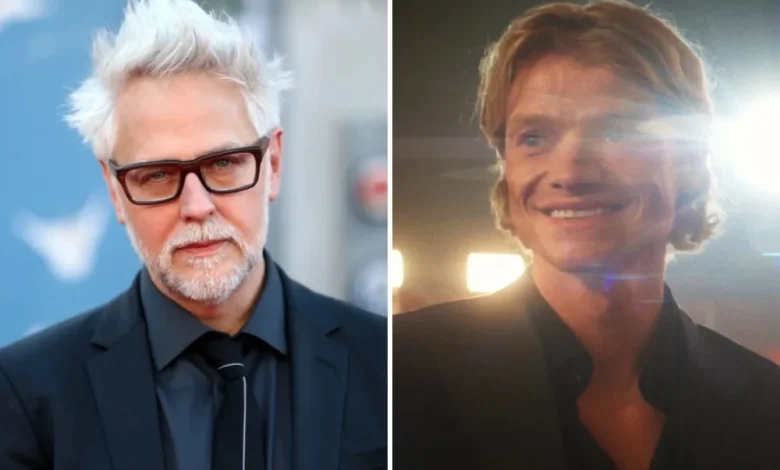
DC Studios co-chairman and co-CEO James Gunn has aggressively defended the creative direction of the newly minted DC Universe (DCU), pushing back against criticisms that his slate of films and television projects lacks a singular, overarching destination. Taking to the social media platform Threads over the weekend, Gunn addressed fan anxieties regarding the absence of a traditional cinematic universe roadmap, clarifying his philosophy that individual films must carry weight and artistic merit on their own rather than functioning merely as elaborate commercials for future crossover events.
The debate reignited online following the theatrical release of Clayface, the latest entry into the DCU stable. A user on Threads had posted an image outlining the foundational projects of Gunn’s expanding comic book franchise—including Superman, Peacemaker, Supergirl, Creature Commandos, Clayface, and Lanterns—captioned with a pointed inquiry: "What is this building towards???"
Rather than ignoring the critique or offering a cryptic teaser of a massive Justice League-style assembly film, Gunn leaned directly into the discourse. He responded to a secondary commenter who argued that a cinematic franchise does not strictly need to force an entirely interconnected web to be successful.
"I couldn’t agree more," Gunn wrote on Threads. "DCU is just an alternate universe; we can enter at any location or time and tell THAT story. I dislike the idea that individual stories aren’t meaningful unless they lead to something else. People not understanding this is strange to me, because ‘Star Wars’ has essentially been doing this for 50 years across movies, shows, games and books, admittedly without the tonal variety."
The Philosophical Shift Away From Marvel-Style Interconnectivity
Gunn’s explicit rejection of the serialized checklist model popularized over the past decade and a half marks a fundamental paradigm shift for modern superhero cinema. For over fifteen years, the cinematic landscape—dominated heavily by the Walt Disney Company’s Marvel Cinematic Universe (MCU)—has conditioned audiences to expect meticulous, multi-phase plotting that funnels dozens of distinct characters into monumental, shared-universe blockbuster finales.
While this interconnected methodology yielded historic box office heights throughout the 2010s, industry analysts have increasingly noted signs of "superhero fatigue," characterized by diminishing returns for films that prioritize setting up future sequels over telling self-contained, satisfying narratives.
By prioritizing standalone value, Gunn and his co-head Peter Safran are attempting to steer the DCU away from mandatory homework viewing. Gunn clarified that while connectivity still exists within their ecosystem, it operates organically rather than mechanically. He pointed to the structural evolution of his own work, noting that the ongoing "Superman" saga logically extends from 2025’s "Superman" into the upcoming "Superman: Man of Tomorrow," incorporating previously established characters along the way.
"But that doesn’t mean those other stories only exist to set up what’s happening there," Gunn emphasized. "I would love people to be seeing ‘Clayface’ because it’s a great, fun horror movie unto itself, not because of where else Clayface will show up three movies from now."
Box Office Success and Critical Reception of Clayface
Gunn’s defense of the DCU’s flexible architecture comes immediately on the heels of the box office performance of Clayface. Distributed by Warner Bros. and hitting domestic theaters, the feature represents a daringly unconventional choice for a major comic book franchise adaptation.
Unlike marquee properties such as Batman, Superman, or Wonder Woman, Clayface—historically known as a tragic Batman rogue—has never previously been the subject of a standalone feature film. Considered by comic book aficionados to be a significantly nicher, more character-driven proposition than standard tentpole offerings, the film nonetheless captured the No. 1 spot at the North American box office, grossing $24 million across 3,458 theaters during its opening weekend.
Directed by James Watkins, Clayface presents a distinct tonal departure for the superhero genre, leaning heavily into body horror and psychological thriller elements. The narrative centers on Matt Hagen, a rising movie star portrayed by Tom Rhys Harries, whose face is severely disfigured in an accident. Desperate to reclaim his career and identity, Hagen volunteers for a highly experimental medical procedure that triggers terrifying transformations. The ensemble cast also features Naomi Ackie, David Dencik, Max Minghella, and Eddie Marsan.
Critical response to the film has largely validated Gunn’s emphasis on genre diversity within the DCU. Reviewing the film for Variety, critic Guy Lodge praised its daringly specific aesthetic, describing it as "its own ugly animal; perhaps the characters and conflicts introduced here would pall if given the franchise treatment, but in the context of a single, genre-melding romp, they’re fresh and ickily enjoyable."
The Evolution and Chronology of the DCU Slate
The formation of the current DCU began in late 2022 when Warner Bros. Discovery appointed James Gunn and producer Peter Safran as the co-chairmen and co-chief executive officers of the newly formed DC Studios. Tasked with wiping the slate clean from the disparate and turbulent continuity of the previous DC Extended Universe (DCEU)—which included films like Zack Snyder’s Man of Steel, Batman v Superman: Dawn of Justice, and Aquaman—Gunn and Safran announced an expansive, multi-year blueprint titled "Chapter 1: Gods and Monsters."
The rollout strategy was designed to mix traditional theatrical blockbusters with prestige television series on streaming platforms, establishing a cohesive creative vision without demanding strict chronological viewing orders from casual moviegoers.
The current and upcoming timeline of major DCU releases illustrates this diverse multi-format approach:
- Creature Commandos (Animated Series) – Serving as the opening salvo for the new universe, introducing audiences to Gunn’s specific brand of offbeat comic book storytelling.
- Superman (Feature Film) – Released in 2025, directed by James Gunn, establishing a vibrant, optimistic corner of the new universe.
- Peacemaker Season 2 (Television Series) – Continuing the narrative threads of Gunn’s critically acclaimed HBO Max series, bridging the old DCEU continuity into the new ecosystem.
- Supergirl (Feature Film) – Expanding the cosmic scope of the DCU.
- Clayface (Feature Film) – Released in early 2026, marking a significant pivot toward standalone, genre-specific storytelling.
- Lanterns (Television Series) – An upcoming gritty, prestige-drama take on the Green Corps.
- Superman: Man of Tomorrow (Feature Film) – Scheduled for a theatrical release on July 9, 2027, continuing the flagship hero’s arc.
Industry Implications of the Standalone Strategy
The commercial and artistic gamble taken by Gunn and Safran with projects like Clayface holds broad implications for the broader entertainment industry. For over a decade, major studios have attempted to replicate the serialized model of comic book publishers, frequently sacrificing complete narrative arcs in individual films to establish complex cinematic universes.
By openly validating "one-off" or loosely connected storytelling within a broader banner, DC Studios is signaling to audiences that not every film requires an end-credits sequence setting up a sequel five years down the line. This approach mitigates creative exhaustion for filmmakers, who are often constrained by the rigid narrative demands of a massive shared universe. It also provides consumers with a lower barrier to entry; audiences who may be fatigued by continuity-heavy franchises can engage with a standalone horror film like Clayface without needing to watch five preceding television shows or cross-franchise movies.
As Warner Bros. Discovery continues to roll out the remaining components of the "Gods and Monsters" slate leading up to 2027 and beyond, the ultimate test will be whether mainstream audiences fully embrace a comic book cinematic universe that prioritizes narrative autonomy over the promise of an ultimate assembly. For now, James Gunn’s firm stance on Threads underscores a commitment to prioritizing cinematic craft and individual storytelling longevity over formulaic universe-building.