Decoding the Lexus Badge: The History and Meaning Behind the Luxury Brand’s Alphanumeric Nomenclature

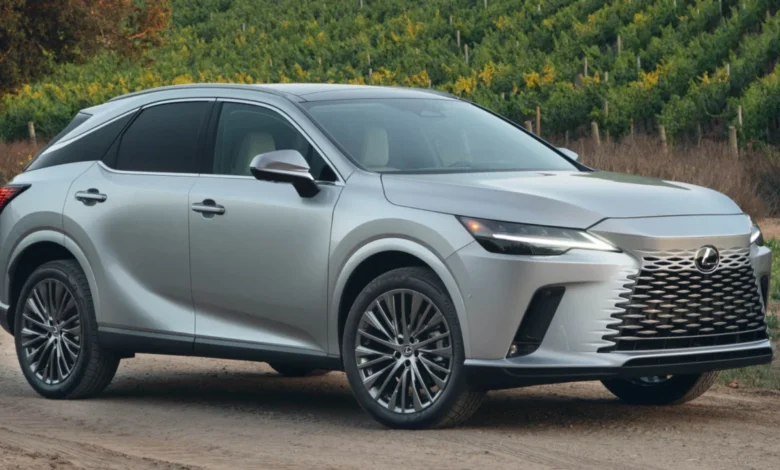
For nearly four decades, Lexus vehicles have occupied a prominent space on international roadways, serving as a benchmark for automotive luxury, reliability, and engineering precision. From the long-running LS flagship sedan to a rapidly expanding fleet of utility vehicles, the Japanese luxury manufacturer has established a distinct identity in the global marketplace. Yet, despite the ubiquity of these vehicles, many automotive enthusiasts and loyal owners remain largely unaware of the exact etymology behind the brand’s two-letter model designations, which are routinely paired with numerical hierarchies. Among these, the Lexus RX stands out as a global sales phenomenon and a pioneer of the luxury crossover segment. As the midsize SUV prepares for a comprehensive refresh, an examination of its nomenclature reveals a fascinating look into the strategic marketing and corporate vision of the late 1990s. Far from being arbitrary combinations of letters, every badge across the Lexus portfolio carries a specific, calculated meaning that reflects the vehicle’s market positioning, powertrain philosophy, and structural design.
The Origin Story of the Radiant Crossover
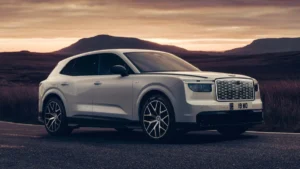
The Lexus RX first entered the automotive landscape in 1998, a period when the luxury SUV market was in its absolute infancy. Before the turn of the millennium, high-end utility vehicles were predominantly rugged, truck-based, body-on-frame platforms designed primarily for off-road utility rather than daily commuting comfort. Lexus recognized a paradigm shift among consumers who desired the elevated driving position and cargo versatility of an SUV, but demanded the refined ride quality, plush interior amenities, and handling characteristics of a luxury sedan.
According to official corporate documentation from Lexus, the letters "RX" officially stand for "Radiant Crossover." As the automotive industry hovered on the verge of a new millennium, corporate strategists selected the word "radiant" to symbolize a bright, optimistic new future for the brand as it expanded beyond traditional sedan offerings into uncharted market territory. The "X," meanwhile, was chosen to represent "Crossover," serving as a self-explanatory marker that denoted the vehicle’s unique hybrid positioning between traditional luxury sedans and genuine, heavy-duty off-roaders.
Over the course of more than two decades, this formula proved to be an unprecedented commercial success. The RX lineage has evolved through five distinct generational updates, maintaining its status as the Japanese brand’s global volume leader. The chronology of the RX underscores its steady integration into the automotive mainstream:
- 1998: The inaugural generation debuts, creating the modern luxury crossover segment and establishing a blueprint for competitors to follow.
- 2004: The second generation arrives, introducing hybrid technology to the luxury SUV market for the first time with the RX 400h, setting a new benchmark for eco-conscious performance.
- 2010: The third generation launches, featuring sharper styling, enhanced interior ergonomics, and the introduction of the brand’s signature spindle-grille design language in later updates.
- 2016: The fourth generation brings a striking, aggressive aesthetic overhaul, expanded safety suites via Lexus Safety System+, and a three-row L variant to accommodate larger families.
- 2023: The fifth and current generation debuts, built on the GA-K platform with extensive dynamic fine-tuning conducted at the Nürburgring, accompanied by a thoroughly diversified powertrain lineup.
Numerical Evolution: From Displacement to Output Metrics
For decades, luxury automotive nomenclature followed a straightforward, intuitive rule: the three-digit number trailing a model’s alphabetical prefix directly correlated with the displacement of its internal combustion engine. For instance, the original RX 300, launched in the late 1990s, utilized a naturally aspirated 3.0-liter V6 engine. Similarly, vehicles bearing a ‘400’ or ‘450’ badge historically housed larger displacement V6 powerplants, sometimes aided by electric hybridization to elevate total system output.
However, the contemporary automotive landscape—dictated by stringent global emissions regulations, aggressive fuel-economy targets, and rapid advancements in forced-induction and electrification technologies—has rendered engine displacement largely obsolete as a naming metric. In the current iteration of the RX, the numerical designations no longer reflect the physical size of the engine blocks beneath the hood.
Instead, Lexus has shifted toward a hierarchy based on overall performance equivalency and output tiers. For example, while the current ICE-powered RX 350 drops the historical V6 in favor of a responsive, turbocharged 2.4-liter four-cylinder engine, it delivers performance figures that rival or exceed its larger-displacement predecessors. The diversification of the lineup continues with electrified variants: the hybrid RX 350h and the plug-in hybrid RX 450h+ both leverage electrified 2.5-liter four-cylinder powerplants designed to optimize thermal efficiency and urban fuel economy.
At the pinnacle of the current standard lineup sits the RX 500h F Sport Performance. While historical precedent might suggest the presence of a thunderous 5.0-liter V8 engine—a powerplant famously utilized in discontinued Lexus F models—the 500h instead employs an advanced, high-output hybrid turbocharged 2.4-liter unit. Working in tandem with electric motors, this setup generates a combined output of 366 horsepower, proving that modern nomenclature prioritizes dynamic capability over literal cubic centimeters.
Looking forward, industry intelligence and recent spy sightings indicate that Lexus is preparing to push the performance boundaries of the platform even further. Rumors and test-mule observations suggest the development of a high-performance GR version of the RX. Likely to adopt the Morizo RR badge with the backing of Toyota’s Gazoo Racing division, this upcoming iteration is rumored to feature a lowered, widened stance and a high-output hybrid setup combining a new 2.0-liter turbocharged engine with dual electric motors, potentially yielding an astounding 600 horsepower.
Decrypting the Complete Lexus Portfolio
The "Radiant Crossover" moniker is not an isolated naming convention; rather, it forms a cornerstone of a meticulously structured, homogenous naming hierarchy applied across the entire global Lexus portfolio. Each alphanumeric badge serves a distinct communicative purpose, instantly informing the consumer of the vehicle’s segment, powertrain philosophy, and intended utility.
Utility Vehicles and Crossovers
- LBX: Standing for "Lexus Breakthrough Crossover," this subcompact model serves as an entry-level gateway for international markets, though it remains unavailable in the United States.
- UX: Denotes "Urban Crossover," targeting city-dwelling drivers with a compact footprint and agile maneuverability.
- NX: Represents "Nimble Crossover," bridging the gap between subcompact city cars and midsize utility vehicles.
- TX: Stands for "Touring Crossover," a large, three-row family hauler designed for long-distance highway comfort.
- RZ: Mirrors the RX philosophy with "Radiant Zero," explicitly denoting a battery-electric vehicle (BEV) that produces zero tailpipe emissions.
- GX: Translates to "Grand Crossover," applied to rugged, body-on-frame architectures built for serious off-road exploration.
- LX: Represents the apex of utility with "Luxury Crossover," serving as the brand’s flagship full-size, heavy-duty SUV.
Sedans, Coupes, and Specialty Vehicles
Lexus applies an identical systematic logic to its passenger car and grand touring divisions:
- IS: Intelligent Sport, designating compact, driver-focused performance sedans.
- ES: Executive Sedan, prioritizing ride comfort, interior spaciousness, and quietness for business professionals.
- LS: Luxury Sedan, the brand’s long-running flagship that established Lexus as a credible competitor to traditional European luxury titans.
- LC: Luxury Coupe, a low-slung, high-performance grand tourer emphasizing striking aesthetics and long-distance cruising capability.
- LM: Luxury Mover, a high-end minivan engineered primarily for chauffeur-driven executive transport in select global markets.
Furthermore, performance-oriented variants bearing the F and F Sport monikers pay direct homage to the Fuji Speedway in Japan. It is upon the challenging asphalt of this historic racetrack that Lexus master drivers and engineering teams rigorously evaluate and fine-tune the suspension geometry, powertrain responsiveness, and dynamic handling characteristics of each model.
Broader Industry Implications and Brand Identity
The meticulous preservation of this alphanumeric naming structure highlights a broader strategic philosophy within the modern automotive industry. As legacy manufacturers transition through a turbulent era defined by electrification, autonomous driving hardware, and shifting consumer demographics, brand consistency acts as an essential anchor.
By maintaining a transparent and logical nomenclature system, Lexus provides consumers with a clear roadmap of its product ecosystem. Whether a buyer is stepping into a compact urban runabout or a high-performance electrified flagship, the badge immediately communicates the vehicle’s engineering ethos. As the brand moves closer to achieving a fully electrified lineup in the coming decade, the continuation of legacy designations like the RX—while adapting their underlying numerical meanings to reflect hybrid and battery-electric outputs—demonstrates a successful balancing act between honoring rich corporate heritage and embracing forward-thinking automotive innovation.