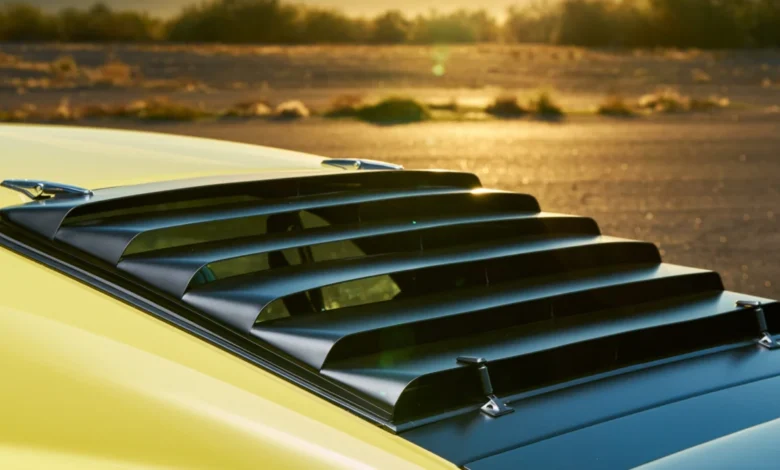
During the golden era of American muscle cars in the 1960s and 1970s, performance was defined by much more than just displacement figures and quarter-mile times. While massive, high-compression V8 engines producing underrated horsepower outputs formed the mechanical heart of Detroit’s factory hot rods, visual identity was equally critical to capturing the youth market. Automakers competed fiercely to imbue their coupes and fastbacks with aggressive, race-inspired aesthetics. Among the most popular and enduring stylistic hallmarks of this period were window louvers—slatted metal or plastic arrays mounted externally across the rear glass. While modern observers often view these additions purely as nostalgic styling exercises, their proliferation was rooted in genuine thermodynamic, ergonomic, and regulatory challenges unique to the automotive design of the mid-20th century.
To understand the widespread adoption of window louvers, one must examine the intersection of automotive design trends and cabin comfort technology during the late 1960s. During this period, the fastback body style surged in popularity across American and European markets. Characterized by a roofline that sloped continuously down to the rear bumper, the fastback profile offered superior aerodynamic efficiency compared to traditional three-box notchback sedans. However, this sweeping silhouette necessitated a massive expanse of shallowly raked rear glass.
When exposed to direct sunlight, these large, angled windows acted as giant greenhouses, allowing solar radiation to penetrate the cabin rapidly and trapping immense amounts of heat. In an era when automotive air conditioning was an expensive, inefficient dealer-add-on option that severely sapped engine power, and automotive window tinting films were in their infancy and largely illegal in many jurisdictions, vehicle occupants suffered significant thermal discomfort.
Window louvers emerged as an elegant passive solution to this problem. Functioning similarly to architectural window shutters, the angled slats were precisely engineered to block the overhead sun’s direct rays from penetrating the cabin, thereby reducing internal temperatures significantly. Crucially, because the slats were spaced apart, they maintained rearward visibility for the driver, a legal necessity that solid body panels would have compromised. Furthermore, they offered a degree of interior privacy, shielding the cabin and any valuables from prying eyes without requiring darkened glass. Beyond these practical considerations, louvers imparted a utilitarian, track-ready aesthetic that resonated strongly with consumers drawn to the trans-am and drag-racing culture of the era.
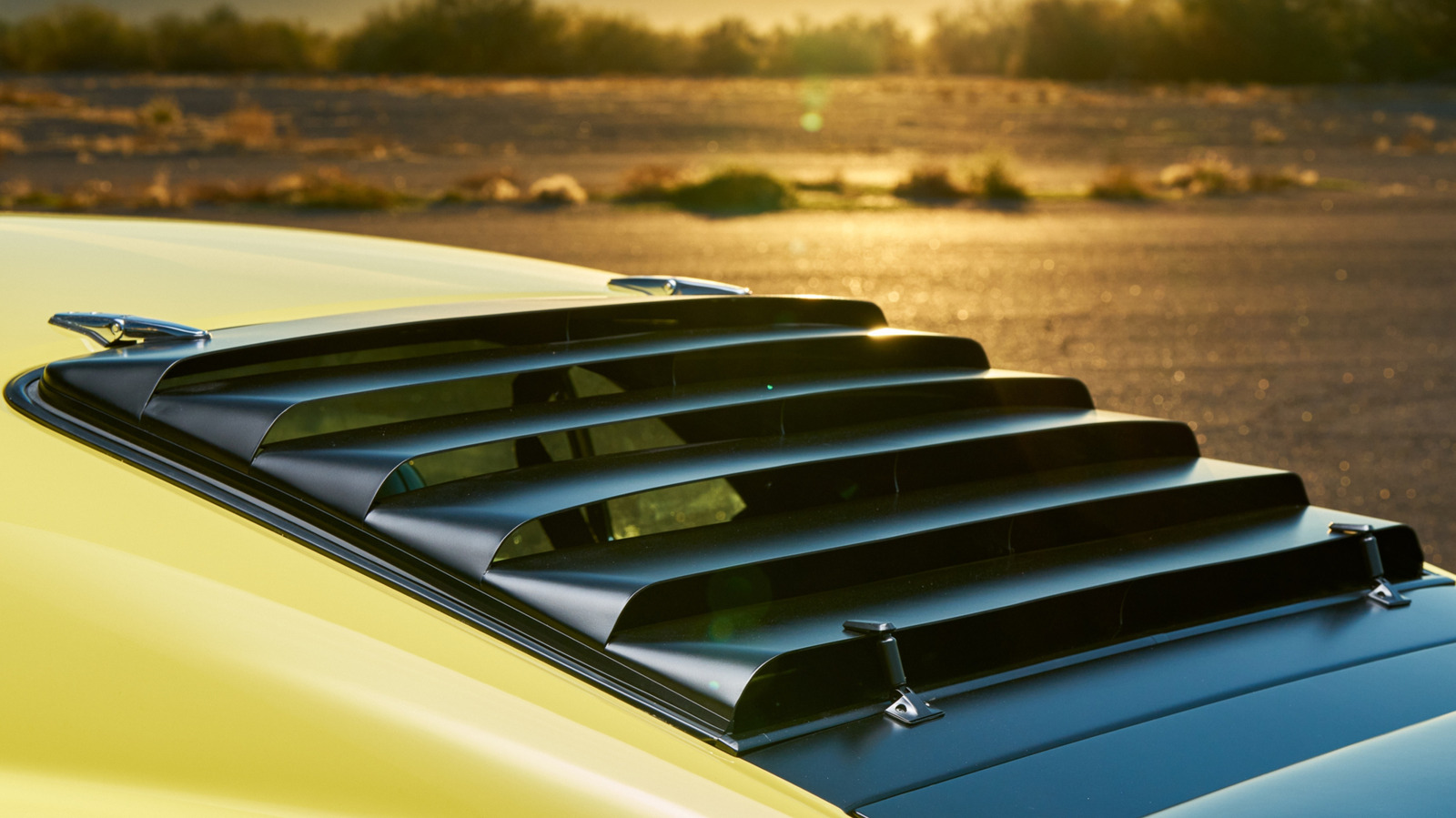
Architectural louvers had been utilized for thousands of years for ventilation and light control, and automotive manufacturers had long stamped metal louvers directly into body panels—such as hood sides and cowl vents—to dissipate engine heat, a practice famously seen on 1940s Buick Roadmasters and classic hot rods. However, the modern automotive window louver as a dedicated exterior rear-window treatment traces its lineage to the supercar world, specifically the mid-engine Lamborghini Miura.
When the Lamborghini Miura debuted at the 1966 Geneva Auto Show, it featured a sleek plexiglass window covering its transversely mounted 4.0-liter V12 engine. However, test drivers and engineers quickly discovered a critical flaw: the clear cover acted as a solar oven, trapping immense amounts of heat generated by the 350-horsepower powerplant and threatening the mechanical integrity of the engine bay. Legendary designer Marcello Gandini solved the crisis by replacing the glass hatch with a striking array of metal louvers. This functional modification not only successfully evacuated engine heat but also created an instantly iconic visual signature that defined the Miura for generations.
American manufacturers were quick to take note of the functional and aesthetic benefits of louvers, adapting the concept to their burgeoning pony car and muscle car segments. Ford, which had already experimented with fixed metal louvers on the rear quarter windows of the 1965 Mustang, introduced factory-authorized rear window "Sports Slats" for the 1969 model year on Mustangs equipped with the SportRoof fastback body. These aluminum or heavy-gauge plastic assemblies were mounted cleanly over the exterior of the rear glass using specialized brackets and hinges, allowing owners to pivot or lift the assembly slightly for glass cleaning.
Chrysler followed suit shortly thereafter, rolling out comprehensive louver packages for its legendary E-body performance cars, including the Dodge Challenger and Plymouth Barracuda. General Motors also embraced the trend across various high-performance platforms, solidifying louvers as a ubiquitous feature of the muscle car landscape.
By the mid-1970s, the popularity of window louvers transcended factory options, fueling a massive boom in the American aftermarket automotive industry. Companies specialized in fabricating custom louver kits for dozens of domestic and imported vehicle models. Japanese sports coupes and hatchbacks—such as the Datsun 280Z, Mazda RX-7, and Toyota Celica—became prime candidates for louver makeovers. These aftermarket kits frequently included matching quarter-light louvers designed to cover the small side windows behind the doors, creating a cohesive, heavily textured appearance that visually widened the rear stance of the cars.
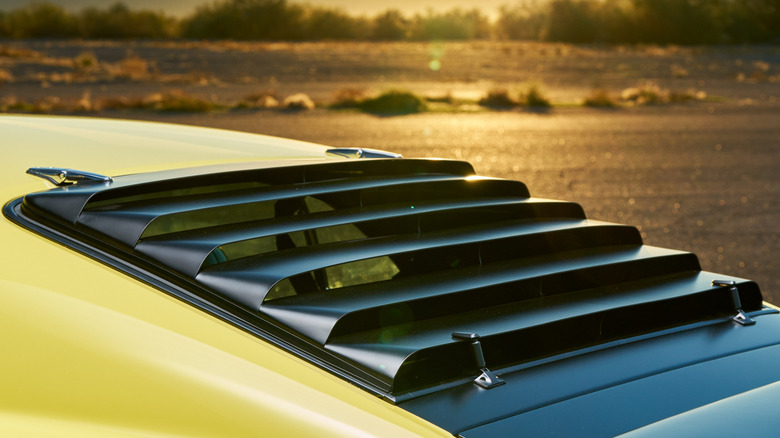
The louver trend maintained strong momentum throughout the 1980s, becoming a defining visual element of the synth-wave and neo-classic automotive aesthetics of the decade. Vehicles like the Chevrolet Camaro IROC-Z and Pontiac Firebird Trans Am frequently wore factory or aftermarket louvers as badges of high-performance intent.
However, as the automotive industry transitioned into the 1990s, consumer tastes shifted dramatically toward smoother, more aerodynamic, and minimalist exterior styling. Concurrently, advancements in chemical engineering led to the widespread availability and legal acceptance of high-performance polymer window tint films, which could reject solar heat and provide privacy without altering the exterior profile of the vehicle or adding aerodynamic drag. Consequently, window louvers fell largely out of favor with mainstream automotive designers, relegated for a time to the realm of retro nostalgia and period-correct restorations.
Despite their decades-long absence from mainstream automotive styling, window louvers have experienced a notable resurgence in contemporary automotive design, bridging the gap between nostalgic heritage and modern engineering. Exotic manufacturers continue to pay homage to the pioneers of the trend; Lamborghini frequently incorporates louvered engine covers and rear treatments on modern supercars like the Revuelto and Temerario, echoing the legacy of the Miura.
In the domestic performance sector, General Motors utilizes functional louver designs on ultra-high-performance track machines, such as the C8 Corvette ZR1, to manage extreme thermal loads. Meanwhile, the aftermarket enthusiast community has embraced louvers for modern rear-wheel-drive platforms, ranging from the Toyota GR86 and Subaru BRZ to the Ford Mustang and BMW 4 Series.
The enduring appeal of window louvers underscores a broader philosophy in automotive design: form and function are inextricably linked. What began as an inventive thermodynamic workaround for overheating Italian supercars and sun-baked American fastbacks evolved into a cultural touchstone of automotive styling. By successfully marrying practical utility—protecting cabin occupants from harsh solar radiation while maintaining outward visibility—with an aggressive, uncompromising visual identity, window louvers secured their place as one of the most functional and iconic accessories in automotive history.