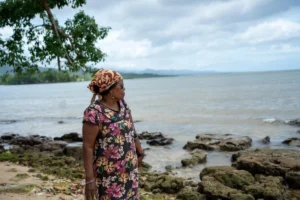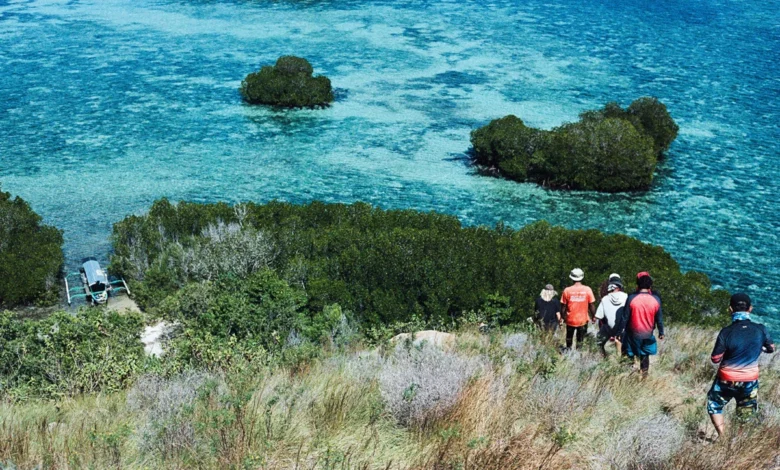
Off the coast of Poto Tano, a remote fishing village on the island of Sumbawa, Indonesia, the rhythm of life is dictated by the pulse of the tide. Here, Mahari, the ketua (leader) of a specialized group of Bajau octopus fishers, sits at the prow of his vessel, his gaze fixed on the shifting hues of the Indian Ocean. His movements are deliberate, seasoned by a lifetime of immersion in a world that most only witness through glass. As the leader, he holds the authority to determine the day’s methodology, signaling to his crew whether they will employ the trailing hook-and-shell method or the highly technical art of pocong fishing. This daily ritual is more than a livelihood; it is a manifestation of a cultural legacy currently navigating the precarious intersection of tradition, economic survival, and environmental stewardship.

The Bajau, historically known as "sea nomads," have inhabited the waters of Indonesia, Malaysia, and the Philippines for centuries. Their existence is inextricably linked to the marine environment, with generations of Bajau developing extraordinary physiological adaptations to life at sea, including enlarged spleens that facilitate prolonged breath-holding. In Poto Tano, this ancestral knowledge is being mobilized to counter the destructive legacy of compressor diving—a perilous practice that has long threatened both the health of the fishers and the integrity of the coral reefs.
The Rise and Fall of Compressor Diving
For many years, compressor diving—an improvised method where divers breathe surface air pumped through a hose—became the standard for many Bajau fishers seeking to maximize their catch. The allure was purely economic. By extending the duration of their dives, fishers could penetrate deeper, reach more remote reef sections, and secure higher yields of octopus, the primary commodity of the local market. However, this practice came at a staggering human cost.

Without formal training, safety equipment, or decompression protocols, compressor divers were frequently exposed to the severe risks of decompression sickness, air embolisms, and nitrogen narcosis. The long-term physical toll is evidenced by the accounts of local veterans; men like Mahari and Well have reported suffering from paralysis on numerous occasions. In the village of Poto Tano, tales of chronic disability, neurological damage, and drowning became common, casting a shadow over the community’s pursuit of wealth.
The turning point arrived with the implementation of stricter provincial regulations. While Indonesian national law indirectly prohibits destructive fishing gear, the West Nusa Tenggara provincial government took a definitive step in 2020 by explicitly banning the use of air compressors for fishing. This legislative action, while supported by conservationists, initially met with resistance from families who viewed the practice as their only viable means of financial survival.

The PELITA Initiative: A New Model of Stewardship
To bridge the gap between regulatory compliance and economic necessity, the Jari Foundation, led by Hani and Boen Nusantari, stepped in to facilitate a transition toward sustainable, traditional practices. This collaboration birthed the Persaudaraan Nelayan Gurita (PELITA), or "Octopus Fishermen Brotherhood."
The name PELITA, meaning "light," serves as a symbolic beacon for the community. The initiative currently supports approximately 40 fishers who have collectively abandoned compressor diving in favor of traditional freediving. This shift is not merely a regression to older methods but an evolution into a modern, rights-based fisheries management model.

The efficacy of PELITA lies in its holistic approach. By organizing the fishers into a formal brotherhood, the Jari Foundation has helped the community adopt sustainable harvesting techniques, such as the use of the pocong—a decoy lure carved from wood and felt. When deployed by a skilled freediver at depths of 15 to 20 meters, the pocong mimics the movement of a live octopus, enticing a territorial response from the prey. This requires immense physical conditioning and skill, as the diver must remain perfectly still to deceive the animal.
Chronology of Transformation
- Pre-2020: Compressor diving becomes the dominant, albeit dangerous, method for octopus fishing in Poto Tano, driven by economic pressure.
- 2020: The West Nusa Tenggara provincial government formally bans compressor diving due to the high incidence of diving-related injuries and environmental degradation.
- 2022: Hani Nusantari launches Women for Marine Conservation (WMC) to integrate female community members into data collection, ecotourism, and environmental advocacy.
- December 2025: The village government of Poto Tano receives approval to govern its own marine resources, marking a significant victory for community-led, rights-based management.
- 2026: PELITA members continue to formalize traditional ecological management, including temporary closures of fishing grounds to allow for population recovery.
The Role of Traditional Ecological Knowledge
The Bajau’s ability to navigate and locate prey without modern GPS, relying instead on celestial navigation, wind patterns, and the subtle shifts in ocean currents, provides the foundation for their conservation strategy. According to local fishers like Nadir, children are introduced to the sea as infants, fostering an intuitive understanding of the marine ecosystem that cannot be replicated by modern technology.

This deep-seated knowledge is now being synthesized with scientific data. PELITA members are actively engaged in monitoring reef health and catch sizes. When an octopus is deemed too small, it is released, and specific reef areas are closed for months at a time to allow for biomass regeneration. This cyclical approach to fishing mimics natural rhythms and ensures that the marine resources remain viable for future generations.
Expanding the Scope: Women in Conservation
A critical component of this transition is the Women for Marine Conservation (WMC) group. Recognizing that the entire community is affected by the shift in fishing methods, the WMC has played an essential role in broadening the economic base of Poto Tano. By involving women in ecotourism, fisheries data entry, and educational workshops, the foundation has reduced the household-level dependence on intensive fishing. This diversification is vital; it provides a buffer against the potential income fluctuations that come with moving from industrial-style harvesting to sustainable, artisanal fishing.

Challenges and Future Implications
Despite the progress made by PELITA, the transition is far from complete. Illegal night-time compressor diving remains a challenge, as surveillance in vast coastal areas is difficult. Boen Nusantari notes that, on occasion, large groups of rogue divers still exploit the cover of darkness to bypass the ban.
Furthermore, the physical toll of years of compressor diving has left some older fishers with long-term mobility issues, making the physical exertion of freediving difficult for them. There is also the challenge of cultural erosion; many of the younger generation, while aware of the risks of the compressor, are still navigating the pressures of a modernizing economy. To combat this, the Jari Foundation is exploring the creation of a Bajau cultural museum in Poto Tano to codify oral histories and traditional fishing lore for the youth.

The implications of the Poto Tano model extend well beyond Sumbawa. As coastal communities globally face the twin threats of overfishing and the loss of traditional ecological knowledge, the Bajau’s experience offers a compelling template. By combining ancestral expertise with modern rights-based management, these communities are proving that environmental conservation does not have to be an adversary to economic survival.
As Mahari watches his niece study marine science, the sentiment within the community is clear: the future of the Bajau is inseparable from the health of the reef. The transition is not just about returning to the ways of the past, but about using that wisdom to navigate a more sustainable future. The "light" of the PELITA is not just a reminder of the oil lamps of old, but a guide toward a path where human activity is once again in balance with the ocean’s enduring, silent strength.