An Unlikely Political Alliance over Infrastructure and Energy Defines Michigan’s Crucial 7th District Race

The intersection of local discontent, clean energy transitions, and political realignment has created one of the most unpredictable electoral battlegrounds in the United States. In Michigan’s competitive 7th Congressional District, a high-stakes legislative race is currently testing whether a traditional progressive activist can successfully forge a cross-partisan coalition with conservative and independent anti-development advocates. At the center of this political experiment is Will Lawrence, a 36-year-old Democrat and co-founder of the Sunrise Movement, who is campaigning heavily against the rapid, unvetted expansion of industrial data centers and state-level green energy preemption laws.
Lawrence’s campaign represents a stark departure from conventional Democratic Party orthodoxy. By aligning himself with local skepticism regarding large-scale infrastructure projects—ranging from massive data center campuses to utility-scale solar farms—Lawrence is attempting to capture a wave of grassroots frustration that spans traditional partisan boundaries. His primary opponent-turned-ally approach bridges the gap between MAGA-aligned conservatives, rural landowners, and progressive climate organizers, highlighting a profound crisis of trust in modern American economic development.
The Anatomy of a Cross-Partisan Coalition
For Marjorie Steele, a political independent and founder of the Michigan-based Economic Development Responsibility Alliance, navigating the modern environmental movement has been an isolating experience. Steele spends her days combating large-scale industrial developments across the state, including a contentious Chinese electric vehicle battery plant near Big Rapids, massive battery storage systems, high-voltage transmission lines, and the surging proliferation of data centers. Her fierce opposition to these projects has frequently placed her at odds with climate-conscious progressives who view her skepticism of green infrastructure with deep suspicion.
“When the progressives look at me and say, ‘You’re MAGA’ because of the green energy issue, it really hurts me,” Steele explained.
However, political dynamics in Michigan are shifting. Earlier this year, while lobbying state lawmakers in Lansing for a moratorium on data center construction, Steele encountered Lawrence. Knowing his background as a co-founder of the Sunrise Movement—one of the nation’s most prominent proponents of the Green New Deal—Steele anticipated a hostile reception. Instead, the two sat down over lunch and discussed the negative externalities associated with unchecked industrial and clean energy development, including severe noise pollution, the depletion of local water tables, and the irreversible destruction of prime agricultural land.
Impressed by his willingness to listen and engage with grassroots concerns rather than dismissing them, Steele’s organization later broke with tradition to endorse Lawrence’s congressional bid. This unusual endorsement underscores a broader phenomenon sweeping the Midwest: local communities experiencing what experts call "infrastructure fatigue," uniting across ideological lines to demand greater autonomy over their local landscapes.

The Data Center Boom and Local Backlash
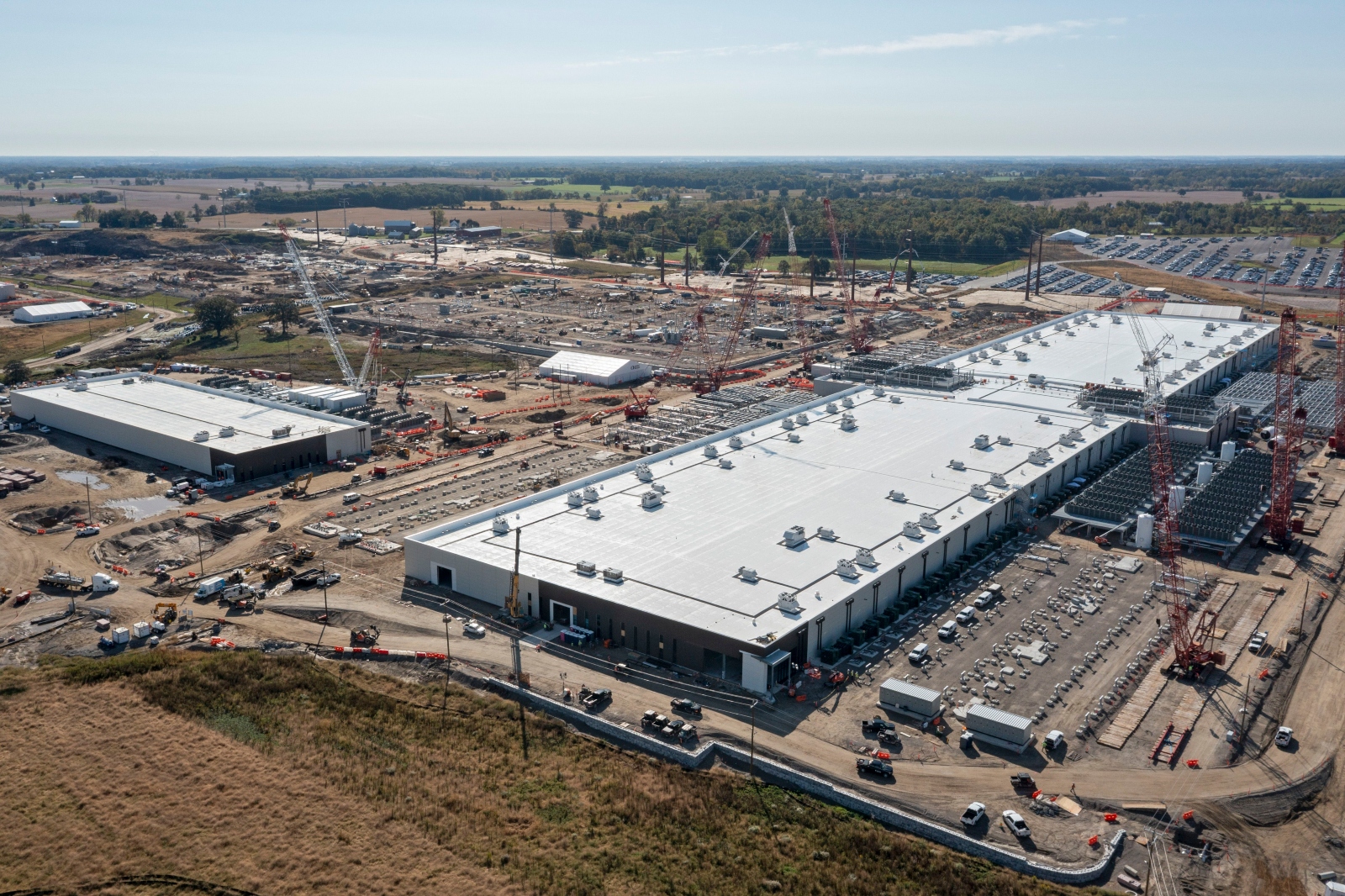
The friction in the Lansing area and surrounding communities mirrors a national flashpoint surrounding the data center boom. Driven by the massive computational demands of artificial intelligence and cloud computing, technology firms have rushed to construct hyperscale facilities across the American landscape. Notable regional projects include a staggering $16 billion Oracle-OpenAI campus currently under construction in Saline Township near Ann Arbor, alongside dozens of other proposals that have triggered intense local pushback.
Public resistance has already yielded tangible results. Earlier this year, intense local backlash successfully tanked a $120 million sustainable data center proposal known as Deep Green in downtown Lansing. Despite developers’ pledges to recycle waste heat and operate with minimal water usage, residents and local government leaders remained deeply skeptical. More than a dozen local municipalities across Michigan have attempted to enact outright bans or strict zoning restrictions on data centers, motivated by fears over excessive power consumption, grid strain, light pollution, and noise disturbances.
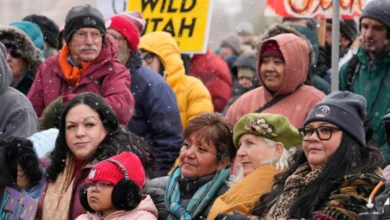
This local resistance defies simple partisan categorization. The anti-data center coalition frequently unites Trump-aligned conservatives wearing red baseball caps with progressive residents and independent landowners who simply object to industrialization transforming their rural or suburban communities.
A Progressive Challenger in a Purple District
On paper, Will Lawrence’s political resume would appear poorly suited for Michigan’s 7th Congressional District, one of the premier swing districts in the country. Encompassing Lansing and a broad swath of surrounding suburbs, the district has historically balanced on a political knife-edge. Moderate Democrat Elissa Slotkin narrowly held the seat for three terms before vacating it in 2024 to successfully run for the U.S. Senate. Republican Tom Barrett subsequently reclaimed the seat by a slim margin and is currently running for reelection, setting the stage for one of the most expensive and closely watched House races in the nation.
Lawrence’s background is rooted in the hardline progressive wing of the Democratic Party. In 2015, he co-founded the Sunrise Movement on the foundational belief that combating climate change requires disruptive activism and sweeping federal intervention. In November 2018, Lawrence and fellow activists staged a high-profile sit-in at then-House Democratic Leader Nancy Pelosi’s congressional office, demanding the adoption of a Green New Deal that would entail massive public investments in clean energy infrastructure. Lawrence was also previously a member of the Democratic Socialists of America—though he no longer identifies as a socialist—and faced scrutiny during his primary over past social media posts advocating for radical policy positions.
Despite these establishment hurdles, Lawrence secured 40 percent of the vote in the August Democratic primary, outpacing two centrist opponents who split the moderate vote. Following his primary victory, congressional Democratic leaders rallied behind his campaign, and Lawrence has successfully kept pace with Barrett in fundraising, drawing resources into a race heavily influenced by major national PACs and external spending.
Infrastructure Fatigue and the Renewable Energy Dilemma
While data centers have served as the immediate catalyst for cross-partisan organizing, the anti-development sentiment in Michigan extends far beyond computing facilities. Resistance has increasingly bled over into renewable energy infrastructure, including utility-scale solar farms, battery storage facilities, and high-voltage transmission lines necessary to transport clean electricity to urban centers.
According to Ed Rivet, director of the Michigan Conservative Energy Forum, this growing wave of infrastructure fatigue presents a complex challenge for the state’s energy transition. “We’ve definitely seen some bleed over from data center opposition to all types of infrastructure development,” Rivet noted. He characterized the trend as unfortunate, emphasizing that renewable projects provide tangible benefits to consumers in terms of cost reduction, grid reliability, and emissions reduction.
Solar energy has become a particularly volatile battleground. Under Michigan law, the state aims to transition its electrical grid entirely to clean energy by 2040. However, after numerous local governments enacted zoning restrictions to block new solar developments, the Michigan Legislature passed a law in 2023 preempting local authority. The statute allows renewable developers to bypass local roadblocks and seek direct approval from state regulators if municipal permits are denied.
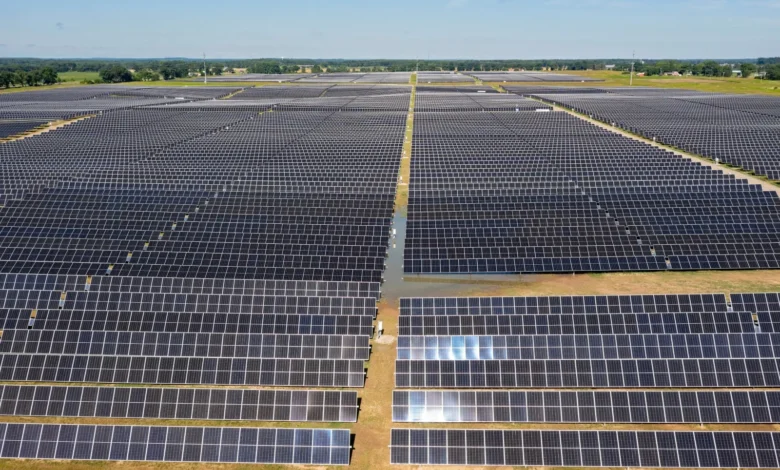
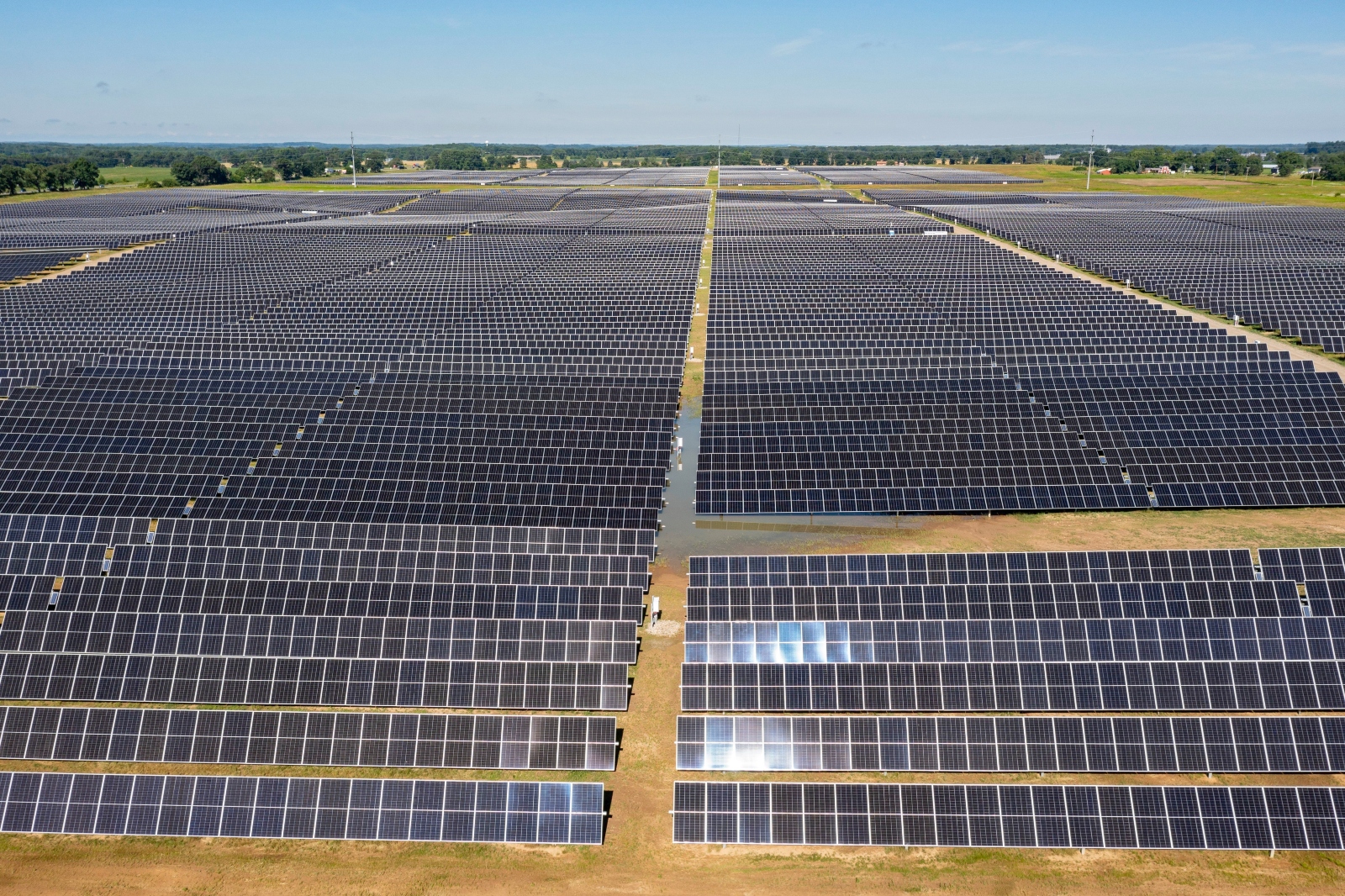
The implementation of this state preemption has heightened tensions. The first project approved under the state framework, the Assembly Solar facility, recently completed construction on the eastern edge of Lawrence’s district, generating frustration among residents who feel their agrarian lifestyle is being systematically dismantled. Lawrence has capitalized on this discontent, arguing publicly that the state solar law disenfranchises local communities and allows utilities to force mega-projects onto rural areas without genuine public buy-in.
Reimagining Economic Development
Lawrence contends that the core issue lies in a fundamentally broken model of American economic development. In his view, most rural and suburban communities derive few long-term benefits from large-scale energy or technological infrastructure projects. While construction generates temporary jobs and limited municipal tax revenue, the vast majority of financial returns flow out of the district to corporate entities and outside investors, leaving local residents to shoulder the burdens of construction noise, environmental disruption, and altered landscapes.
“What’s clear is that people just don’t believe that investments that are directed from outside of the district, from somewhere else in the state or somewhere else in the country or the world, are going to benefit them,” Lawrence said. He advocates for structural reforms, such as establishing public banks to finance infrastructure without demanding exorbitant profit margins, utilizing congressional convening power to negotiate direct community benefits, and implementing a national pause on data center construction until more sustainable frameworks are established.
This position marks a sharp evolution from Lawrence’s early days with the Sunrise Movement. The Green New Deal paradigm heavily emphasized the necessity of top-down federal action to rapidly deploy infrastructure, often implying that federal imperatives would supersede local zoning and community preferences. Having spent years working as a tenant organizer in Michigan following his departure from Sunrise in 2020, Lawrence now argues that the climate movement must prioritize the process of democratic consent alongside the urgency of environmental outcomes.
“I think in that era, you know, we were thinking about the necessity of the outcome, and now I’m thinking more about what is necessary in the process,” Lawrence reflected. “And I’m reckoning with just how little trust we all have.”
Academic and Political Realities
Energy and policy experts caution that balancing local autonomy with the urgent need for rapid decarbonization remains a formidable mathematical and logistical challenge. Doug Bessette, an energy development researcher at Michigan State University, notes that alternative, decentralized proposals—such as smaller community solar installations or agrivoltaic projects that combine agriculture with solar panels—cannot scale quickly enough to replace retiring coal and natural gas capacity.
“In order to fully transition our economy to clean energy, you have to build huge solar and huge wind and huge batteries and you have to do it fast,” Bessette stated. “The smaller-is-better approach honestly would be ineffective at actually mitigating emissions at the rate at which we need to do it — and would also be more expensive.”
Furthermore, political scientists question whether cross-partisan infrastructure skepticism will ultimately alter voting behavior in a tightly contested swing district. Republican incumbent Tom Barrett has also positioned himself as a critic of data centers, potentially neutralizing the issue as a partisan wedge. Jean Hardy, a professor at Michigan State University who studies local governance and technology development, suggests that widespread opposition to data centers is already bipartisan, meaning it may not compel voters to cross party lines or shift allegiance.
Nevertheless, Lawrence remains convinced that political figures must actively channel anti-development sentiment rather than ignore it. For Democrats attempting to navigate the green transition, the central test moving forward is whether they can successfully translate public opposition to industrial encroachment into a constructive, forward-looking vision for community-approved infrastructure.
“The question is who can effectively connect the big ‘no’ that we’re all saying to data centers into an affirmative ‘yes’ about what we want to build,” Lawrence concluded.