Vietnam’s Robusta Reckoning: The Environmental Cost of Decades of Unchecked Coffee Expansion in the Central Highlands

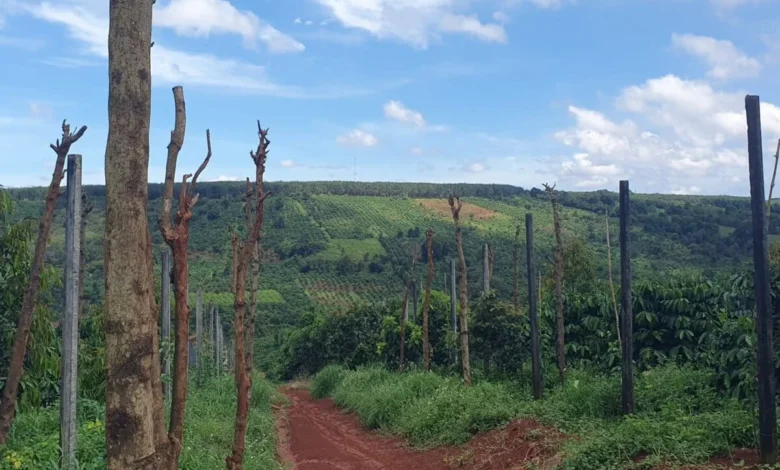
The rapid transformation of Vietnam into a global coffee powerhouse has come at a staggering environmental price, according to a comprehensive investigation by Coffee Watch, a Berlin-based watchdog group. The report, which synthesizes decades of satellite imagery and government records, reveals that the pursuit of coffee dominance has led to the systematic destruction of tropical forests across the country’s Central Highlands. While Vietnam now stands as the world’s second-largest coffee producer and the undisputed leader in Robusta exports, the ecological foundation upon which this industry was built is showing signs of severe exhaustion. The investigation underscores a critical tension between economic development and environmental preservation, suggesting that the very landscapes that fueled Vietnam’s rise are now under threat from the consequences of their own exploitation.
The Scale of Forest Loss: A Thirty-Year Decline
The Central Highlands of Vietnam, encompassing provinces such as Dak Lak, Lam Dong, Gia Lai, and Dak Nong, serve as the heart of the nation’s coffee industry, accounting for approximately 95% of its total output. However, the Coffee Watch investigation highlights a dramatic collapse in forest cover within this vital region. In 1990, tropical forests covered approximately 42.8% of the Central Highlands. By 2020, that figure had plummeted to just 19%. This represents a loss of more than half of the region’s original forest canopy in just three decades.
The chronology of this deforestation reveals a period of intense, rapid clearing between 1995 and 2010. This era coincided with a global surge in coffee demand and a domestic push to liberalize the agricultural sector. During these fifteen years, vast swathes of primary and secondary forests were razed to make way for monoculture coffee plantations. While the rate of forest loss has stabilized at lower levels in the 2020s, the report notes that this is largely because there is very little accessible forest left to clear. The remaining tropical moist forest is now predominantly found in "steeper, less accessible terrain," often at high elevations or within the boundaries of formally designated protected areas, where topography serves as a natural barrier to agricultural encroachment.
Historical Drivers: Policy and Finance
The transformation of the Central Highlands was not an accidental byproduct of smallholder farming but rather the result of deliberate policy and international support. Historically, the Vietnamese government prioritized coffee as a key export commodity to generate foreign exchange and alleviate rural poverty. Following the "Đổi Mới" economic reforms of the late 1980s, the state incentivized the migration of millions of people from the northern provinces to the Central Highlands to establish "New Economic Zones."
This internal migration provided the labor force necessary for the coffee boom. Furthermore, international development financing played a significant role in scaling the industry. In the 1990s and early 2000s, various multilateral organizations and development banks provided loans and technical assistance aimed at increasing agricultural yields and integrating Vietnam into global commodity chains. While these initiatives succeeded in lifting millions out of poverty and making Vietnam a dominant player in the global Robusta market—supplying nearly 40% of the world’s exports of Coffea canephora—the ecological externalities were largely ignored in the pursuit of growth.
The Ecological Toll: From Biodiversity Loss to the "Nutrient Treadmill"
The environmental consequences of this rapid expansion have been multifaceted and severe. The Coffee Watch report details how the replacement of diverse forest ecosystems with monoculture coffee plantations has led to fragmented habitats, making it difficult for local wildlife to survive or migrate. Beyond the loss of biodiversity, the physical health of the land has been compromised.
One of the most alarming findings in the investigation is the emergence of a "nutrient treadmill" in the Central Highlands. Because coffee is often grown in high-density monocultures on cleared forest land, the natural nutrient cycling provided by a forest canopy is absent. Over time, the intensive cultivation exhausts the soil’s organic matter. To maintain high yields, farmers are forced to apply ever-increasing amounts of chemical fertilizers. This creates a cycle of dependency where the soil becomes a mere substrate for chemical inputs rather than a living ecosystem.
Furthermore, the loss of forest cover has accelerated soil erosion, particularly on the sloping terrain of the Highlands. Without the root systems of trees to hold the earth in place and the canopy to break the fall of heavy tropical rains, topsoil is washed away into river systems. This not only degrades the farmland but also leads to the siltation of waterways and affects the regional hydrological cycle. The report notes that forest loss has significantly impacted water flow and recharge, making the region more susceptible to both flash floods and prolonged droughts.
The Looming Threat of Climate Change
The investigation warns that the environmental degradation of the past is now colliding with the climate realities of the future. The Central Highlands are becoming increasingly vulnerable to climate extremes, including rising average temperatures and increasingly erratic rainfall patterns. The Coffee Watch report issues a stark warning: up to 50% of Vietnam’s current Robusta-growing belt could become unsuitable for coffee production in the coming decades if these trends continue.

The loss of forest-induced microclimates exacerbates these risks. Forests act as natural regulators, providing shade and maintaining humidity. In their absence, coffee plants—particularly Robusta, which is sensitive to extreme heat despite its name—are directly exposed to the elements. The "reckoning" mentioned in the report’s title refers to the possibility that the very land cleared for coffee may soon be unable to support it, potentially leading to a collapse of the regional economy that millions of livelihoods depend upon.
Shifting Paradigms: Expert Reactions and Future Outlook
Despite the grim findings of the report, some experts see a window of opportunity for reform. Ly Thi Minh Hai, the Vietnam country director for the international environmental nonprofit RECOFTC, acknowledges that coffee expansion was a primary driver of historical forest loss. However, she notes that the industry is currently undergoing a strategic shift.
According to Minh Hai, the focus is moving away from further land expansion and toward "improving the productivity, resilience, and sustainability of existing coffee-growing landscapes." This transition is essential for the long-term survival of the sector. She emphasizes the need for "climate-smart and regenerative farming practices," which include the rejuvenation of aging plantations and the introduction of intercropping. By planting shade trees alongside coffee (agroforestry), farmers can recreate some of the ecological functions of a forest, such as moisture retention and natural pest control, while diversifying their income streams.
RECOFTC is currently working with local communities to secure forest tenure and promote these sustainable practices. Secure land rights are seen as a foundational requirement for conservation, as farmers with long-term stakes in their land are more likely to invest in its health rather than exploit it for short-term gain. "Vietnam’s coffee sector should not be defined by the deforestation challenges of the past," Minh Hai stated. "The future… will not be measured by how much land we cultivate, but by how well we manage the landscapes we already have."
Global Implications and the EUDR Factor
The findings of the Coffee Watch report come at a time of increased international scrutiny regarding the environmental footprint of global commodities. The European Union’s Deforestation Regulation (EUDR), which is set to impose strict due diligence requirements on products entering the EU market, represents a significant challenge for the Vietnamese coffee industry. Under the EUDR, companies must prove that their products—including coffee—were not produced on land deforested after December 31, 2020.
While the Coffee Watch report shows that the most rapid deforestation in Vietnam occurred before this cutoff date, the legacy of past forest loss remains a reputational and ecological burden. To remain competitive in high-value markets like Europe, Vietnam must demonstrate a commitment to "zero-deforestation" supply chains and prove that it is actively restoring degraded landscapes.
The analysis suggests that the "Robusta reckoning" is not just an environmental issue but a profound economic one. If Vietnam cannot transition to a more sustainable model, it risks losing its market share to competitors who can meet stricter environmental standards, all while facing the physical decline of its production base due to soil exhaustion and climate change.
Conclusion: A Critical Juncture
The Coffee Watch investigation serves as a sobering reminder of the environmental costs of rapid industrialization in the agricultural sector. The transformation of the Central Highlands from a lush forest frontier into a global coffee hub has provided significant economic benefits, but it has also left a legacy of ecological fragility.
As the industry faces the dual pressures of a changing climate and shifting international regulations, the path forward requires a radical departure from the expansionist policies of the past. The survival of Vietnam’s coffee sector now depends on its ability to heal the landscapes it once cleared. The shift toward agroforestry, regenerative agriculture, and landscape-level management represents the only viable way to ensure that the Central Highlands remain a productive and resilient region for generations to come. The era of unchecked expansion is over; the era of restoration must now begin.
Related posts: