A Landmark Legal Battle Emerges as Washington State Judge Allows Wrongful Death Lawsuit Against Oil Majors to Proceed

The judicial landscape of climate accountability shifted significantly this month as a King County judge denied motions to dismiss a first-of-its-kind wrongful death lawsuit against the world’s largest fossil fuel corporations. The case, brought by Misti Leon, centers on the death of her mother during the historic and catastrophic "heat dome" that scorched the Pacific Northwest in June 2021. By allowing the case to proceed toward trial, the court has opened a new front in the legal war over climate change, moving beyond property damage and infrastructure costs into the realm of individual human casualty.
The 2021 Heat Dome: A Meteorological Anomaly
To understand the gravity of the Leon lawsuit, one must look back at the unprecedented meteorological event of June 2021. For one week, a high-pressure ridge of extraordinary intensity settled over Washington, Oregon, and British Columbia. In Washington state, temperatures shattered all-time records, reaching 108 degrees Fahrenheit in areas accustomed to temperate maritime climates.
The human toll was staggering. Public health records indicate that approximately 1,200 people perished across the region during that single week. In many instances, the victims were elderly or low-income individuals living in homes without air conditioning—infrastructure that was never deemed necessary in the historically cool Pacific Northwest. Leon’s mother was among those who succumbed to hyperthermia on the hottest day in the state’s history.
The scientific community’s response to the event was swift. An international team of researchers from the World Weather Attribution group concluded that the heatwave was "virtually impossible" without the influence of human-caused climate change. Their analysis suggested that the accumulation of greenhouse gases had made such an extreme event at least 150 times more likely, providing the foundational "attribution science" that now sits at the heart of Leon’s legal argument.
Allegations of Deception and Corporate Liability
Misti Leon’s lawsuit names Exxon Mobil, BP, Chevron, Shell, and several other oil majors as defendants. The core of the complaint does not merely allege that these companies produced the products that caused global warming; rather, it asserts a theory of "wrongful death through deception."
The lawsuit alleges that these corporations were aware as early as the 1970s that the combustion of fossil fuels would lead to catastrophic global temperature increases. Drawing on internal memos and historical research—often referred to under the "Exxon Knew" umbrella—the plaintiffs argue that the industry chose to fund sophisticated disinformation campaigns instead of transitioning their business models or warning the public.
By downplaying the risks and lobbying against carbon regulations for decades, the lawsuit claims, the companies effectively "delayed the inevitable transition to clean energy" and prevented the implementation of heat-mitigation strategies that could have saved Leon’s mother. Mike Meno, communications director at the Center for Climate Integrity, noted that this ruling signals a growing judicial willingness to treat these claims as legitimate legal questions rather than political grievances.
A Growing Wave of Climate Litigation
The Washington state case is not an isolated incident but part of a burgeoning national trend. According to the Sabin Center for Climate Change Law at Columbia Law School, there are currently nearly 40 climate-related lawsuits pending against fossil fuel companies across the United States.
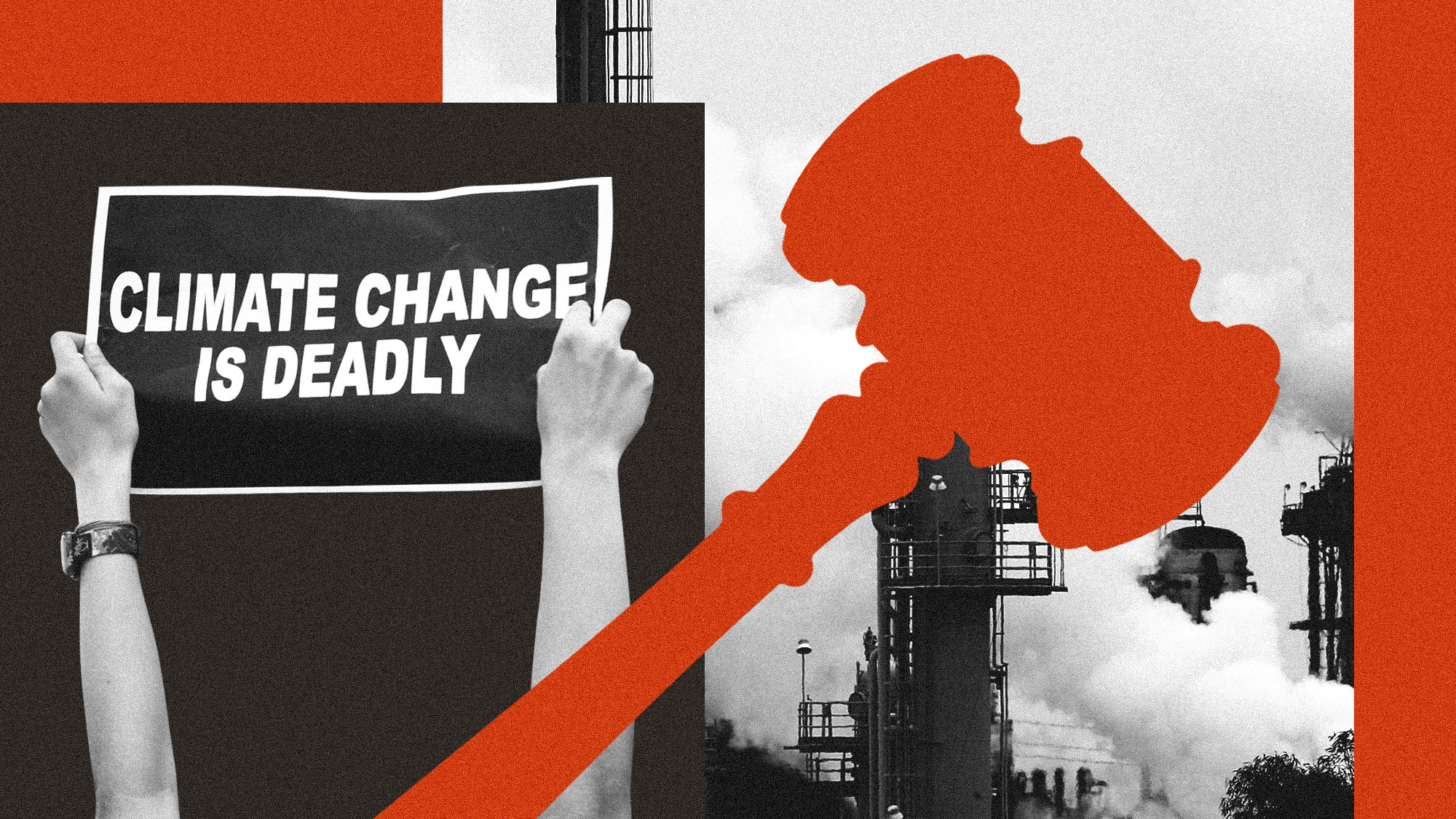
While many of these cases were stalled for years by procedural maneuvers—specifically efforts by oil companies to move the cases from state courts to federal courts, where they are often more easily dismissed—the tide has begun to turn. At least five major lawsuits, including those filed by the states of Massachusetts, Connecticut, and Vermont, as well as the city of Honolulu and the District of Columbia, have successfully moved into the "discovery" phase.
Discovery is a critical juncture in any litigation. It allows plaintiffs’ attorneys to subpoena internal corporate documents, emails, and testimony from high-ranking executives. For the oil industry, this represents a significant risk of exposing further evidence of internal knowledge regarding climate risks that may contradict their public messaging.
The Industry Counter-Offensive: Immunity and "Liability Shields"
As the legal pressure mounts, the fossil fuel industry has mobilized a multi-tiered defense strategy involving legislative lobbying and executive intervention. The American Petroleum Institute (API), the primary lobbying arm for the industry, has explicitly identified the cessation of "extreme climate liability policy" as a top priority for its 2026 legislative agenda.
This counter-attack has seen significant success in Republican-led states. Legislatures in Utah, Iowa, Tennessee, Oklahoma, and Louisiana have recently passed "liability shield" laws. These statutes are designed to grant fossil fuel companies immunity from lawsuits seeking damages related to greenhouse gas emissions. Furthermore, states like Montana and Utah have moved to redefine "public nuisance" laws—the legal theory used in many climate cases—to ensure they cannot be applied to global environmental issues.
Investigations by watchdog groups like Fieldnotes and ProPublica have highlighted a coordinated effort behind these bills. Organizations such as the American Legislative Exchange Council (ALEC) and the American Tort Reform Association, which receive significant funding from Koch Industries and Exxon Mobil, have been instrumental in drafting the model legislation used by these states.
Federal Intervention and the Shift in DOJ Policy
The industry’s defense has also found a powerful ally in the federal government. Following an executive order from President Donald Trump aimed at "protecting American energy from state overreach," the Department of Justice (DOJ) has taken the unprecedented step of suing states that attempt to hold oil companies accountable.
In May, the DOJ filed a lawsuit against the state of Minnesota just as that state’s climate case was entering discovery. The federal government’s argument echoes the industry’s long-standing position: that the regulation of greenhouse gases is a matter of federal and international law, and that state-level lawsuits interfere with "American energy dominance."
The internal culture of the DOJ’s environmental wing has also seen a visible shift. The division formerly known as the "Environment and Natural Resources Division" has been rebranded as the "Energy and Natural Resources Division." Furthermore, the appointment of former Exxon attorney Robert Levy to a senior position within this division has drawn criticism from environmental advocates who see it as a "regulatory capture" of the nation’s top law enforcement agency.
The Role of Attribution Science in the Courtroom
The ultimate success of the Leon case and others like it may hinge on the robustness of attribution science. This field of study uses complex computer modeling to compare a world without human-induced emissions to our current reality, allowing scientists to quantify exactly how much a specific weather event was intensified by global warming.

A recent report from the National Academies of Sciences, Engineering, and Medicine bolstered this field, concluding that the science linking climate change to extreme heat is now "increasingly robust." However, this scientific progress has met with intense political resistance. Republican attorneys general recently pressured the Federal Judicial Center to remove a chapter on climate science from its reference manual for judges.
President Trump has also entered the fray, utilizing social media to label the National Academies’ work as "Climate Fraud" and calling for a review of their taxpayer funding. This politicization of climate data creates a challenging environment for judges and juries who must weigh scientific evidence against a backdrop of intense national debate.
Parallels to the Big Tobacco Settlement
Legal experts frequently compare the current wave of climate litigation to the 1990s battle against the tobacco industry. For decades, tobacco companies denied the link between smoking and lung cancer while internally acknowledging the risks. It was only when internal documents were leaked and states began suing to recover healthcare costs that the industry was forced to the negotiating table.
The resulting 1998 Master Settlement Agreement saw Big Tobacco agree to pay more than $200 billion over 25 years. The oil industry is acutely aware of this precedent. Justin Anderson, a lawyer for Exxon, noted during a Federalist Society panel that while plaintiffs only need to win once to set a devastating precedent, the industry "must win every time."
Conclusion and Future Outlook
The Leon v. Exxon Mobil case represents a critical test of whether the legal system can address the human costs of a changing climate. If the case reaches a jury, it will force a public accounting of what the world’s largest energy companies knew, when they knew it, and what they did with that information.
In the near term, all eyes are on the U.S. Supreme Court, which is expected to hear a challenge related to a climate lawsuit from Boulder, Colorado, this fall. The high court’s ruling could either clear the way for these cases to proceed in state courts or grant the fossil fuel industry the broad federal protection it has sought for years.
For Misti Leon and the families of the 1,200 victims of the 2021 heat dome, the legal battle is about more than just policy; it is about seeking a measure of justice for a loss they believe was entirely preventable. As the discovery phase begins, the "panic mode" described by climate advocates suggests that the industry’s long-standing wall of immunity may finally be showing cracks.
Related posts: