The Legacy of Thomas J. Walker A Pioneer in Insect Bioacoustics and Open Science Dies at 94

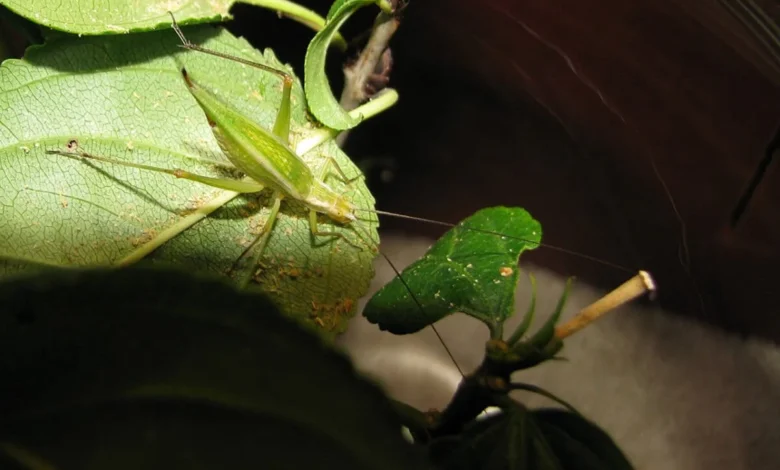
The scientific community is mourning the loss of Dr. Thomas J. Walker, a visionary entomologist whose work redefined the study of insect behavior and pioneered the digital democratization of scientific knowledge. Dr. Walker, a Professor Emeritus at the University of Florida (UF), passed away on April 8, 2026, at the age of 94. Over a career spanning more than six decades, he transitioned the field of entomology from a primary focus on preserved museum specimens to a dynamic understanding of living, breathing, and—most importantly—singing organisms. His research into the acoustic communication of crickets and katydids provided a foundational framework for modern bioacoustics, while his advocacy for open-access publishing set a precedent for the modern transparency of global research.
Early Life and the Foundations of an Observational Mind
Born in 1931 in Dyersburg, Tennessee, Thomas J. Walker was raised on a family farm during the height of the Great Depression. This environment, characterized by long hours of manual labor and constant proximity to the natural world, fostered a deep-seated attentiveness to the rhythms of the environment. While many of his peers viewed the rhythmic buzzing of the Tennessee dusk as mere background noise, Walker began to recognize these sounds as a complex series of signals.
His formal education began at the University of Tennessee, where he earned his undergraduate degree, followed by a doctorate in entomology from Ohio State University. It was during his doctoral studies that Walker began to specialize in the Orthoptera order—specifically crickets and katydids. He realized that while many species looked nearly identical under a microscope, they behaved in fundamentally different ways in the wild. This realization would eventually lead him to challenge the taxonomic status quo of the mid-20th century.
A Career Defined by Listening: The University of Florida Years
In 1957, Walker joined the faculty of the University of Florida. At the time, Gainesville was a burgeoning center for agricultural and biological research, and Walker found the diverse ecosystems of North Central Florida to be an ideal laboratory. He would remain at UF for the rest of his professional life, ascending from assistant professor to professor, and eventually continuing his research as professor emeritus long after his formal retirement.

Walker’s primary contribution to entomology was the integration of acoustics into systematics. In the 1950s and 60s, insect classification was largely morphological, based on the physical characteristics of dead specimens. Walker argued that for many insects, the "song" was a more accurate diagnostic tool than the shape of a leg or the color of a wing. He demonstrated that acoustic signals were the primary mechanism for reproductive isolation; if two insects looked the same but produced different calls, they were effectively different species because they would never mate in the wild.
One of his most cited studies involved the use of high-speed cinematography synchronized with precision sound recording to analyze how katydids produce their complex courtship calls. He discovered that the "file and scraper" mechanism on the wings of these insects was capable of producing patterns far more intricate than their simple anatomy suggested. This led to a broader scientific realization: morphology alone cannot predict function. To understand an organism, one must observe—and listen to—its performance in its natural habitat.
The Digital Frontier and the Open Access Movement
Long before the term "Open Access" became a staple of academic policy, Dr. Walker was a staunch advocate for making scientific data available to the public without barriers. In the early 1990s, as the internet began to move into the mainstream, Walker recognized its potential to revolutionize how scientific information was disseminated.
He was instrumental in moving the Florida Entomologist, the oldest regional entomological society journal in America, into the digital age. Under his guidance, the journal became one of the first in the world to offer its entire back catalog freely online. Walker believed that scientific knowledge, often funded by the public, should belong to the public.
This philosophy culminated in the creation of the "Singing Insects of North America" (SINA) website. This resource was a landmark in digital natural history, combining high-quality audio recordings, detailed distribution maps, and taxonomic data. It bridged the gap between professional entomologists and amateur naturalists, allowing anyone with an internet connection to identify a cricket or katydid by its sound. Today, SINA remains a primary reference for researchers globally, serving as a model for biodiversity databases.

Chronology of a Distinguished Career
- 1931: Born in Dyersburg, Tennessee.
- 1950s: Completes PhD at Ohio State University, focusing on insect systematics.
- 1957: Joins the University of Florida as an Assistant Professor.
- 1972: Publishes landmark research on the mechanical production of sound in katydids, utilizing high-speed filming.
- 1993: Plays a pivotal role in the establishment of the Natural Area Teaching Laboratory (NATL) at UF.
- 1994: Pioneers the transition of the Florida Entomologist journal to a free, online format.
- 2000s–2020s: Continues work as Professor Emeritus, maintaining the SINA database and mentoring new generations of bioacousticians.
- 2026: Passes away on April 8 at the age of 94.
Conservation and the Natural Area Teaching Laboratory (NATL)
Walker’s legacy is not confined to paper and digital archives; it is also etched into the physical landscape of the University of Florida. In the early 1990s, as the university faced pressure to expand its infrastructure, Walker led the effort to preserve a 60-acre tract of land on the southwest corner of the campus.
This area became the Natural Area Teaching Laboratory (NATL). Walker envisioned it as a place where students could study Florida’s diverse ecosystems—including longleaf pine uplands, wetlands, and old-field successions—without leaving campus. He spent decades overseeing its restoration, ensuring that invasive species were managed and that the area remained a viable habitat for the very insects he studied.
The NATL serves as a testament to Walker’s belief that conservation should be integrated into everyday environments. It remains one of the most utilized outdoor classrooms in the southeastern United States, providing a sanctuary for biodiversity in an increasingly urbanized region.
Scientific Recognition and Species Nomenclature
Dr. Walker’s influence is immortalized in the scientific nomenclature of the insects he loved. Nancy Collins, a prominent researcher of tree crickets, named the species Oecanthus walkeri (Walker’s tree cricket) in his honor. Found in Hidalgo County, Texas, the species serves as a permanent tribute to a man who spent his life cataloging the "unseen" inhabitants of the North American landscape.
Colleagues and former students remember Walker not for a forceful personality, but for a "quiet persistence." He was known for his willingness to share data freely, often declining co-authorship on papers for which he had provided significant data, believing that the advancement of the field was more important than personal accolades.

Analysis of Impact: Bioacoustics in the 21st Century
The implications of Walker’s work extend far beyond the niche of entomology. His insistence on using sound as a primary data point foreshadowed the current rise of "passive acoustic monitoring" (PAM) in conservation biology. Today, researchers use automated recording units to monitor the health of entire ecosystems by analyzing the "soundscape." By tracking the presence and frequency of insect calls, scientists can now detect environmental shifts, climate change impacts, and biodiversity loss in real-time.
Walker’s early work provided the baseline data necessary for these modern technologies. Without his meticulous recordings and species descriptions, modern bioacousticians would lack the "Rosetta Stone" needed to translate the cacophony of the natural world into actionable data.
Furthermore, his push for open access has become the gold standard for scientific publishing. The shift toward transparency that he championed in the 1990s is now mandated by major funding bodies like the National Institutes of Health (NIH) and the National Science Foundation (NSF).
A Final Resonance
As the sun sets over the Florida wetlands and the first rasping calls of the katydids begin, the influence of Thomas J. Walker remains audible. He did not merely study these sounds; he taught the world how to interpret them. He proved that even the most common seasonal background noise contains a wealth of biological information, provided one has the patience to listen.
Dr. Walker is survived by a global network of students, researchers, and conservationists who continue to build upon his work. His death marks the end of a foundational chapter in American entomology, but his digital and physical legacies—from the NATL trails to the SINA archives—ensure that his voice, and the voices of the insects he studied, will continue to be heard for generations to come. In an era of rapid environmental change, Walker’s life work serves as a reminder that understanding the world begins with paying attention to its smallest, most persistent signals.
Related posts: