US Firm Virtus Minerals Acquires Congolese Mining Giant Chemaf in Strategic Bid to Secure Critical Mineral Supply Chains

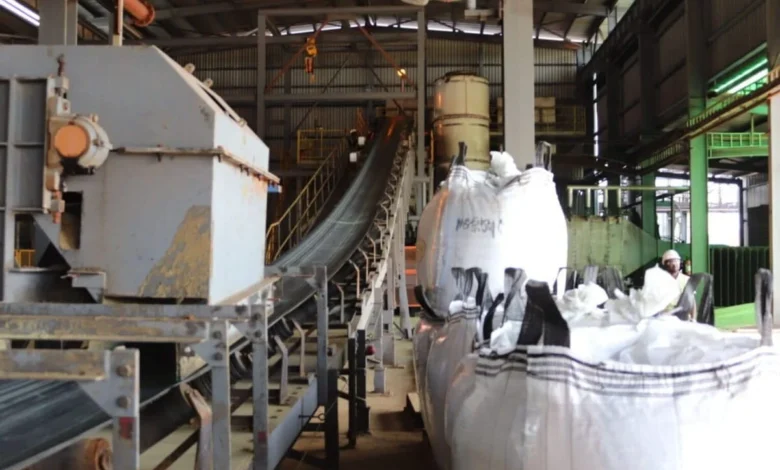
In a landmark transaction that signals a decisive shift in the global race for energy transition materials, the U.S.-based mining entity Virtus Minerals has finalized a comprehensive acquisition of Chemaf, one of the most significant copper and cobalt producers in the Democratic Republic of Congo (DRC). This deal, which includes all of Chemaf’s substantial assets in the southeastern mining heartland of the DRC, represents the first major success for the United States in its intensified efforts to challenge Chinese dominance over the critical minerals necessary for the production of electric vehicle (EV) batteries, defense technologies, and high-tech electronics. The acquisition follows months of high-stakes diplomatic maneuvering and underscores the strategic importance of the DRC, which currently produces approximately 70% of the world’s cobalt supply.
The closure of the Virtus-Chemaf deal is being viewed by industry analysts and geopolitical observers as a direct outcome of the December 2025 bilateral agreement between Washington and Kinshasa, which established a framework for American investment in the Congolese extractive sector. Reports indicate that the final stages of the negotiations were characterized by significant diplomatic pressure from the administration of U.S. President Donald Trump, who has prioritized "resource independence" and the decoupling of critical supply chains from Chinese influence. By securing Chemaf’s assets, Virtus Minerals—and by extension, the United States—now controls a portfolio that includes the Mutoshi mine, a site estimated to be capable of supplying up to 5% of the total global cobalt output.
The Geopolitical Context: Challenging the Status Quo in Central Africa
For more than two decades, Chinese state-backed firms have maintained a near-monopoly on the extraction and processing of minerals in the DRC. Companies such as CMOC Group and Zijin Mining have invested billions in infrastructure and mining concessions, creating a vertically integrated supply chain that feeds directly into China’s domestic battery manufacturing industry. The U.S. absence from this landscape has long been cited as a strategic vulnerability for Western nations transitioning toward renewable energy.
The Virtus Minerals acquisition marks a fundamental pivot in U.S. foreign policy toward the "Middle Africa" region. Rather than relying solely on diplomatic overtures, the U.S. government appears to be facilitating private-sector entries into the market through a combination of diplomatic leverage and financial guarantees. This deal is closely linked to the broader development of the Lobito Corridor—a massive U.S. and EU-backed infrastructure project aimed at connecting the African Copperbelt to the Atlantic coast via rail, thereby bypassing traditional routes that are often under Chinese influence.
Profile of Virtus Minerals and the Nature of the Deal
One of the most striking aspects of the acquisition is the profile of the acquiring firm. Virtus Minerals is a relatively new player in the global mining industry, reportedly employing only eight full-time staff members. Despite its small size, the company is led by a leadership team comprising former U.S. military and intelligence personnel, a factor that has drawn both intrigue and scrutiny. Critics, including Frederic Mousseau of the Oakland Institute, have pointed out that the company lacks a traditional track record in large-scale mining operations, suggesting that its primary value proposition may be its alignment with U.S. national security objectives rather than purely commercial mining expertise.
The financing of the deal further highlights its strategic nature. A primary financier is Orion Resource Partners, a New York-based firm that manages billions in mining-related assets. Orion recently entered into an $1.8 billion investment consortium involving ADQ—the sovereign wealth fund of Abu Dhabi—and the U.S. International Development Finance Corporation (DFC). While Orion has declined to specify the exact amount of public U.S. funding involved in the Virtus deal, the presence of the DFC in the consortium suggests a high degree of state support for the venture.
A Chronology of the Acquisition and U.S.-DRC Relations
To understand the significance of the Virtus-Chemaf deal, it is necessary to examine the timeline of events that led to this consolidation of American interests in the DRC:
- 2015: Chemaf acquires major concessions in the DRC, including the Mutoshi mine. Operations begin amidst high expectations for production but are soon shadowed by allegations of human rights abuses and community displacement.
- 2020–2023: China expands its grip on DRC cobalt, leading to a "critical mineral crisis" in Western capitals. The U.S. begins formulating the Minerals Security Partnership (MSP).
- December 2025: The U.S. and DRC sign a historic memorandum of understanding on critical minerals, providing legal and political cover for American firms to enter the Congolese market.
- January 2026: Virtus Minerals enters formal negotiations for the acquisition of Chemaf, which had been facing financial liquidity challenges and operational hurdles.
- February 2026: Following reported direct engagement between the Trump administration and President Félix Tshisekedi, the deal is finalized. Virtus announces that all minerals produced will be sold exclusively to "U.S.-aligned" buyers.
Environmental and Human Rights Concerns
While the deal is being celebrated in Washington as a victory for national security, the situation on the ground in the DRC remains fraught with tension. The Lualaba and Haut-Katanga provinces, where Chemaf’s primary mines are located, have a long and documented history of environmental degradation and social unrest.

Amnesty International has previously reported on the forced evictions associated with Chemaf’s operations. In one particularly egregious incident following Chemaf’s 2015 acquisition of certain sites, Congolese security forces were alleged to have destroyed an entire village to clear the way for mining activity after residents refused to relocate. Jean-Claude Mputu, a prominent voice for Congolese civil society, has noted that Chemaf has a history of "evading its responsibilities" regarding pollution in the urban centers of Lubumbashi and Kolwezi.
Virtus Minerals has publicly committed to "clear standards for safety, labor, and environmental performance." However, the lack of specific details regarding these standards has led to skepticism among international observers. The challenge for Virtus will be to prove that a U.S. firm can operate more ethically than the competitors it seeks to displace, especially in a region where regulatory oversight is often weak and corruption risks are high.
Economic Implications and the "U.S.-Aligned" Strategy
The decision by Virtus Minerals to sell its output exclusively to U.S.-aligned buyers is a significant departure from the traditional open-market model of mineral sales. This policy aims to create a "closed-loop" supply chain where critical materials are insulated from global market volatility and geopolitical interference.
- Supply Chain Security: By controlling 5% of the world’s cobalt, Virtus provides a buffer for U.S. automakers who have expressed concern over the "China-plus-one" sourcing strategy.
- Price Stability: Exclusive contracts could lead to more stable pricing for American manufacturers, though they may also create a two-tiered global market for cobalt and copper.
- Technological Edge: Access to high-grade Congolese copper is essential for the high-capacity wiring required in advanced AI data centers and next-generation electrical grids.
Analysis of Global Reactions and Future Outlook
The reaction to the deal has been sharply divided. U.S. policymakers, including officials from the State Department and the Department of Energy, have hailed the acquisition as a "turning point" that demonstrates American resolve in the global energy transition. They argue that American investment will bring higher ESG (Environmental, Social, and Governance) standards to the DRC, ultimately benefiting the local population through better wages and reduced environmental impact.
Conversely, some African analysts remain cautious. There are concerns that the DRC is once again becoming a theater for "Great Power Competition," where the interests of local communities are secondary to the strategic needs of Washington or Beijing. The success of Virtus Minerals will likely be measured not just by the tons of cobalt it exports, but by its ability to maintain stability in its concessions and manage the complex socio-political landscape of the Congolese Copperbelt.
Furthermore, the involvement of Abu Dhabi’s ADQ suggests a new era of "triangular diplomacy," where the U.S. partners with wealthy Gulf states to finance capital-intensive projects in Africa. This model allows the U.S. to project influence while sharing the financial risk, but it also adds another layer of complexity to the governance of the assets.
Conclusion: A New Era for African Mining
The acquisition of Chemaf by Virtus Minerals is more than a corporate takeover; it is a statement of intent. It signals that the United States is no longer content to sit on the sidelines of the African mining sector. As Virtus begins the difficult work of revitalizing the Mutoshi mine and addressing the legacy of environmental and social issues it has inherited, the world will be watching to see if the "American model" of mining can deliver on its promises of transparency and responsibility.
For the DRC, the deal represents a potential influx of Western capital and technology, but it also places the country at the center of a deepening geopolitical rift. As the global demand for critical minerals continues to surge, the Virtus-Chemaf deal may well be remembered as the opening volley in a new century of resource diplomacy, where the stakes are nothing less than the future of the global economy.
Related posts: