New York Sets National Precedent as First State to Finalize All-Electric Building Mandate to Curb Emissions and Energy Costs

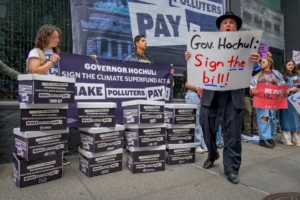
In a move that marks a significant shift in the American energy landscape, New York has officially become the first state in the nation to finalize a comprehensive mandate requiring most new buildings to be constructed entirely electric, effectively banning the installation of fossil fuel infrastructure such as natural gas hookups. The New York State Fire Prevention and Building Code Council granted its final approval to the regulations in late July 2025, solidifying a legislative journey that began with the passage of the All-Electric Buildings Act in 2023. This landmark decision aligns the state’s building codes with its aggressive climate goals, signaling a transition away from a century of reliance on combustible fuels for heating, cooling, and cooking.
The new regulations establish a phased implementation schedule designed to transition the construction industry toward zero-emission technologies. Under the finalized mandate, building permit applications for new residential structures up to seven stories tall, as well as commercial and industrial buildings under 100,000 square feet, must comply with the all-electric requirement if approved on or after December 31, 2025. Larger commercial and industrial edifices—those exceeding 100,000 square feet—have been granted a longer lead time, with a compliance deadline set for 2029. This tiered approach is intended to provide developers of complex, large-scale projects sufficient time to adapt to the new engineering and supply chain requirements.
A Chronology of New York’s Decarbonization Efforts
The path to the All-Electric Buildings Act was paved by the 2019 Climate Leadership and Community Protection Act (CLCPA), one of the most ambitious climate laws in the world. The CLCPA mandates that New York reduce its greenhouse gas emissions by 40% by 2030 and no less than 85% by 2050, compared to 1990 levels. Given that the "built environment"—the collection of residential and commercial structures—accounts for approximately 31% of the state’s total greenhouse gas emissions, state officials identified building electrification as a critical lever for meeting these statutory requirements.
Following the passage of the CLCPA, the New York State Climate Action Council released a Scoping Plan that explicitly recommended a transition to all-electric new construction. In May 2023, Governor Kathy Hochul and the State Legislature reached an agreement to include the All-Electric Buildings Act in the state budget. However, the path to finalization was not without significant legal hurdles.
In early 2024, a coalition of building and fossil fuel interest groups filed a lawsuit in the U.S. District Court for the Northern District of New York. The plaintiffs argued that the state’s mandate was preempted by the federal Energy Policy and Conservation Act (EPCA), the same legal argument that led to the overturning of a similar municipal gas ban in Berkeley, California. However, in July 2025, the court ruled in favor of New York State, asserting that the mandate focused on the infrastructure of buildings rather than the efficiency standards of individual appliances, thereby distinguishing it from the Berkeley case. This judicial victory cleared the way for the Building Code Council’s final vote in late July.
Economic Analysis and Consumer Impact
Proponents of the mandate point to a growing body of data suggesting that all-electric construction is not only environmentally necessary but also economically advantageous for residents and developers alike. According to an analysis by the New Buildings Institute, the shift toward decarbonized construction can result in immediate savings during the building phase. For instance, constructing a 100% electric single-family home can save developers between $7,500 and $8,200 compared to a traditional home that requires the installation of gas lines, meters, and specialized venting systems.
For the end-user, the long-term financial outlook is equally promising. Data compiled by Canary Media and other energy analysts indicates that all-electric homes in New York could see a reduction in energy usage of approximately 17%. Over a 30-year period, this efficiency translates to an estimated savings of nearly $5,000 per household. These savings are largely attributed to the superior efficiency of modern air-source and ground-source heat pumps, which can provide both heating and cooling using a fraction of the energy required by traditional furnaces and air conditioners.
Furthermore, the mandate is expected to insulate New Yorkers from the volatility of global fossil fuel markets. By tethering home heating and cooking to a state electrical grid that is increasingly powered by renewable sources—such as offshore wind and solar—the state aims to provide more predictable utility costs for its citizens.

Public Health and Environmental Rationale
Beyond the economic and climate-centric arguments, the transition to all-electric buildings is being framed as a public health imperative. A burgeoning field of research has linked indoor gas combustion to various respiratory issues. Gas stoves, in particular, have been found to emit nitrogen dioxide (NO2), carbon monoxide, and fine particulate matter, even when they are not in use.
Studies have suggested that children living in homes with gas stoves have a significantly higher risk of developing asthma. By eliminating combustion within the home, the All-Electric Buildings Act aims to improve indoor air quality for millions of New Yorkers. "The health, well-being, affordability, and prosperity of our communities matters more than the industry’s profits," stated Dawn Wells-Clyburn, executive director of PUSH Buffalo, following the court’s decision to allow the act to proceed.
Environmentally, the mandate addresses the "locked-in" emissions associated with new construction. Buildings constructed today are expected to stand for 50 to 100 years. By ensuring that new structures are not reliant on fossil fuels from the outset, the state avoids the future need for costly and complex retrofits as the grid moves toward 100% zero-emission electricity by 2040.
Industry Exemptions and Technical Challenges
Recognizing that certain sectors have unique energy requirements that current electric technology may struggle to meet, the All-Electric Buildings Act includes several specific exemptions. These carve-outs apply to:
- Medical Facilities: Hospitals and urgent care centers where redundant power and specific sterilization processes are required.
- Laboratories: Facilities requiring high-intensity heat for scientific research.
- Commercial Kitchens/Restaurants: Establishments that rely on specific cooking methods, though many are already beginning to transition to high-performance induction technology.
- Crematoriums and Agricultural Buildings: Structures where the industrial application of heat is central to operations.
- Emergency Backup Power: The mandate does not prohibit the use of fossil-fuel-powered generators for emergency backup systems.
Despite these exemptions, the real estate and construction industries have expressed concerns regarding the capacity of the electrical grid to handle the increased load, particularly during peak winter heating periods. In response, New York has committed billions of dollars to grid modernization and the expansion of transmission lines to bring renewable energy from upstate and offshore sources into high-demand areas like New York City.
Official Reactions and Future Legal Outlook
The finalization of the rule has drawn sharp reactions from across the political and industrial spectrum. Environmental advocates have hailed the move as a blueprint for the rest of the world. Alex Beauchamp, Northeast region director at Food & Water Watch, emphasized the grassroots effort behind the victory, stating, "When New Yorkers come together… we can win even in the face of opponents with an almost-limitless budget. That is how we won this bill."
Conversely, fossil fuel industry groups and some labor unions have voiced opposition, citing concerns over job losses in the gas utility sector and potential increases in electricity rates. Some industry groups have already petitioned the U.S. Department of Justice to intervene, arguing that the New York mandate interferes with federal energy policy. While the recent court ruling provided a green light for the state, the possibility of a challenge reaching the U.S. Supreme Court remains a point of discussion among legal scholars.
National Implications and the Road Ahead
As the first state to successfully navigate the legislative, legal, and administrative hurdles of a statewide gas ban for new construction, New York is serving as a laboratory for national policy. Other states with ambitious climate goals, including Massachusetts, Washington, and California, are closely monitoring New York’s implementation process.
The success of the All-Electric Buildings Act will ultimately depend on the state’s ability to scale its renewable energy production and maintain grid reliability. As December 31, 2025, approaches, the eyes of the nation will be on New York’s construction sites, where the traditional blue flame of natural gas is set to be replaced by the hum of the electric heat pump. This transition represents more than just a change in building codes; it is a fundamental reimagining of how modern society powers its daily life in the face of a changing climate.
Related posts: