Rare Chimpanzee Civil War in Uganda Reveals Lethal Consequences of Social Fission in Great Ape Societies

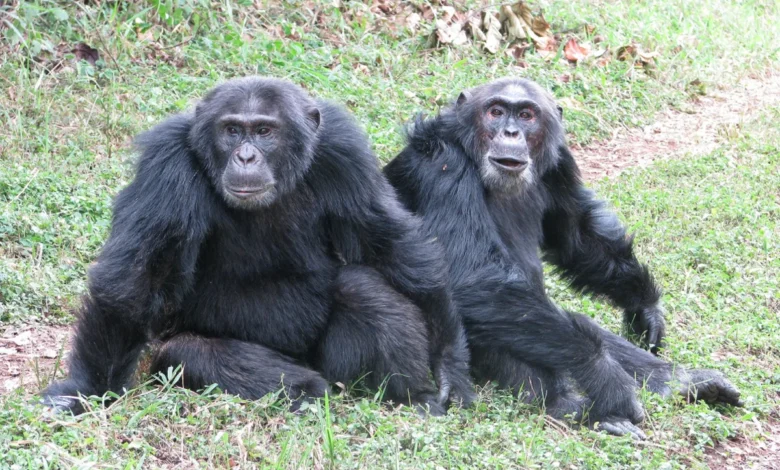
In the dense, verdant canopy of Uganda’s Kibale National Park, a decades-long peace within one of the world’s largest chimpanzee communities has dissolved into a brutal and systematic "civil war." A groundbreaking study published in the journal Science details the rise of lethal conflict within the Ngogo chimpanzee community, an event so rare that researchers estimate it may occur only once every five centuries. Led by primatologist Aaron A. Sandel of the University of Texas at Austin, the research team has documented a period of unprecedented violence where former allies, who once groomed and hunted together, have turned into mortal enemies.
The Ngogo community has long been an anomaly in the world of primatology. While most chimpanzee (Pan troglodytes) groups consist of 20 to 80 individuals, the Ngogo group was remarkably large, numbering between 150 and 200 members. This massive size was supported by the rich ecological resources of Kibale National Park, allowing the community to maintain a level of social cohesion that fascinated scientists for nearly 30 years. However, that cohesion fractured between 2015 and 2018, leading to a permanent split that has since resulted in a series of coordinated, lethal attacks.
The Chronology of a Social Collapse
The dissolution of the Ngogo community did not happen overnight. Researchers, who have maintained a presence at the site since 1995, began noticing subtle shifts in social dynamics as early as 2015. Using a combination of demographic records, social network analysis, and thousands of hours of behavioral observations, the team tracked the emergence of two distinct social clusters.
In chimpanzee society, grooming is the primary currency of friendship and political alliance. By 2015, the frequency of grooming between members of what would become the "Central" and "Western" factions began to plummet. Conversely, interactions within these burgeoning subgroups intensified. By 2016, the Western faction began conducting "territorial patrols"—a behavior usually reserved for defending the community against outside groups—along the internal boundaries of their shared territory.

The final rupture occurred in 2018. All social ties between the two factions were severed, and the forest they once shared was divided by a hard border. According to the study, the last cross-group infant was conceived in March 2015. Since then, reproduction has occurred strictly within the new group boundaries, signaling a total biological and social separation.
Between 2018 and 2024, the situation escalated from social avoidance to active warfare. The Western group launched at least 24 targeted attacks against the Central group. These were not random acts of aggression but coordinated raids that resulted in the deaths of at least seven adult males and 17 infants. The violence remains an ongoing concern, with the Central group currently facing a "dramatic increase in mortality," according to Sandel.
Statistical Analysis of the Conflict
The sheer scale of the violence at Ngogo has shocked the scientific community. To put the deaths into perspective, researchers calculated the mortality rate for the Central group during the height of the conflict. The data revealed a staggering death rate equivalent to 3,376 per 100,000 individuals per year.
When compared to the median rate of intergroup aggression in other chimpanzee populations—which typically hovers around 100 per 100,000—the Ngogo "civil war" is more than 30 times more lethal than standard chimpanzee conflict. This level of violence suggests that when a large society fractures from within, the resulting "civil" conflict is far more devastating than the routine skirmishes between established, unrelated groups.
The study highlights a chilling aspect of primate psychology: the ability to reclassify a former "friend" as an "enemy" based solely on new group affiliation. The attackers and victims were individuals who had spent years feeding, traveling, and protecting one another. The researchers noted that the Western chimps appeared to use their intimate knowledge of their former allies’ habits and weaknesses to carry out more effective and lethal raids.

The Relational Dynamics Hypothesis
The underlying cause of this social catastrophe is a subject of intense debate among experts. Sandel and his colleagues propose the "relational dynamics hypothesis." This theory suggests that shifts in individual relationships within a complex social network can reach a tipping point where the network can no longer sustain itself as a single unit.
As the Ngogo group grew to an unprecedented size, the "social tax" required to maintain bonds with 200 other individuals may have become too high. In this view, the split was a structural necessity of a group that had simply become too large to function. Once the social network divided, new group identities emerged with startling speed, and the "us versus them" mentality that fuels collective violence took hold.
However, other experts suggest that ecological factors cannot be ignored. Michael L. Wilson, a primatologist at the University of Minnesota who was not involved in the study, noted that while social shifts are evident, they may be symptoms of deeper pressures. Wilson suggested that competition over high-quality fruit patches or strategic territory might have been the catalyst that drove the factions apart. If food became slightly scarcer or if one faction felt it could secure better resources by excluding the other, the social bonds would naturally begin to fray.
Historical Precedent and the Gombe Comparison
The Ngogo conflict is only the second time in recorded history that humans have witnessed such a community-wide fission followed by lethal warfare. The first was the famous "Four-Year War" at Gombe National Park in Tanzania during the 1970s, documented by Dr. Jane Goodall.
In the Gombe conflict, the Kasakela community split into two, and the northern faction systematically hunted down and killed every male in the southern Kahama faction. At the time, Goodall’s reports were met with skepticism by some who believed human interference—specifically the provision of bananas to the chimps—had caused the unnatural aggression.

The Ngogo study provides crucial validation for Goodall’s earlier observations. Unlike the Gombe chimps of the 1970s, the Ngogo chimpanzees live in a largely undisturbed forest environment and are not provisioned with food by researchers. The fact that a similar "civil war" has emerged in a pristine, protected environment suggests that lethal group fission is a natural, albeit rare, part of chimpanzee social evolution.
Conservation and Human Impact
The violence at Ngogo is not occurring in a vacuum. Chimpanzees are currently listed as endangered on the IUCN Red List, facing threats from habitat loss, poaching, and disease. The loss of 24 individuals in a single community due to internal conflict is a significant blow to the local population’s genetic diversity and long-term viability.
Furthermore, the Ngogo chimps face external pressures from their proximity to humans. In 2017, just as the social split was hardening, a human-borne respiratory epidemic swept through the community, killing 25 chimpanzees. This underscores the fragility of these populations. In response, the Uganda Wildlife Authority and the Ngogo research team have implemented some of the world’s strictest health protocols, including a mandatory seven-day quarantine for any researcher or staff member entering the forest.
These measures have proven effective; Sandel reports a noticeable drop in viral loads among the chimps since the quarantine was established. However, the combination of internal warfare and external disease creates a precarious situation for the survivors of the Ngogo split.
Broader Implications for Social Science
The Ngogo "civil war" offers more than just a glimpse into primate behavior; it provides a mirror for understanding the roots of collective violence in all social species, including humans. The study demonstrates how easily social boundaries can be redrawn and how quickly long-standing cooperation can be replaced by lethal competition once a group’s identity is fractured.

"Our study is just the beginning," Sandel said, emphasizing the need for new statistical models to identify "keystone individuals" whose presence or absence might prevent such fissions. By understanding what holds a society together, researchers hope to better understand what causes it to fall apart.
As the conflict continues to unfold in the forests of Uganda, the international scientific community remains watchful. The next 30 years of data from Ngogo may reveal whether the Central group can survive the onslaught of their former brothers or if, like the Kahama group of Gombe, they are destined to be erased by the very individuals they once called family. For now, the "civil war" stands as a stark reminder of the complex and often violent nature of high-level social organization in the animal kingdom.
Related posts: