The Cynics Are Making Me Cynical: A Deep Dive into the Enduring History of Vaccine Opposition

Dr. Stanley Plotkin, at 93 years old, a towering figure instrumental in the development of numerous life-saving vaccines, recently voiced a profound lament: he is "beginning to regret having lived so long—because we’re going downhill." This poignant statement from the "Godfather of Vaccines" underscores a growing concern among public health experts regarding the resurgence of vaccine skepticism and outright opposition. The question arises: how did we reach this point, where foundational medical advancements are met with such widespread distrust? Perhaps, as new scholarship suggests, the seeds of this skepticism have always been present, merely evolving in their expression across centuries.
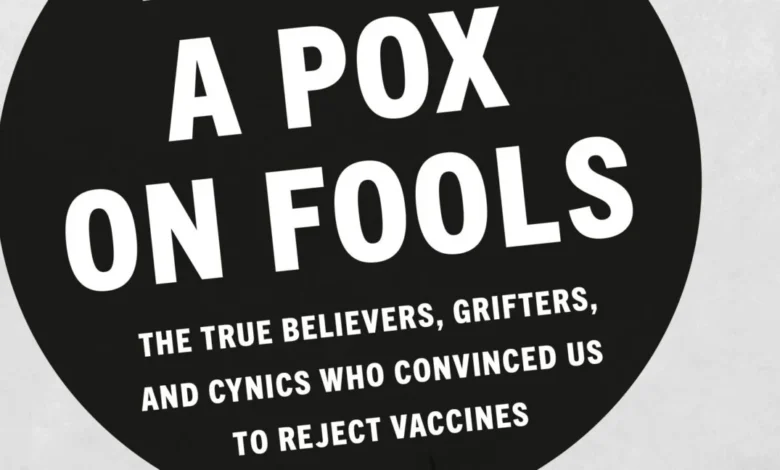
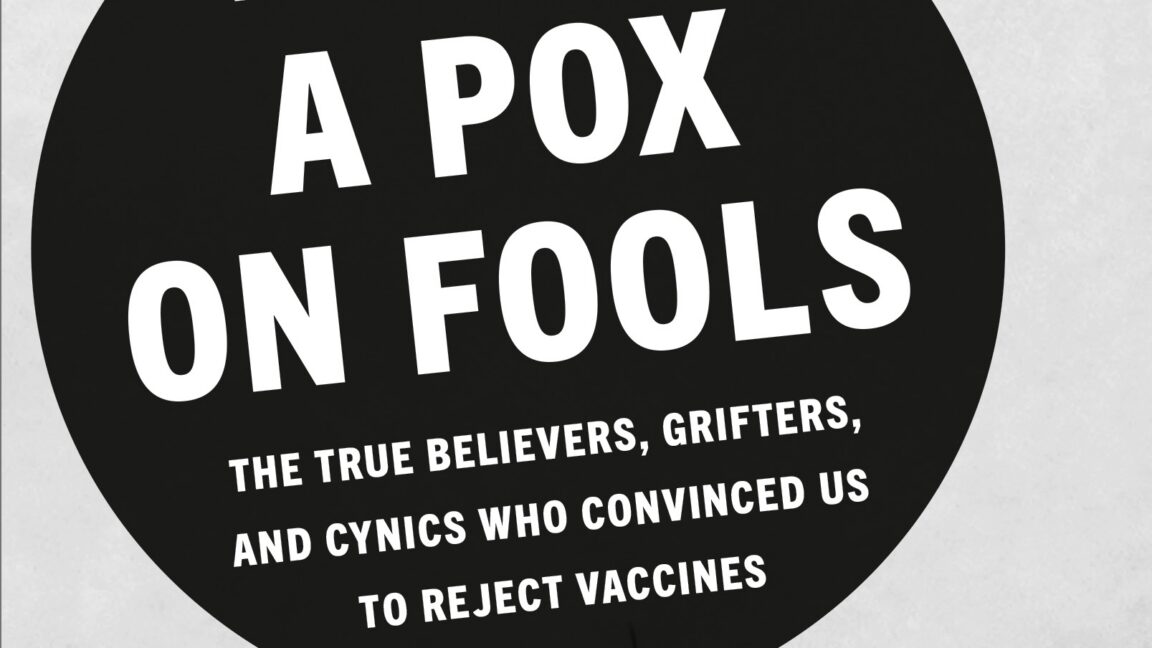
Thomas Levenson, in his compelling new book A Pox on Fools, meticulously dissects the historical roots of anti-vaccine sentiment, categorizing its proponents as "The True Believers, Grifters, and Cynics Who Convinced Us to Reject Vaccines." Levenson’s analysis, as explored in a recent review, reveals that the core arguments against vaccines are not novel inventions of the digital age but echoes of objections raised since the very inception of vaccination. These arguments, irrespective of their specific phrasing, fundamentally assert that vaccines are either wrong, bad, or intolerable, each representing a distinct challenge to public health.
A Historical Tapestry of Resistance: From Variolation to Vaccination
To fully grasp the enduring nature of vaccine opposition, it is crucial to understand the historical context in which these arguments first emerged. The concept of inoculation, a precursor to modern vaccination, predates Western scientific discovery. For centuries, practices akin to variolation—deliberately infecting individuals with a mild form of smallpox to confer immunity—were observed in various cultures, including those in China, India, and parts of Africa and the Ottoman Empire.
In the early 18th century, these practices made their way to Western consciousness. Lady Mary Wortley Montagu, an English aristocrat, observed variolation in Constantinople and championed its introduction to England in 1721. Simultaneously, in Boston, Cotton Mather, a prominent Puritan minister, learned about the technique from Onesimus, an enslaved African man who had been variolated in Africa. Amidst a devastating smallpox epidemic, Montagu and Mather initiated inoculation campaigns in their respective cities, marking a pivotal moment in preventive medicine.
Smallpox was, at this time, a pervasive and terrifying scourge. Infectious diseases were the primary cause of death, claiming an immense toll, particularly among the young. In the 19th century, it was not uncommon for roughly 40 percent of children to die from infection before reaching their fifth birthday. This grim reality dramatically lowered the average life expectancy, not because adults universally died young, but because the staggering infant and child mortality rates skewed the overall average. Those who survived childhood often lived into old age, but the gauntlet of early life diseases was a constant threat.
Despite the clear and present danger of smallpox, variolation was met with immediate and fierce resistance. The backlash was multifaceted, encompassing moral, religious, and philosophical objections that would later evolve into the core arguments against modern vaccines.
The "Wrong" Argument: Defying Divine Will and Natural Order
The earliest and perhaps most deeply ingrained argument against inoculation was that it constituted a morally and religiously "wrong" interference with divine providence. Critics claimed that only God had the authority to determine who would sicken and die, and who would be spared. To intervene in this divine ordination was deemed an act of hubris and blasphemy, an attempt to thwart God’s will. Levenson highlights the implicit subtext of this attitude: that contracting a highly infectious disease was often seen as divine punishment for sin, and therefore, the only legitimate path to health was a virtuous life.
As society progressed and scientific understanding began to challenge purely theological explanations for natural phenomena, the "divine will" argument gradually morphed. By the mid-19th century, with the rise of movements like Transcendentalism and Romanticism, "nature" often replaced "God" as the sacred principle not to be transgressed. The core argument, however, remained largely unchanged: vaccines were an affront to the "natural" world, and a lifestyle of "clean living"—eating pure foods, exercising, and avoiding artificial interventions—was presented as the sole, sufficient pathway to health.
This argument persists today, underpinning many modern wellness movements that advocate for "natural immunity" over vaccination. While it is undeniable that advancements in public hygiene and sanitation during the 19th and early 20th centuries significantly curbed the spread of many infections and contributed to increased lifespans, these measures do not provide the specific immunological protection offered by vaccines against individual pathogens. Relying solely on "clean living" ignores vast swaths of human history and the fundamental principles of microbiology and immunology. Yet, this narrative holds powerful allure, particularly in a complex modern world, and resonates deeply with those who romanticize a bygone era, often forgetting the pervasive suffering and child mortality that characterized pre-vaccine life.
The "Bad" Argument: Debunking Claims of Harm and Inefficacy
The second major category of anti-vaccine arguments asserts that vaccines are not only unnecessary but actively harmful—often more harmful than the diseases they are designed to prevent. This claim, vociferously championed by figures like Robert F. Kennedy Jr. and his allies, leverages the immediate, tangible, albeit minor, side effects of vaccination (a brief sting, a sore arm, a mild fever) against the invisible, often forgotten, specter of disease. The stark success of vaccines in eradicating or dramatically reducing infectious diseases means that many people alive today have never witnessed the devastating impact of polio, measles, diphtheria, or smallpox firsthand. This absence of suffering, taken for granted, makes it easier for claims of vaccine harm to gain traction.
Historically, this argument also emerged early, when scientific understanding was nascent and empirical data was limited. It is important to acknowledge that the early history of vaccine development and administration was not without tragic missteps, including issues with vaccine purity, potency, and administration techniques. These genuine historical failings, though long since addressed by rigorous scientific and regulatory frameworks, are often exploited by modern anti-vaccine proponents to sow doubt about current vaccines.
However, after 300 years of scientific advancement, clinical trials, and population-level data, the overwhelming consensus is that vaccines are remarkably safe and effective. Organizations like the Centers for Disease Control and Prevention (CDC) and the World Health Organization (WHO) consistently provide data demonstrating dramatic reductions in disease incidence and mortality following vaccine introduction. For example, before the measles vaccine, nearly all children got measles, and hundreds died annually in the U.S. alone. Today, measles is rare thanks to vaccination. Similarly, polio, which once paralyzed thousands of children each year, has been virtually eliminated globally due to widespread vaccination efforts.
While no medical intervention is entirely risk-free—a point readily conceded by public health authorities—the risks associated with vaccines are overwhelmingly minor and transient compared to the severe, often life-threatening risks of contracting the diseases they prevent. Claims linking vaccines to autism, for instance, have been thoroughly debunked by extensive scientific research across multiple continents, revealing the original study to be fraudulent. Furthermore, while certain vaccines may not be safe for specific subsets of the population (e.g., infants, the elderly, or the immunocompromised), this fact is not an argument against vaccination for healthy individuals. On the contrary, it forms the precise rationale for why healthy people should get vaccinated: to establish "herd immunity," which protects vulnerable individuals who cannot receive vaccines themselves by reducing the overall circulation of pathogens in the community.
The "Intolerable" Argument: Navigating Liberty and Collective Responsibility
The final category of anti-vaccine sentiment transcends biological and efficacy debates, delving into a visceral, philosophical realm: opposition to vaccine mandates. This argument is fundamentally about individual liberty versus collective responsibility, a perennial tension in democratic societies concerning the extent to which government can compel individual actions for the greater good.
The legal bedrock for public health mandates in the United States was established in the landmark 1905 Supreme Court case, Jacobson v. Massachusetts. During a smallpox epidemic in 1901, the cities of Boston and Cambridge enacted vaccine mandates. Henning Jacobson, a pastor, refused vaccination, arguing that "a compulsory vaccination law is… hostile to the inherent right of every freeman to care for his own body and health in such way as to him seems best."
The Supreme Court, however, ruled against Jacobson, affirming that individual liberties are not absolute. Associate Justice John Marshall Harlan, writing for the majority, articulated a foundational principle: "Liberty itself, the greatest of all rights, is not unrestricted license to act according to one’s own will. It is only freedom from restraint under conditions essential to the equal enjoyment of the same right by others." While the concept of herd immunity was not fully developed or explicitly named in 1905, the Court’s decision implicitly relied on germ theory: refusing vaccination endangers those around you. Therefore, an individual’s liberty of bodily autonomy must be limited when its exercise infringes upon the collective right to health and, potentially, life itself.
This argument resurfaced with particular intensity during the COVID-19 pandemic, as vaccine mandates were implemented for various sectors, from healthcare workers to school children. For those who fervently believe "the government can’t tell me what to inject into my kid," factual data on vaccine efficacy and safety often fail as counterarguments. The only potential avenue to sway such deeply held philosophical convictions is an appeal to solidarity—to the fundamental obligations every member of society has to one another, and to the necessary sacrifices individuals must make to ensure the safety and well-being of the collective. Unfortunately, as Levenson notes, that sense of solidarity appears to be at a nadir in many contemporary societies, particularly in the United States.
The Modern Confluence: Misinformation, Polarization, and Health Crises
While these three categories of arguments have been present throughout vaccine history, two critical differences distinguish the current landscape. Firstly, 300 years ago, individuals questioning vaccine efficacy or safety could be excused for their skepticism given the limited scientific understanding and data. Today, however, we possess a sophisticated understanding of germ theory, immunology, and virology, coupled with centuries of robust data unequivocally demonstrating how infection and death rates plummet once a vaccine is introduced against a particular pathogen. We know better. The continued propagation of anti-vaccine narratives in the face of overwhelming scientific evidence constitutes willful ignorance or deliberate deception.
Secondly, and perhaps most alarmingly, anti-vaccine arguments have become increasingly intertwined with political identity. Levenson points out that in the U.S. from 2021 onward, "being a Republican has become a measurable risk factor for illness and death." This politicization of public health has dire consequences, leading to observable disparities in vaccination rates and health outcomes along partisan lines. The weaponization of public health issues for political gain not only undermines collective health but also erodes trust in vital institutions, including science, medicine, and government.
The implications of this modern confluence are profound. We are witnessing the resurgence of vaccine-preventable diseases like measles in communities with low vaccination rates. Public health resources are diverted to combat preventable outbreaks, straining healthcare systems. The spread of misinformation, amplified by social media algorithms and echo chambers, creates a fractured public understanding of scientific facts, making effective public health messaging increasingly challenging. The economic costs associated with preventable illnesses, including lost productivity and healthcare expenditures, further burden societies.
The Path Forward: Rebuilding Trust and Reinforcing Public Health
Thomas Levenson, an accomplished science writer and director of MIT’s Graduate Program in Science Writing, navigates this incendiary topic with clarity, conciseness, and an effective blend of statistics and compelling anecdotes. His measured tone, devoid of anger or ranting, underscores the gravity of the situation and the anguish he feels that "Robert F. Kennedy Jr.’s lies and policies will cause kids to needlessly be sickened by and die from diseases we have the tools to prevent."
The path forward requires a multi-pronged approach: robust science communication that translates complex information into accessible narratives, efforts to combat misinformation effectively, and a renewed emphasis on civic education that highlights the symbiotic relationship between individual liberty and collective responsibility. Rebuilding public trust in scientific institutions and fostering a sense of shared community obligation are paramount. The lament of Dr. Stanley Plotkin serves as a powerful reminder that the gains of modern medicine are not irreversible; they require constant vigilance, scientific literacy, and a commitment to protecting the health of all.