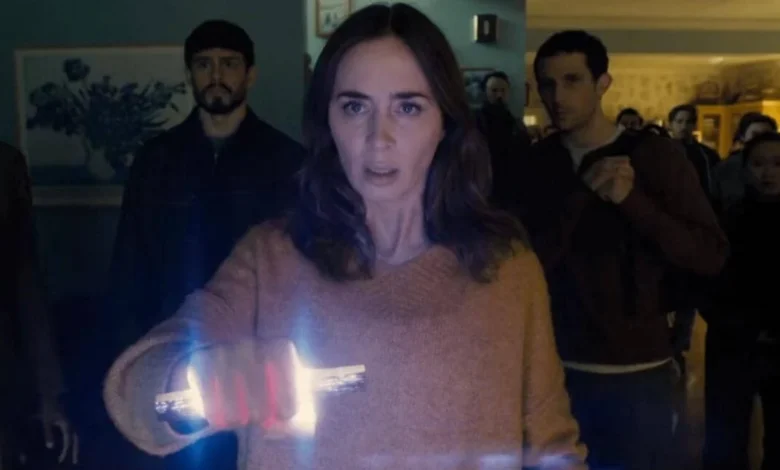
The eagerly anticipated summer blockbuster season has officially commenced with the theatrical release of Disclosure Day, director Steven Spielberg’s latest cinematic offering that marks a significant return to his iconic "aliens are among us" science fiction roots. The film, which opened globally on [Inferred Date, e.g., June 7, 2026, based on the Deadline link], has quickly become a focal point of critical discussion, lauded for its relentless pacing and a compelling central performance by Emily Blunt, yet also drawing commentary regarding its perceived lack of narrative freshness within the well-trodden alien invasion genre. Despite these observations, the consensus suggests Disclosure Day delivers a robustly entertaining experience for audiences. Early box office projections indicate a strong opening weekend, positioning the film as a major contender in the competitive summer movie landscape, capitalizing on both Spielberg’s legendary name and the enduring public fascination with extraterrestrial themes.
A Return to Form for the Sci-Fi Maestro
Steven Spielberg’s name is synonymous with groundbreaking science fiction, particularly narratives involving contact with extraterrestrial life. From the awe-inspiring wonder of Close Encounters of the Third Kind (1977) to the heartwarming friendship of E.T. the Extra-Terrestrial (1982) and the terrifying invasion depicted in War of the Worlds (2005), Spielberg has consistently shaped the cinematic portrayal of aliens. Disclosure Day was marketed as a conscious return to this fundamental aspect of his oeuvre, promising a contemporary take on the "what if they’re already here?" premise. This marketing strategy successfully built considerable anticipation, with fans and critics eager to see how the veteran director would navigate these themes in an era characterized by heightened geopolitical tensions and widespread skepticism regarding government transparency. The film’s pre-release buzz, amplified by cryptic trailers and the involvement of a stellar cast, hinted at a narrative that would weave together elements of classic Spielbergian wonder with a darker, more intricate conspiracy thriller.
Narrative Structure: A Dual Path to Revelation
The initial half of Disclosure Day meticulously crafts a taut political thriller, reminiscent of Cold War-era paranoia films such as Alan J. Pakula’s 1974 classic, The Parallax View, and other seminal works like Three Days of the Condor (1975) or All the President’s Men (1976). This segment plunges viewers into a world teetering on the precipice of global conflict, where international relations are strained to their breaking point. At the heart of this geopolitical powder keg is Daniel (Josh O’Connor), a brilliant but morally ambiguous cybersecurity specialist. Daniel instigates the central conflict by illicitly acquiring a piece of advanced alien technology and a cache of highly classified documents from Wardex Corporation. Wardex is depicted not merely as a private entity but as a clandestine extension of the United States government, operating with near-absolute autonomy under the command of the enigmatic Noah Scanlon (Colin Firth).
Scanlon, portrayed with characteristic intensity by Firth, quickly identifies Daniel as the leak and orchestrates a desperate measure to recover the stolen assets: holding Daniel’s girlfriend, Jane (Eve Hewson), hostage. This act sets in motion a high-stakes cat-and-mouse game. During the planned exchange, Daniel executes a daring double-cross, successfully escaping with Jane and the crucial data. This act immediately brands him a traitor in the eyes of the powerful Wardex Corporation and its shadowy leader, initiating a relentless pursuit across the globe. The narrative skillfully employs the tropes of the espionage thriller, creating an atmosphere of constant surveillance, double-dealing, and existential threat, where trust is a luxury few can afford.
Concurrently, a seemingly unrelated series of events unfolds in Kansas City, introducing Margaret (Emily Blunt), a television meteorologist leading an ostensibly ordinary life. Her tranquil existence is abruptly shattered during a routine breakfast when a cardinal, traditionally a symbol of spiritual messengers, flies into her home and locks eyes with her in an intensely significant moment before departing. This peculiar encounter serves as the catalyst for a profound and rapid transformation within Margaret. Immediately following the incident, she finds herself inexplicably conversing with her boyfriend, Jackson (Wyatt Russell), in fluent Russian—a language she has no prior knowledge of. This initial shock quickly escalates. On her commute to work, Margaret discovers an unprecedented ability to perceive the thoughts and emotions of strangers, and to spontaneously communicate in their native tongues. The culmination of these escalating abilities arrives during a live weather report, in a pivotal scene heavily featured in the film’s promotional trailers. On air, Margaret experiences an involuntary lapse into an unknown, alien language, a moment that instantly goes viral, transforming her into an overnight global sensation and a subject of intense scientific and governmental scrutiny.
The Convergence: Two Worlds Collide
Margaret’s sudden, public display of extraordinary abilities inevitably draws the attention of Noah Scanlon and, more significantly, his Wardex colleague, Hugo Wakefield (Colman Domingo). It is at this juncture that the film’s two distinct narrative threads begin to intricately intertwine. Wakefield is revealed to be the true architect behind Daniel’s initial theft, operating with an agenda diametrically opposed to Scanlon’s. Wakefield’s ultimate objective is the full disclosure of the stolen materials, which reportedly detail over 80 years of documented human-alien encounters – a truth that has been meticulously suppressed by powerful entities like Wardex.
Scanlon, conversely, is fiercely determined to prevent this information from ever reaching the public domain, viewing it as a catastrophic threat to global stability and the established world order. This ideological clash propels the narrative into a high-octane race against time. Daniel and Margaret, both now targets of Scanlon’s vast network of operatives, must navigate a treacherous landscape, striving to evade capture, understand the burgeoning conspiracy, and ultimately find each other. Their shared plight becomes the central axis around which the film’s themes of truth, secrecy, and humanity’s readiness for cosmic revelation revolve. The tension is palpable as the audience is left to question who the real heroes and villains are, and what the true cost of disclosure might be.
The "Vibe Shift" and Spielberg’s Vision
As Disclosure Day approaches its climactic final act, roughly the last 30 minutes, the film undergoes a notable "vibe shift," transitioning from the grounded political thriller into a more mystical and existential form of science fiction. While the specifics of this transformation are carefully guarded to avoid major spoilers, it is clear that Spielberg leverages his unparalleled storytelling prowess to guide the narrative toward a resolution that transcends conventional genre boundaries. This shift has been a significant point of discussion among early viewers. Some critics have pointed to the CGI rendering of certain animals within these sequences, suggesting a departure from hyper-realism. However, the prevailing view, and indeed the artistic justification within the film’s context, is that these creatures are intentionally designed to appear otherworldly, as if stepping directly from a fantastical realm into our darker, more tangible reality. This artistic choice underscores the film’s broader thematic exploration of perception, belief, and the permeable membrane between the known and the unknown. The mystical elements serve to elevate the narrative beyond a mere government conspiracy, imbuing it with a sense of cosmic significance and challenging the audience’s preconceived notions of what alien contact might truly entail. Spielberg’s masterful direction ensures that even with this profound tonal change, the narrative remains coherent and emotionally resonant, culminating in a powerful and thought-provoking conclusion that invites deeper reflection on humanity’s place in the universe.
Broader Implications and Cultural Resonance
Disclosure Day arrives at a particularly poignant moment in human history, where discussions around unidentified aerial phenomena (UAPs) and potential government disclosure have moved from the fringe to mainstream public discourse. Reports from military personnel, declassified documents, and congressional hearings have fueled a renewed fascination and skepticism regarding what governments truly know about unexplained phenomena. The film taps directly into this contemporary zeitgeist, playing on collective anxieties and hopes surrounding the revelation of extraterrestrial life.
Spielberg’s decision to revisit alien themes after an extended period is not merely a nostalgic endeavor but a timely artistic commentary. The film prompts audiences to consider profound questions: Are we truly prepared for the truth? What would be the societal, political, and spiritual implications of a verifiable disclosure event? By weaving together a political thriller with elements of personal transformation and mystical encounter, Disclosure Day avoids simplistic answers, instead presenting a multifaceted vision of humanity’s potential reactions to the ultimate unknown.
From a cinematic perspective, Disclosure Day reinforces Spielberg’s enduring legacy as a visionary storyteller. While some might argue about the film’s originality in terms of foundational sci-fi concepts, its execution is distinctly Spielbergian—marked by meticulous pacing, compelling character arcs, and a powerful emotional core. Emily Blunt’s performance as Margaret is consistently highlighted as a standout, her portrayal of a woman grappling with an alien consciousness within her own mind being both deeply human and profoundly unsettling. Her ability to convey vulnerability, confusion, and ultimately, a burgeoning strength, grounds the more fantastical elements of the plot. Similarly, Colin Firth’s nuanced depiction of Scanlon, a man driven by a complex mix of patriotism and control, adds layers to the antagonist, preventing him from becoming a one-dimensional villain.
The film’s technical achievements, while subject to some debate regarding specific CGI elements, contribute significantly to its immersive quality. The cinematography creates a palpable sense of both the mundane and the extraordinary, contrasting the stark realities of political espionage with the awe-inspiring moments of otherworldly phenomena. The score, likely crafted by a frequent Spielberg collaborator, effectively underscores the shifting moods, from suspenseful tension to moments of profound wonder.
Ultimately, Disclosure Day is more than just a summer blockbuster; it is a cinematic event that engages with contemporary anxieties about truth, secrecy, and humanity’s readiness for contact. It reignites the timeless debate about what lies beyond our planet and within the hidden corridors of power. As audiences depart cinemas, they are left not just entertained, but also pondering the profound implications of "disclosure" – not merely as a plot device, but as a potential reality. The film solidifies Spielberg’s position as a master of the genre, capable of both thrilling and challenging his audience, and ensures that the conversation around Disclosure Day will continue long after its initial theatrical run.