The 2026 Formula 1 season has provided a fascinating study in contrasts, highlighting the serene, highly technical dominance at the front of the grid alongside the chaotic, bruising survival battles that routinely characterize the rear guard. Nowhere was this dichotomy more starkly illustrated than at the Circuit of The Americas during the United States Grand Prix. While Mercedes AMG Petronas rising star Kimi Antonelli cruised to a controlled, masterclass victory to move to the precipice of his maiden world drivers’ championship, the lower reaches of the race classification were embroiled in friction, frustration, and fiery post-race recriminations.
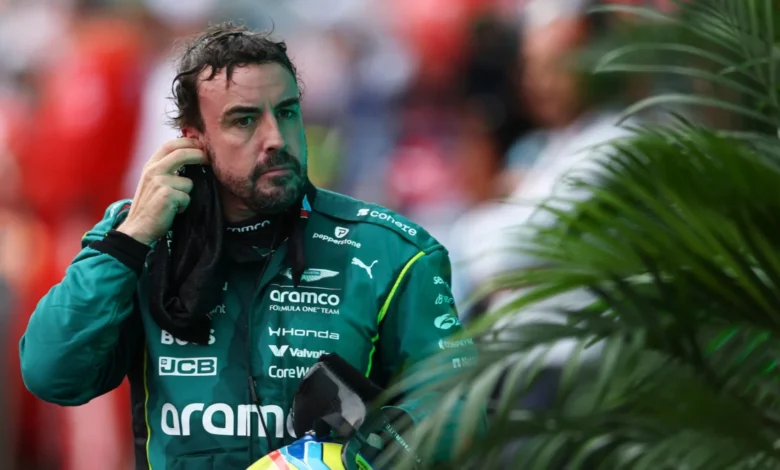
For 45-year-old Aston Martin veteran Fernando Alonso, a weekend that held modest ambitions dissolved into an exercise in damage control, culminating in a blistering verbal assault on the racing standards of his fellow competitors. Following a first-lap collision that effectively ruined his race—and that of Williams driver Alex Albon—the two-time world champion did not mince words when assessing the capabilities of drivers navigating the lower third of the grid. Alonso’s sharp critique has reignited a perennial debate within the motorsport community regarding driving standards, the widening performance delta between top-tier and backmarker machinery, and the unique perils faced by veterans trapped in uncompetitive equipment.
The Catalyst: Turn 11 Chaos at the Circuit of The Americas
The incident that triggered Alonso’s tirade occurred almost immediately after the lights went out at the Circuit of The Americas. As the tightly packed field funneled toward the heavy braking zone of the circuit’s notoriously tight Turn 11 left-hander on the opening lap, Williams driver Alex Albon attempted an aggressive, opportunistic maneuver up the inside of the Aston Martin.
With a Haas machine positioned tightly to Alonso’s outside, the Spanish veteran found himself completely boxed in, devoid of any viable space to execute an evasive maneuver. Albon’s Williams clipped the side of the Aston Martin, ripping away the left-side bargeboard of Alonso’s car and concurrently sustaining heavy damage to his own front wing.
The contact instantly crippled the aerodynamic efficiency and balance of both machines. What could have been an exploratory opening lap turned into a marathon of defensive driving and pit-lane interventions. Neither driver was able to recover any meaningful ground, ultimately limping across the finish line with Alonso classified 16th and Albon trailing closely behind in 17th.
Speaking to reporters after the race, Alonso expressed profound exasperation not just with the specific racing incident, but with what he perceives as a systemic deficiency in racecraft among the sport’s younger or less experienced backmarkers.
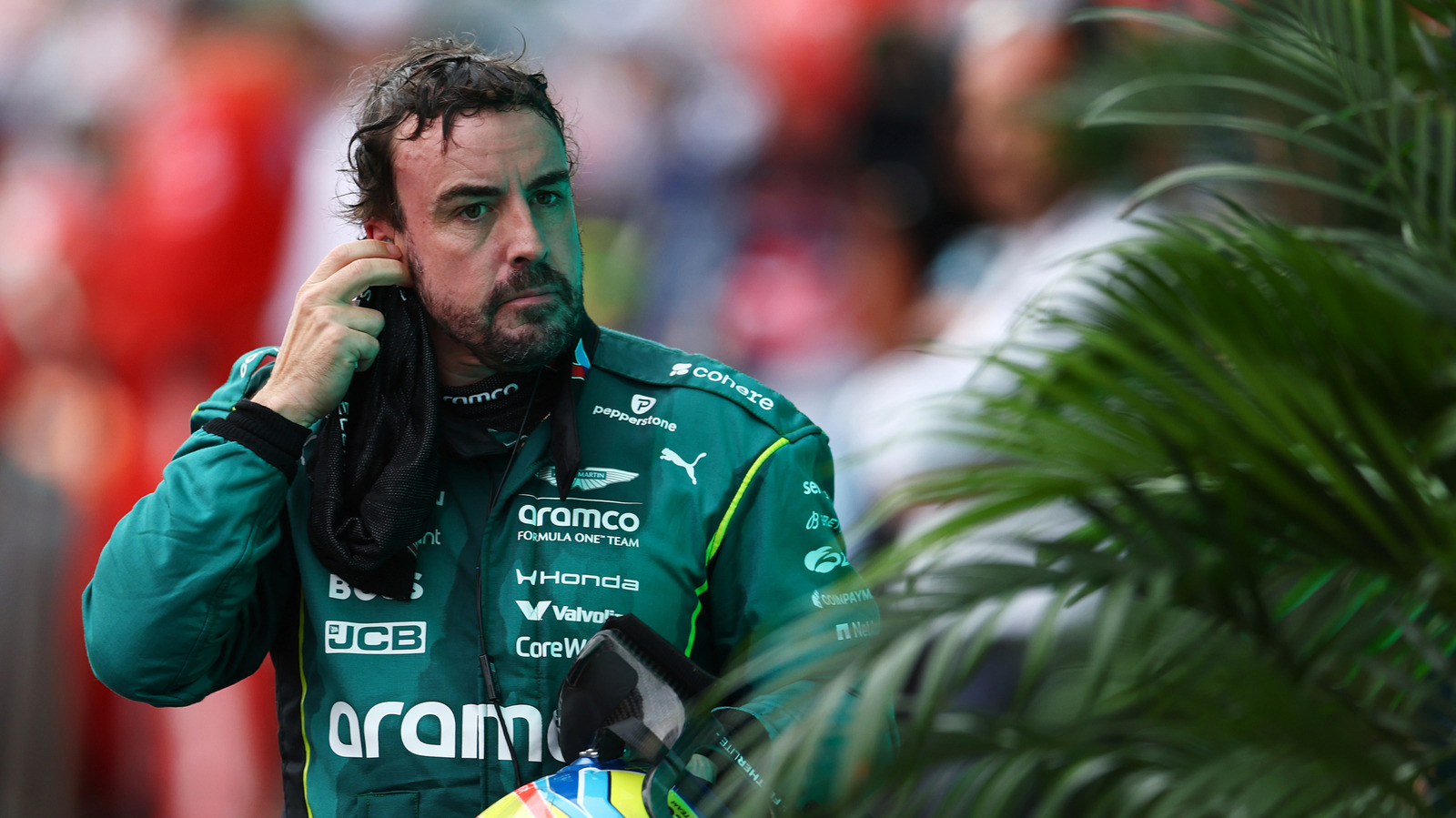
"I think the quality of the drivers in the lower third of the grid is very low, as we saw today with Alex," Alonso stated bluntly in media debriefs covered by The Race. The veteran driver, whose illustrious career spans over two decades, added a stark internal assessment of his own team’s current standing: "So I think we need to improve the car and start a little bit higher up."
A Quarter-Century Arc: From Indianapolis to Austin
Alonso’s current predicament carries a profound sense of historical irony. Over two decades ago, during the 2001 Formula 1 season, a fresh-faced Alonso made his United States Grand Prix debut with the struggling Minardi outfit, failing to finish the race when his car suffered a mechanical breakdown midway through the event at the Indianapolis Motor Speedway.
Fast forward twenty-five years, and the Spaniard finds himself once again battling at the very back of the grid. Despite prolonged periods of competitiveness with Aston Martin since his high-profile return to the sport, technical limitations and developmental stagnation have frequently forced the green machines into the lower tiers of the classification. Having secured points in only three Grands Prix over the course of the 2006-stretching campaign, Alonso’s frustration is rooted in a fundamental mismatch between his driving pedigree and the machinery at his disposal.
To understand Alonso’s frustration, one must examine the stratification of a modern Formula 1 race. The grid can generally be segregated into three distinct operational tiers:
- The Front-Runners: Comprising championship contenders who sprint away from the pack early, engaging in calculated strategic and wheel-to-wheel duels largely uninterrupted by traffic.
- The Midfield Battle: Best described as a relentless, high-speed bar brawl, particularly behind tenth place—the final points-scoring position. This zone is characterized by aggressive DRS trains, tactical defensive driving, and razor-thin margins for error.
- The Back-Markers: Operating almost in a separate race of their own, where teams struggle with fundamental aerodynamic deficits, tire degradation issues, and reliability vulnerabilities. Drivers here are often forced to take excessive risks on opening laps to make up ground, amplifying the likelihood of precisely the kind of clumsy contact Alonso experienced with Albon.
Meanwhile, at the Front: Antonelli Inches Toward History
While Alonso and Albon fought for scraps at the tail end of the field, the race at the front of the grid provided a masterclass in precision engineering and driver execution. The United States Grand Prix presented Mercedes prodigy Andrea Kimi Antonelli with his first mathematical opportunity to clinch the Formula 1 World Drivers’ Championship.
Although securing the title in Texas was always a statistical long shot—requiring disastrous weekends from both his Mercedes teammate George Russell and Ferrari’s veteran charger Lewis Hamilton—Antonelli executed his weekend to absolute perfection. The young Italian secured pole position during Saturday qualifying, launched brilliantly when the race commenced, and maintained absolute control of the race from the front, never relinquishing his lead.
While Antonelli’s victory was comprehensive, the broader championship picture remains mathematically alive. Solid points finishes by both Russell and Hamilton ensured that the title fight extends to the upcoming round in Mexico City. Heading to Autódromo Hermanos Rodríguez, Antonelli’s path to immortality is straightforward: he needs merely to finish ninth or higher to secure his maiden world championship, capping off an astonishingly rapid ascension to the pinnacle of motorsport.
Ferrari, Red Bull, and the Continuing Reliability Saga
Behind the dominant Mercedes, the battle for the remaining podium steps offered the most electrifying racing of the afternoon. Ferrari’s Charles Leclerc and Red Bull Racing’s veteran champion Max Verstappen engaged in a fierce, wheel-to-wheel tactical duel during the opening laps, setting the stage for what promised to be a dramatic grandstand finish.
However, those expectations were once again undermined by the familiar specter of technical reliability and operational friction—phenomena that motorsport analysts have increasingly labeled the "Paper Bulls" phenomenon. Both Verstappen and his Red Bull teammate Isack Hadjar suffered persistent radio communication failures throughout the Grand Prix. Compounding these electronic gremlins were ongoing struggles with car balance, aggressive engine-braking behavior, and strategic disagreements with the pit wall.
Despite these compounding handicaps, Verstappen demonstrated the unrelenting racecraft that has defined his career, clawing his way through the field to secure a hard-fought third-place finish behind Leclerc. Verstappen’s back-to-back victories earlier in October at Sepang and Singapore proved unequivocally that Red Bull’s power unit and chassis development path are heading in the right direction, yet lingering reliability concerns continue to prevent the Milton Keynes-based squad from mounting a flawless weekend.
Implications and Industry Response
Alonso’s scathing comments regarding driving standards in the lower tier of the grid have sparked widespread discussion among team principals, stewards, and fans alike. While veterans often argue that modern junior categories and the immense size of current F1 cars encourage overly aggressive lunges—particularly on opening laps where visibility is severely compromised—defenders of drivers like Albon point out that the immense aerodynamic dirty air in modern ground-effect cars forces drivers to take extreme risks if they hope to progress past structurally superior machinery.
From a regulatory standpoint, the FIA has consistently reviewed first-lap incidents with a balanced lens, recognizing the chaotic nature of the initial charge toward Turn 1. Neither Alonso nor Albon received post-race sporting penalties for the Turn 11 clash, with stewards viewing it as a standard racing incident exacerbated by the packaging of cars in the tight midfield traffic.
Nevertheless, Alonso’s warning serves as a public challenge to his own team. For an athlete of his caliber and competitive history, operating in the lower third of the grid is an alien and deeply uncomfortable experience. As Aston Martin looks toward the remainder of the season and preparations for upcoming regulatory cycles, the team is under immense pressure to provide Alonso with a car capable of fighting higher up the order. Until that happens, the veteran champion will continue to grapple not only with rival machinery, but with the chaotic realities of the back-marker pack—a battleground he clearly believes is beneath his standard of competition.