In the modern automotive landscape, the decision to purchase a vehicle is increasingly influenced by long-term reliability metrics as consumers look to maximize the return on their investment. A comprehensive new study from automotive research firm iSeeCars has provided a data-driven look at which specific vehicle models possess the greatest statistical probability of achieving a quarter-million miles. While the broader automotive industry maintains a modest average of only 5.4 percent for vehicles reaching this high-mileage threshold, certain manufacturers—particularly those from Japan—have established a dominant track record of engineering endurance.
The Methodology of Longevity
To arrive at these findings, analysts at iSeeCars examined over 402 million cars sold between 2013 and 2023. By tracking odometer readings and service histories across this massive data set, researchers were able to calculate the precise percentage of each model that surpassed the 250,000-mile mark. The study purposefully excluded heavy-duty trucks from the primary ranking to provide a clearer picture of the consumer passenger vehicle market, highlighting that while engines and transmissions are the heart of longevity, the overall build quality of chassis and electrical components plays an equally vital role.
The findings underscore a distinct divide in engineering philosophy. Asian automakers, specifically Toyota Motor Corporation, have secured an overwhelming presence in the top rankings. This is not a recent phenomenon but rather the result of a multi-decade commitment to "Kaizen"—the Japanese philosophy of continuous improvement. By refining existing platforms over years rather than chasing frequent, radical design overhauls, these manufacturers have created a legacy of reliability that permeates their entire lineup.
Toyota and Lexus: The Gold Standard
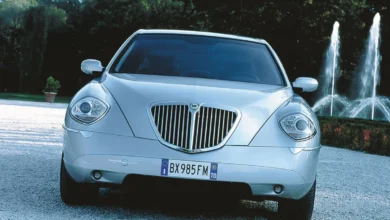
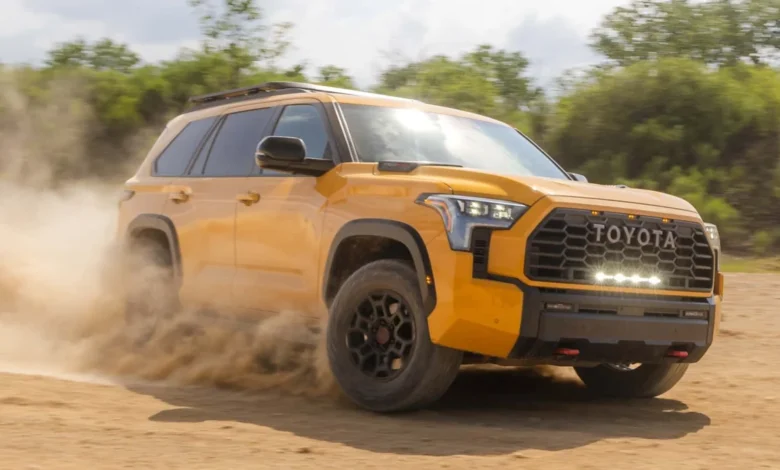
Toyota and its luxury division, Lexus, account for an impressive nine of the top 10 vehicles in the study. Leading the pack is the Toyota Sequoia, which demonstrates a 42.3 percent probability of reaching 250,000 miles. Following closely are the Lexus LS at 38.8 percent and the iconic Toyota 4Runner at 33.1 percent.
These figures are significant when compared to the broader market. For many owners, hitting 200,000 miles was once considered the "end of the road" for a vehicle. However, as the average age of vehicles on American roads continues to climb—currently hovering around 12.5 years—the 250,000-mile benchmark is becoming the new standard for a "reliable" car. The presence of the Lexus LS on this list is particularly notable, as luxury vehicles are often expected to have higher maintenance costs that eventually lead owners to retire the car. The LS, however, defies this by maintaining mechanical integrity that allows it to remain on the road long after its peers have been scrapped.
The Competitive Landscape: Honda and European Entrants
While Toyota dominates, Honda remains the primary challenger. The Honda Accord Hybrid stands out as the only non-Toyota vehicle to break into the top 10, capturing the 10th position with an 18.5 percent chance of reaching the quarter-million-mile milestone. Further down the list, the Honda HR-V (17.6%) and the legendary Honda Civic (17.3%) continue to prove that even compact, high-efficiency vehicles can provide exceptional service life when properly maintained.
The inclusion of the Mercedes-Benz G-Class at 14th place (17.4%) provides an interesting counterpoint to the Japanese dominance. Unlike the mass-market sedans and SUVs that populate the rest of the list, the G-Class owes its longevity to its heritage. Originally designed for military applications, the vehicle utilizes a robust, over-engineered frame and drivetrain that differs significantly from the modular, cost-optimized platforms of typical consumer vehicles. This highlights that longevity can be achieved either through mass-production refinement or through specialized, heavy-duty engineering.
Domestic Performance: The Role of Heavy-Duty Trucks
The narrative for American manufacturers changes significantly when the scope shifts to heavy-duty trucks. While domestic passenger cars have struggled to match the high-mileage percentages of their Asian counterparts, American truck manufacturers excel in creating vehicles designed for extreme work environments.
The Ram 3500 leads the truck category with a 31.9 percent probability of hitting 250,000 miles—a figure that would place it in the top five if it were included in the general passenger vehicle rankings. This segment is driven by the necessity of commercial use; these trucks are often purchased by fleet operators, contractors, and long-haul towers who prioritize engine longevity and chassis strength over interior technology or fuel efficiency.
GMC and Ford also demonstrate strong performance in this sector. The GMC Sierra 3500 HD (26.2%) and the Ford F-350 (15.1%) illustrate that the American automotive industry’s strength lies in the "heavy-duty" segment. These vehicles are engineered with thicker steel, larger cooling systems, and robust powertrains designed to withstand hundreds of thousands of miles of intense stress.
Analyst Perspective and Corporate Philosophy
Karl Brauer, Executive Analyst at iSeeCars, notes that the discrepancy between brands is a reflection of corporate culture. "It’s clear Toyota and Honda have a corporate philosophy focused on durability and a long vehicle lifespan," Brauer stated. "But the military background of the Mercedes-Benz G-Class, and the robust design and wide range of capabilities of Chevrolet’s Suburban, allow them to break into the top rankings."
This analysis suggests that longevity is rarely an accident. It is a calculated design choice. Manufacturers who prioritize long-term durability must often sacrifice the weight-saving measures or rapid tech integration that other brands utilize to lure new-car buyers. The data confirms that for the consumer, the trade-off is clear: choosing a vehicle with a proven history of longevity may result in a higher upfront cost, but it provides a lower cost of ownership over the vehicle’s total lifespan.
Implications for the Future
The data also highlights the "bottom" of the list—the vehicles least likely to hit 250,000 miles—which includes models like the Toyota Prius and Honda Odyssey. While it may seem counterintuitive for a Toyota to be among the lower-ranked vehicles, it is important to contextualize this: even the lowest-ranked cars on the iSeeCars study still perform at nearly double the industry average. The fact that a Toyota Prius or Honda Odyssey still has a 10 to 11 percent chance of reaching a quarter-million miles serves as a testament to the overall elevation of automotive quality in the 21st century.
Looking forward, the rise of electric vehicles (EVs) presents a new variable in the longevity equation. While electric drivetrains have fewer moving parts than internal combustion engines, the long-term viability of high-capacity battery packs remains a subject of intense study. As the first generation of mass-market EVs approaches the 200,000-mile mark, the industry will likely see a shift in how "reliability" is measured.
For now, the message to the consumer is definitive: if the primary goal is reaching 250,000 miles, the data points clearly toward traditional internal combustion platforms from Japanese manufacturers for passenger vehicles, and heavy-duty domestic trucks for those requiring extreme utility. As the average cost of new vehicles continues to rise, the ability of a car to survive for 20 years or 250,000 miles is no longer just a technical curiosity; it is a financial necessity for the average household. By relying on historical performance data, consumers can make informed decisions that ensure their transportation investment remains reliable for the long haul.