For more than half a century, the BMW 3-Series has served as the undisputed heartbeat of the Bavarian manufacturer’s lineup, anchoring its reputation as a global benchmark for sports sedans. Even as consumer preferences shifted overwhelmingly toward sport utility vehicles over the past decade, the 3-Series has steadfastly endured. Today, BMW has officially pulled the wraps off the eighth-generation 3-Series, proving that the internal combustion engine still has a vibrant, high-performance future ahead within the brand’s portfolio.
Debuting just six months after the unveiling of its all-electric sibling, the i3, the newly minted combustion-powered 3-Series bridges the gap between traditional automotive engineering and the bold, futuristic design language of BMW’s upcoming era. While purists might initially mistake it for the EV at a glance, closer inspection reveals a series of meticulously engineered distinctions that honor both its heritage and its mechanical requirements. Set to arrive in United States showrooms in the first quarter of 2027, the latest iteration of the iconic sedan aims to satisfy driving enthusiasts who demand high-revving performance, cutting-edge digital architecture, and timeless rear-wheel-drive dynamics.
Design Evolution: Familiar Yet Distinct
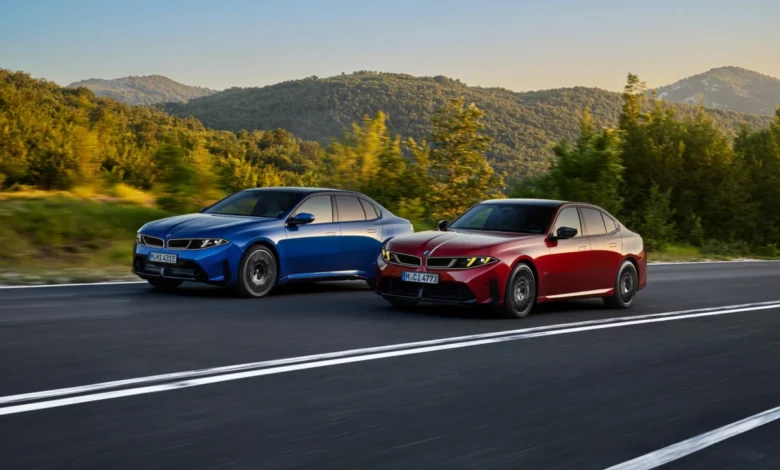
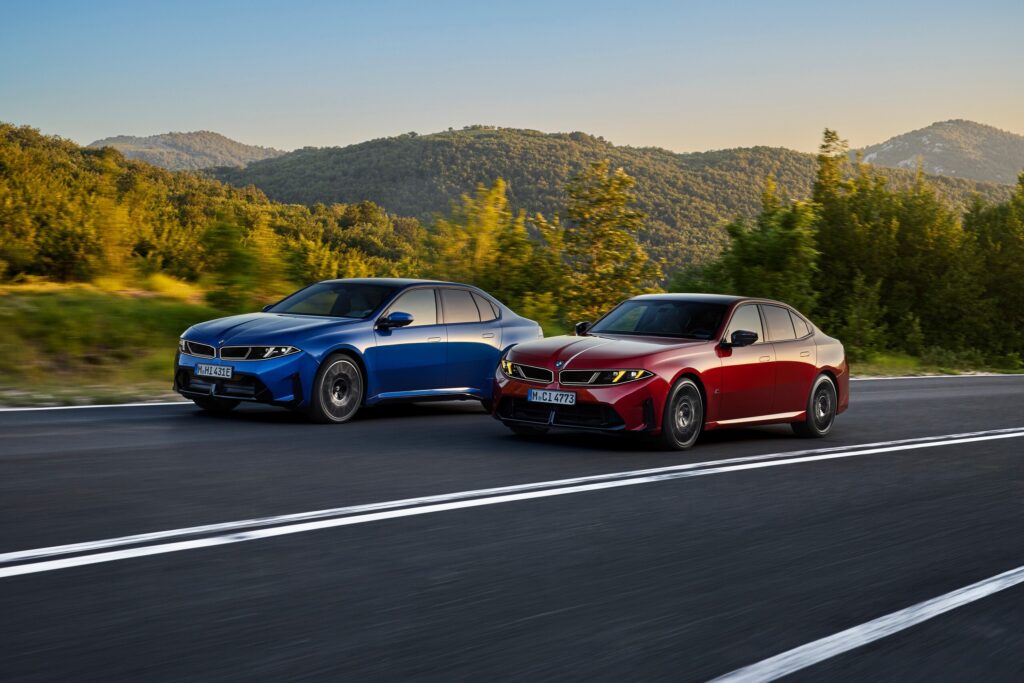
To the untrained eye, the external styling of the eighth-generation 3-Series is nearly indistinguishable from the battery-electric i3. Both vehicles adopt BMW’s latest design ethos, characterized by clean body surfaces, flush door handles, and a minimalist aesthetic. However, the internal combustion engine (ICE) variant incorporates specific structural and aerodynamic modifications necessary to accommodate traditional powertrains.
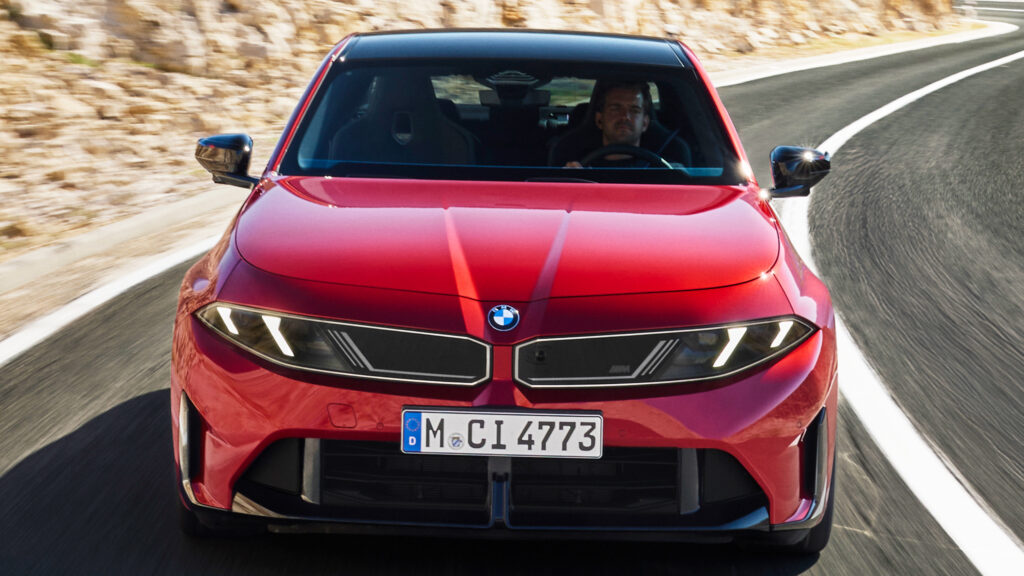
At the front, the gas-powered 3-Series—previewed initially by the high-performance M350 xDrive—features familiar daytime running light signatures and kidney grilles. Yet, these elements have been subtly darkened and widened. Because an internal combustion engine demands substantial cooling airflow compared to an electric drivetrain, the lower front bumper and active air intakes are visibly more prominent, channeling vital oxygen to the radiator and braking components.
In profile, the hood of the standard 3-Series sits slightly lower and stretches out longer than that of the stubvier, cab-forward i3. While the core door skins remain largely identical, the rear side windows feature a revised glasshouse geometry that preserves the legendary Hofmeister kink—a sacred design cue in BMW’s history. The rear fascia of the M350 xDrive model is aggressively styled, featuring darkened LED taillights, a functional lower diffuser, and quad exhaust tailpipes that leave no doubt about the car’s performance capabilities.
Platform Strategy and Dimensions
A fascinating engineering narrative underpins the creation of the new 3-Series. While the all-electric i3 is constructed upon BMW’s ground-up, EV-dedicated Neue Klasse platform, the combustion-powered 3-Series utilizes a heavily updated and modernized version of the outgoing model’s flexible CLAR (Cluster Architecture) platform.
This divergence in underlying skeletons explains the minute differences in exterior dimensions. The newly announced gasoline variants—comprising the 330, 330 xDrive, and the flagship M350 xDrive—measure 187.2 inches in length, 72.8 inches in width, and 57.3 inches in height. By comparison, the i3 50 xDrive spans 187.4 inches long, 73.4 inches wide, and stands slightly taller at 58.3 inches.

Despite utilizing a revised iteration of an established platform, BMW has ensured that drivers of the internal combustion model do not feel shortchanged in the cabin. The interior has been entirely overhauled to mirror the futuristic digital environment introduced by the Neue Klasse electric vehicles.
A Cabin Rooted in the Future
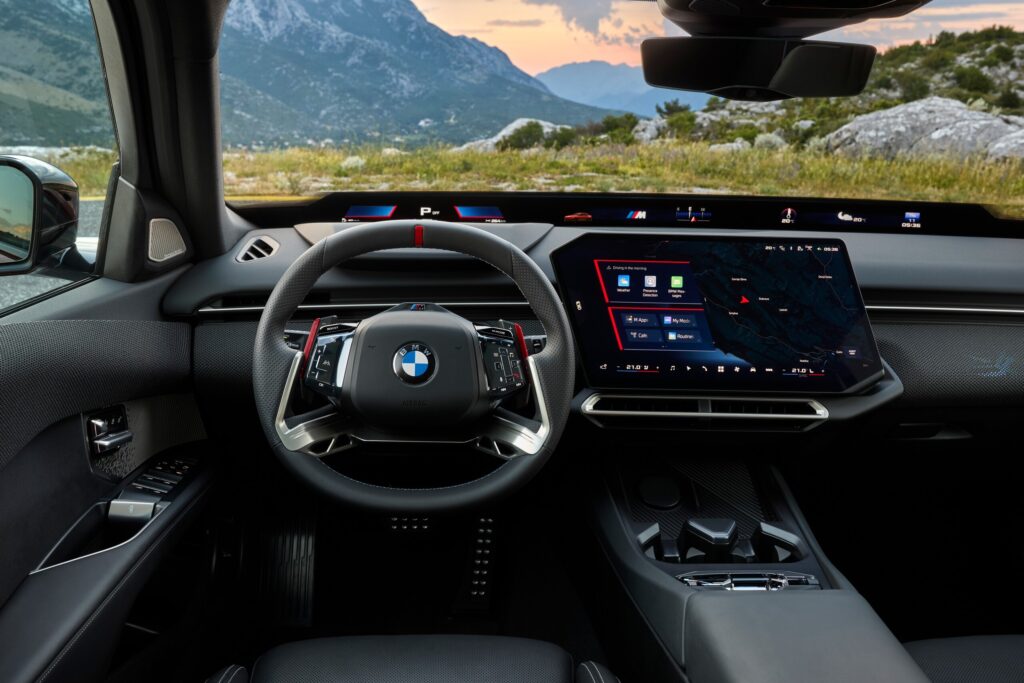
Stepping inside the eighth-generation 3-Series reveals a cabin that feels vastly removed from its predecessor. The dashboard has been completely re-architected, utilizing sustainable fabric materials, ambient lighting arrays, and textures reminiscent of the latest offerings within the broader BMW Group family, including the MINI brand.
Drivers are greeted by a controversial yet undeniably high-tech steering wheel design, which incorporates large haptic touchpad controllers and integrated aluminum paddle shifters. Dominating the dashboard is a sweeping, slanted 17.9-inch central infotainment display powered by the latest iteration of the Panoramic iDrive operating system. This massive digital real estate works in tandem with an optional, highly immersive 3D head-up display that projects crucial driving telemetry directly into the driver’s line of sight.
Seating arrangements have also been revised. Standard models feature newly designed seats optimized for long-distance comfort, though buyers seeking advanced ergonomics such as backrest-width adjustment and lumbar support must step up to optional multifunction seating. Meanwhile, the performance-focused M350 xDrive comes standard with aggressively bolstered M Sport seats designed to keep occupants firmly planted during high-speed cornering maneuvers.

Powertrain Lineup and Performance Figures
At launch, the internal combustion 3-Series family is anchored by two distinct powertrain options, satisfying both efficiency-minded commuters and hardcore enthusiasts.
Sitting temporarily at the apex of the non-M lineup—pending the eventual arrival of the next-generation M3—is the BMW M350 xDrive, which replaces the outgoing M340i xDrive. Under its sculpted hood lies a heavily revised 3.0-liter turbocharged inline-six cylinder engine, augmented by a 48-volt mild-hybrid system. This powerplant churns out an impressive 437 horsepower and 428 lb-ft (580 Nm) of torque.
Mated to a lightning-fast 8-speed Steptronic automatic transmission and BMW’s rear-biased xDrive all-wheel-drive system, the M350 xDrive launches from 0 to 60 mph (96 km/h) in a blistering 3.9 seconds. When factoring in a standard one-foot rollout, that sprint drops to just 3.6 seconds. The vehicle’s top speed is electronically limited to 130 mph, or an elevated 155 mph when specified with performance sport tires.
For buyers prioritizing daily usability and fuel efficiency, BMW has also detailed the specifications for the four-cylinder models. The 330 and 330 xDrive variants feature a refined 2.0-liter turbocharged four-cylinder engine generating 255 horsepower between 4,700 and 6,500 rpm, alongside 295 lb-ft (400 Nm) of torque. While sharing the same top speed limitations as their six-cylinder sibling, the four-cylinder models complete the 0-60 mph sprint in a respectable 5.9 seconds.
Chassis Dynamics and the Innovative "Drift Moment"
Though the CLAR architecture underpinning the 2027 3-Series is evolutionary rather than revolutionary, BMW’s chassis engineers have implemented sweeping structural and kinematic revisions to preserve the nameplate’s dynamic supremacy. The vehicle features a redesigned double-joint spring-strut front axle, wider front and rear track widths, and optimized wheel-and-tire geometries designed to enhance turn-in agility and mid-corner stability.
Standard variants are available with adaptive dampers, while the M350 xDrive receives an adaptive M suspension as standard equipment, featuring electronically controlled shock absorbers that continuously adjust to road conditions and driving styles.
Perhaps the most intriguing mechanical and software innovation coming to the M350 xDrive is a function BMW has dubbed "Drift Moment." Despite its unconventional nomenclature, the feature serves a serious purpose: allowing the all-wheel-drive sedan to dynamically disengage its front axle power delivery, effectively transforming the luxury cruiser into a pure rear-wheel-drive drift machine at the driver’s discretion. BMW has confirmed that this capability will not be active at vehicle launch, but will instead be deployed via an over-the-air (OTA) software update later next year.
Safety, Driver Assistance, and Market Availability
Safety and convenience technologies have also taken a significant leap forward. The new 3-Series incorporates Level 2 advanced driver-assistance systems (ADAS) augmented by BMW’s proprietary "Symbiotic Drive" technology. Unlike many conventional L2 systems on the market—which instantly disengage or fight the driver the moment human steering, braking, or acceleration inputs are detected—Symbiotic Drive allows seamless human override without kicking the driver out of automated driving mode, ensuring a more harmonious transition of control during long highway journeys.
BMW has confirmed that U.S. pricing details for the eighth-generation 3-Series will be released closer to its official market launch. Dealership arrivals for the 330, 330 xDrive, and performance-leading M350 xDrive are officially scheduled to commence during the first quarter of 2027, ensuring that traditionalist sports sedan enthusiasts will have a thoroughly modernized, highly capable option to choose from as the automotive industry continues its complex transition into electrification.