Mercedes-AMG GT Facelift Prototype Destroyed in Dramatic Fire During High-Altitude Testing in Spain

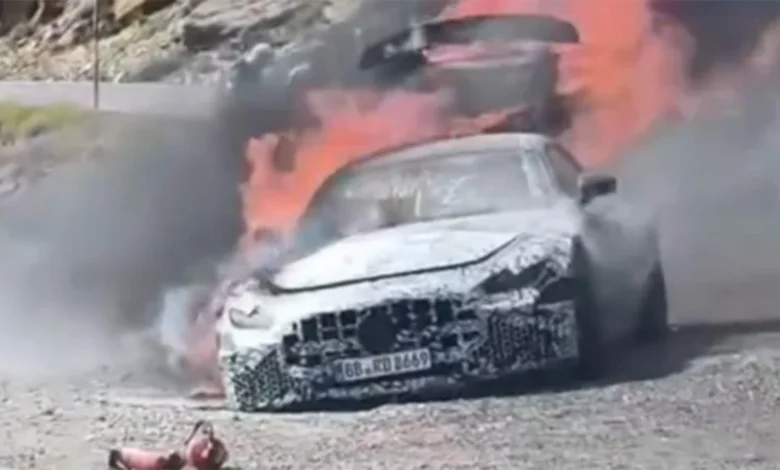
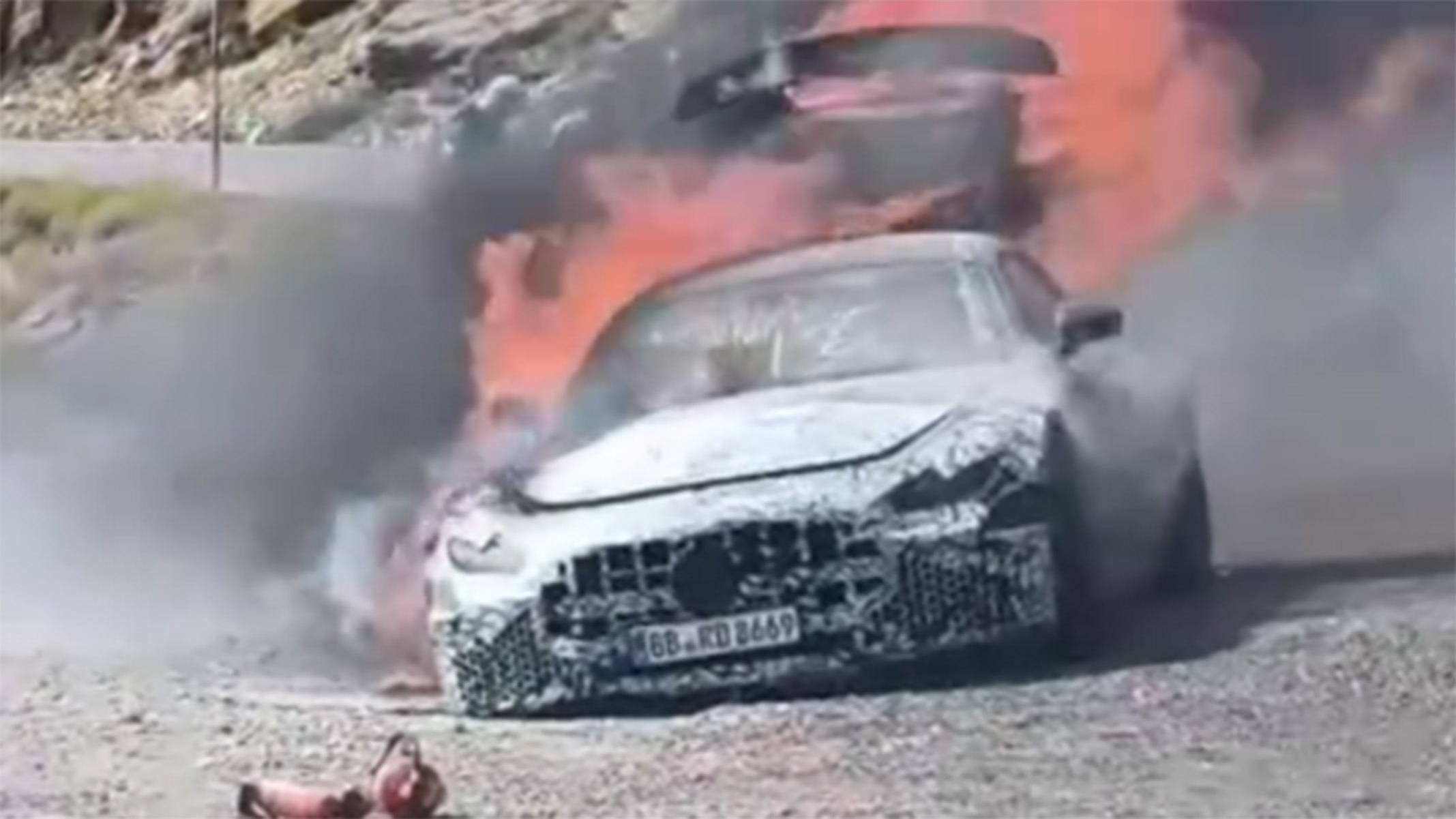
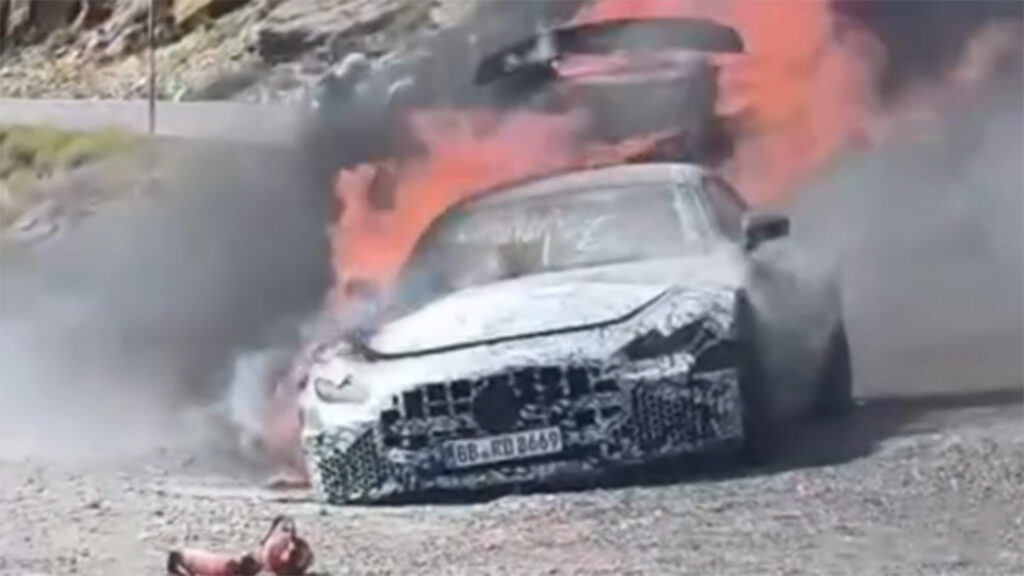
Mercedes-AMG’s rigorous development program for the upcoming facelifted GT coupe faced a significant and costly hurdle this week after a camouflaged prototype was completely destroyed by fire during high-altitude testing in Spain. The incident, which occurred in the Sierra Nevada mountain range, resulted in the total loss of a vehicle that likely represented millions of dollars in research, development, and bespoke components. While the driver and passengers managed to escape the vehicle without injury, the intensity of the blaze and the speed with which it consumed the high-performance machine have raised questions regarding the thermal management of the next-generation AMG GT, particularly its rumored hybrid variants.
Incident Overview in the Sierra Nevada
The Sierra Nevada mountains in southern Spain are a perennial favorite for automotive manufacturers conducting "hot-weather" and high-altitude validation. The region offers a unique combination of steep gradients, thin air, and summer temperatures that frequently exceed 35 degrees Celsius (95 degrees Fahrenheit). These conditions are designed to push a vehicle’s cooling systems, braking performance, and powertrain durability to their absolute limits before a car is cleared for mass production.
According to eyewitness accounts and video footage captured by social media user @kikisnevada_pgarage, the Mercedes-AMG GT prototype began emitting smoke from the rear section while navigating a mountain pass. The driver pulled the vehicle over to the side of the road as the smoke quickly transitioned into visible flames. Despite the presence of onboard fire suppression equipment, the fire accelerated with such ferocity that the occupants were forced to retreat to a safe distance. By the time local emergency services arrived on the scene, the vehicle was fully engulfed, with a column of thick, black smoke visible for miles across the arid landscape.
The Challenges of High-Performance Prototype Testing
The loss of a development "mule" or prototype is a rare but documented risk in the automotive industry. These vehicles are often hand-assembled and equipped with a suite of sensitive data-logging equipment, external sensors, and experimental hardware that may not yet have the failsafe redundancies of a finished production car.
In the case of the Mercedes-AMG GT, the facelifted model is expected to further integrate the brand’s "E Performance" technology. This system, already seen in the GT 63 S E Performance four-door and the new SL 63 S E Performance, utilizes a complex plug-in hybrid architecture. It combines the traditional 4.0-liter V8 biturbo engine with a rear-mounted electric motor and a high-performance lithium-ion battery pack.
The integration of high-voltage battery systems into a sports car chassis presents significant engineering hurdles. Batteries generate substantial heat during rapid discharge—such as during spirited mountain driving—and during high-rate regenerative braking. If a single cell undergoes thermal runaway due to a short circuit or a cooling failure, the resulting fire is notoriously difficult to extinguish using conventional methods.
Unverified Claims and Technical Speculation
While the original footage of the incident led to immediate speculation on social media that the vehicle’s hybrid battery was the source of the fire, Mercedes-Benz has maintained a standard policy of not commenting on internal investigations involving prototype failures. The claim that the battery was the culprit remains unverified by independent investigators or official fire department reports.

However, the behavior of the fire, as seen in the footage, is consistent with the intense heat produced by high-energy-density components. The rear-biased nature of the initial flames aligns with the packaging of the E Performance system, where the electric motor, power electronics, and battery are situated over the rear axle to optimize weight distribution. Conversely, high-performance internal combustion engines also pose fire risks in testing environments, where a ruptured high-pressure fuel line or an oil leak onto a glowing turbocharger or exhaust manifold can trigger a similarly rapid conflagration.
Chronology of the Development Cycle
The Mercedes-AMG GT (internal code C192) is currently in the middle of its lifecycle, with the facelifted version intended to debut as a 2026 or 2027 model. The testing timeline for such a vehicle usually follows a strict progression:
- Computer Simulations and Dyno Testing: Initial powertrain stress tests conducted in laboratory settings.
- Chassis Mules: Early mechanical components hidden under the bodies of existing models.
- Alpha Prototypes: Hand-built cars using the new body and interior, often heavily camouflaged.
- Beta/Validation Prototypes: Vehicles used for final durability testing in extreme climates (Arctic Circle for cold, Sierra Nevada or Death Valley for heat).
- Pre-Production Series: The final stage before the assembly line begins full-scale operations.
The prototype involved in the Spanish fire appeared to be in the "Validation" stage, carrying the distinctive black-and-white "dazzle" camouflage used to hide subtle changes to the front fascia, rear diffuser, and lighting signatures. The loss of this specific vehicle means that the data collected during that specific test run was likely lost, and the engineering team will now have to rely on a smaller fleet of prototypes to complete the remaining mileage requirements.
Industry Implications of Prototype Fires
Fires during the development phase are viewed by engineers as a "successful failure" in a strictly technical sense. The primary goal of extreme testing is to find the breaking point of a vehicle before it reaches the hands of a consumer. If a cooling system is inadequate or a battery housing is prone to overheating under stress, it is far better for that flaw to manifest on a closed testing route in Spain than in a customer’s garage.
Historically, other manufacturers have suffered similar setbacks. In 2014, a prototype of the then-upcoming Acura NSX burned to the ground at the Nürburgring. Similarly, several high-end European marques have seen prototypes succumb to thermal issues during the "Touristenfahrten" or private industry pool sessions. These incidents usually lead to a "stop-test" order across the prototype fleet while engineers analyze the wreckage—if enough of it remains—to determine the root cause.
Safety and Environmental Considerations
One of the most fortunate aspects of the Sierra Nevada incident was the lack of secondary damage. High-altitude fires in dry climates like southern Spain carry a significant risk of sparking wildfires. Local authorities noted that the fire stayed confined to the asphalt and the immediate shoulder of the road.
The difficulty of extinguishing the blaze also highlights an ongoing challenge for first responders. If a lithium-ion battery is involved, a fire can reignite hours or even days after it appears to have been put out. This "re-ignition" phenomenon requires massive amounts of water or specialized cooling agents to fully stabilize the battery chemistry. The fact that the AMG GT prototype was reduced to a "scorched shell" suggests that the fire burned until most of the flammable material, including the magnesium and aluminum alloys used in the chassis, was consumed.
The Future of the Mercedes-AMG GT
Despite this setback, the Mercedes-AMG GT facelift remains a highly anticipated addition to the performance car market. The model is expected to refine the "Grand Tourer" credentials of the current car while pushing the boundaries of hybrid performance. The E Performance variants are rumored to produce combined outputs exceeding 800 horsepower, positioning the GT as a direct competitor to the likes of the Porsche 911 Turbo S and the upcoming electrified offerings from Aston Martin.

Mercedes-AMG engineers will now be tasked with a "post-mortem" analysis of the incident. This involves reviewing the telematics data that is often streamed in real-time to a chase vehicle or a remote server. This data can provide a second-by-second account of temperatures, pressures, and electrical loads leading up to the first sign of smoke.
Conclusion
The destruction of the Mercedes-AMG GT prototype in Spain serves as a stark reminder of the volatility inherent in pushing automotive technology to its limits. As performance cars become increasingly complex—blending high-output internal combustion engines with sophisticated electrical architectures—the margins for error in thermal management become razor-thin.
While the loss of the prototype is an expensive blow to the AMG development budget, the lessons learned from the charred remains will undoubtedly be used to harden the production version against similar failures. For the automotive world, the incident is a dramatic glimpse into the secretive and sometimes dangerous world of vehicle validation, where the quest for perfection often involves a trial by fire. The facelifted Mercedes-AMG GT will eventually make its debut, and it will likely be a safer, more resilient machine because of the failure that occurred on a lonely mountain road in the Sierra Nevada.