Automotive history enthusiasts and fans of television culture are preparing for a significant event this November as Jeremy Clarkson prepares to offload three vehicles that played central roles in his tenure on the Amazon Prime series The Grand Tour. The vehicles—a 1982 Lancia Montecarlo Spider, a 1983 Alfa Romeo GTV6, and a 1978 Lincoln Continental Mark V—will be sold through Iconic Auctioneers during the prestigious Iconic Sale at the NEC Classic Motor Show in Birmingham, England, scheduled for November 14 and 15.
The auction is particularly notable for its "no reserve" status, a move that guarantees the cars will change hands regardless of the final bid price. This decision underscores a shift in Clarkson’s personal collection and hints at a transition in his professional endeavors, specifically regarding the future of his agricultural series, Clarkson’s Farm. While the host has cited the lack of time to enjoy these machines as the primary motivation for the sale, industry observers and fans are closely monitoring the upcoming season of his show for more context regarding this liquidation of his automotive assets.
The Significance of the Lancia Montecarlo Spider
The centerpiece of the collection is undoubtedly the 1982 Lancia Montecarlo Spider. This vehicle holds a profound emotional weight for fans of the trio—Clarkson, Richard Hammond, and James May—as it served as the final car driven by Clarkson in the series finale, The Grand Tour Presents: One for the Road. The episode, which concluded a multi-decade journey across various formats including Top Gear and The Grand Tour, saw the hosts traverse Zimbabwe and Botswana.
The Lancia was not merely a backdrop; it was a character in the final act of a long-running television era. To ensure the vehicle could survive the grueling conditions of the African terrain, extensive modifications were performed. These included the installation of Ferrari 308 rear lights, a bespoke four-outlet exhaust system, and wheels sourced from a Lancia Delta Integrale. Furthermore, the aesthetic and functional components were updated to prioritize reliability over original factory specifications, including a modified front grille and a stripped-down interior featuring cloth seats and a custom Alcantara-covered steering wheel to mitigate the risks associated with the car’s notoriously sensitive electronics. Unlike many production vehicles that are leased or returned to manufacturers, Clarkson purchased this car, cementing its status as a piece of personal memorabilia that he has since had professionally refurbished to ensure it remains in peak running condition.
The Legacy of the Alfa Romeo GTV6
Joining the Lancia on the auction block is a 1983 Alfa Romeo GTV6, a vehicle that became synonymous with the "Well Aged Scotch" episode of The Grand Tour. Filmed in 2019, the special saw the trio navigating the scenic and demanding North Coast 500 in Scotland. This specific GTV6 has recorded approximately 28,315 miles and has been maintained with rigorous in-house care, preserving the performance of its 2.5-liter V6 engine—a power plant frequently praised by Clarkson for its distinctive auditory signature and smooth power delivery.
The backstory of this Alfa Romeo is emblematic of Clarkson’s complicated relationship with classic cars. He had previously owned the model, sold it, and later found himself suffering from "seller’s remorse." His decision to reacquire the vehicle and restore it to his collection highlights the emotional attachment he forms with certain machines. Its inclusion in the auction marks a final separation between the host and one of his favorite driving experiences, signaling a broader theme of downsizing his private collection.
The Lincoln Continental and the Lochdown Spectacle
Rounding out the trio is the 1978 Lincoln Continental Mark V, a vehicle that captured the imagination of viewers during the "Lochdown" episode. As part of a thematic challenge involving oversized American luxury vehicles in the Scottish Highlands, the Lincoln stood out for its sheer scale and the technical eccentricity applied to it for production purposes.
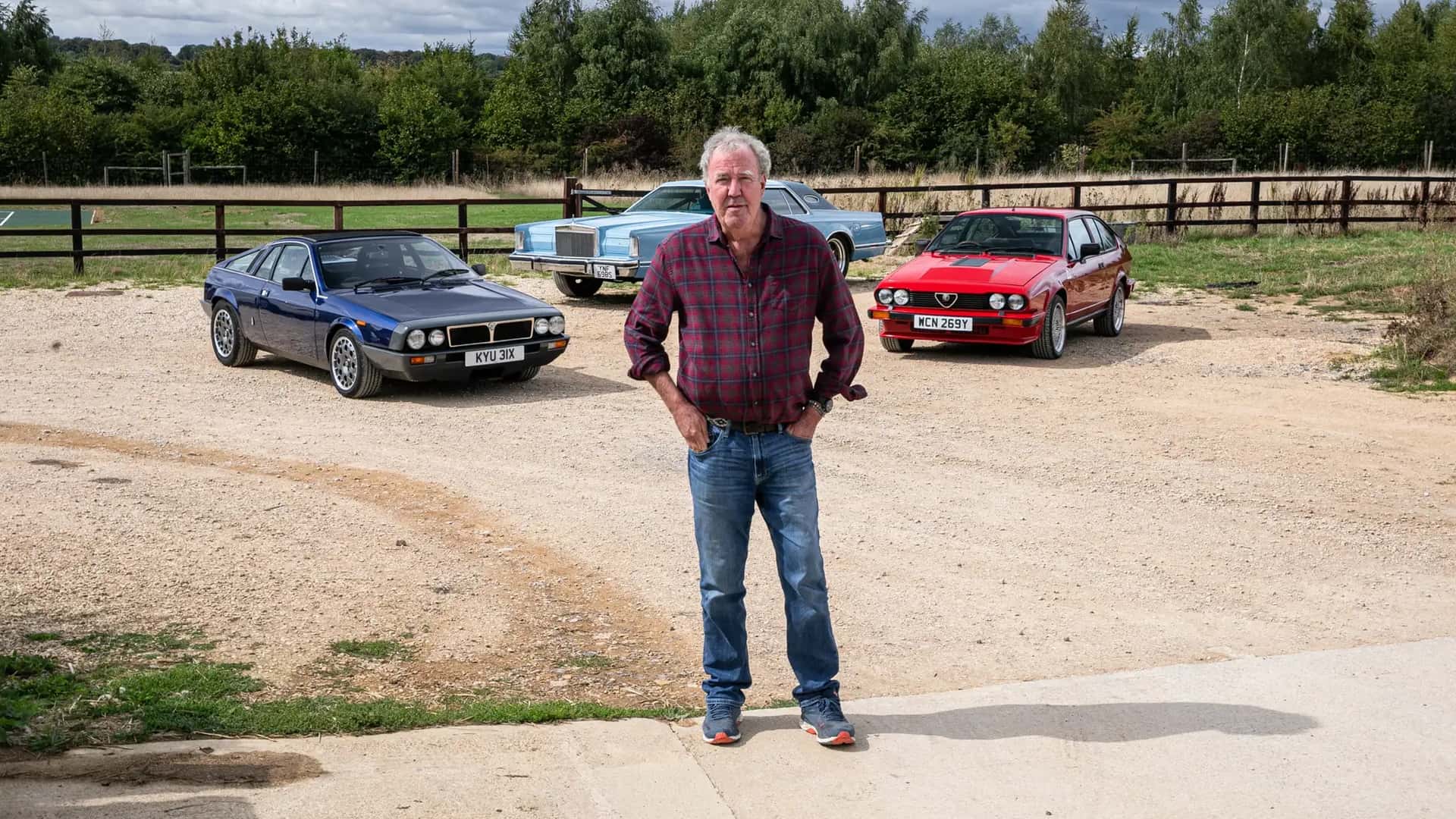
The vehicle is powered by a massive 6.6-liter V8 engine, which was equipped with a nitrous-injection system for the show. While the system remains installed, it is widely noted that the setup was less than optimal during filming, as the engine lacked the internal reinforcements required to fully exploit the nitrous boost. Beyond the technical curiosities, the Lincoln serves as a time capsule of the show’s production values, still containing the original Cartier clock and, quite famously, a set of bagpipes stored in the trunk. The survival of these artifacts alongside the vehicle adds a layer of provenance that is expected to drive significant interest among collectors of television memorabilia.
Chronology of a Television Era
The timeline of these vehicles tracks the evolution of automotive entertainment over the last decade. The Alfa Romeo, featured in 2019, represents the middle period of The Grand Tour, while the Lincoln, appearing in the 2021 "Lochdown" special, highlights the shift toward location-based specials that defined the later years of the series. The Lancia represents the definitive end of an era, marking the final moments of a collaborative partnership that began on the BBC and concluded on a global streaming platform.
The auction at the NEC Classic Motor Show serves as a symbolic conclusion to this timeline. By placing these cars for auction, Clarkson is effectively closing the book on his involvement with the machinery of his television career. For the automotive industry, these sales provide a rare opportunity to acquire vehicles that have been subjected to the most rigorous and visible testing environments in media.
Market Implications and Collector Interest
The "no reserve" auction format is an aggressive strategy that reflects confidence in the provenance of the items. In the world of high-end automotive auctions, provenance—the history of who owned or drove a vehicle—can often be as valuable as the mechanical condition of the car itself. These vehicles carry the "Clarkson pedigree," which effectively separates them from standard classic car listings.
Industry analysts suggest that the Lancia, given its role as the final vehicle driven in the series finale, will likely attract the highest premiums. The intersection of automotive rarity, celebrity ownership, and its status as a "final" cultural artifact creates a unique value proposition for high-net-worth collectors. The Alfa Romeo and the Lincoln, while perhaps lacking the singular significance of the Lancia, benefit from the narrative of their respective episodes and the well-documented maintenance history provided by the seller.
Official Stance and Broader Impact
While Iconic Auctioneers has maintained a professional distance, noting that the reason for the sale will be revealed in the upcoming season of Clarkson’s Farm, the move has sparked intense speculation regarding the host’s future priorities. Clarkson’s shift from the high-octane, global-traveling format of The Grand Tour to the localized, agricultural focus of his current project suggests a broader trend among automotive personalities who are moving toward more sustainable and grounded lifestyle projects.
The sale also underscores the changing nature of the classic car market, where digital-era television has become a primary driver of interest for younger generations of collectors. As the era of the combustion-engine-focused television show faces increasing regulatory and cultural pressure, these vehicles represent the final peak of a specific type of automotive journalism that prioritized character and emotion over pure technical performance.
Conclusion: A Final Chapter
As the NEC Classic Motor Show approaches, the automotive community waits to see which collectors will secure these pieces of television history. The auction represents more than just a transaction of assets; it is the dispersal of a legacy. By choosing to sell these cars without a reserve, Clarkson ensures that the transition is absolute. Whether the proceeds are intended to fund new agricultural ventures or simply to clear space in his garage, the result is the same: three iconic machines will enter the private market, carrying with them the memories of millions of viewers who watched them traverse the globe. The event will likely be remembered as the final milestone in the long and storied career of one of the world’s most influential automotive presenters.