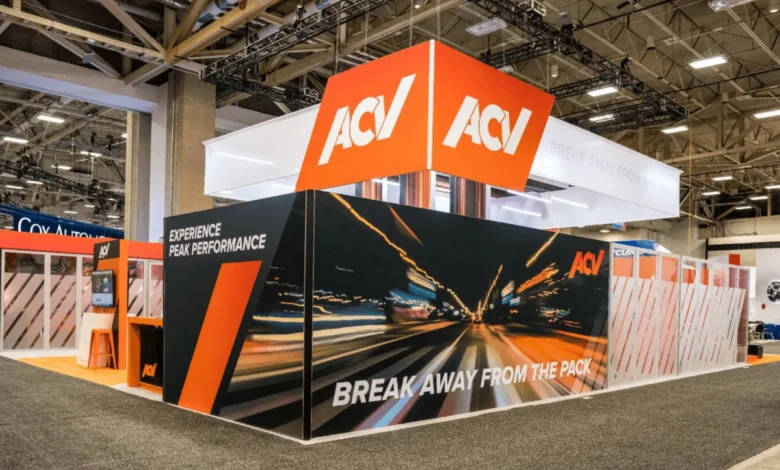
The automotive auction and salvage ecosystem is undergoing a massive structural transformation following Copart’s announcement of a $1.9 billion acquisition of ACV Auctions. Traditionally recognized as the dominant destination for insurance write-offs, flood-damaged vehicles, theft recoveries, and catastrophic collision wrecks, Copart is strategically expanding its operational footprint upstream. By purchasing ACV Auctions, a premier digital dealer-to-dealer wholesale marketplace, Copart is positioning itself to capture and control the entire lifecycle of a vehicle—long before it suffers a total loss or ends up in a salvage yard.
The Strategic Rationale: Capturing the Pre-Salvage Market
For decades, Copart has built its empire on the backend of the automotive sector. When an insurance carrier determines that the cost of repairing a vehicle exceeds its insured value, the car is typically designated as a total loss and routed to an auction platform like Copart. While this business model has proven exceptionally lucrative, it leaves a massive portion of the pre-accident used-car market untouched.

With the integration of ACV Auctions, Copart gains immediate, direct access to the lucrative world of wholesale dealer trade-ins. ACV operates a robust digital marketplace that currently facilitates the movement of more than 800,000 vehicles annually. During the 2025 fiscal year, the platform generated roughly $10 billion in gross merchandise value (GMV). By absorbing ACV, Copart bridges the gap between healthy retail-ready trade-ins, rougher wholesale units, export-bound vehicles, and severe salvage cases.
Industry analysts note that this is not merely a diversification play; it is a masterclass in pipeline control. Under the newly expanded operational framework, a vehicle traded in at a traditional franchise or independent dealership can follow multiple financial pathways depending on its condition:
- Retail-Ready Units: Vehicles that meet high retail standards can remain on the dealership lot for direct consumer sale.
- Wholesale Channels: Units that require minor reconditioning or do not fit a specific dealership’s retail footprint can move seamlessly through ACV’s digital wholesale channel.
- Export and Secondary Markets: Lower-end yet drivable vehicles can be routed to international or secondary buyers via Copart’s extensive global network.
- Total Loss Salvage: Severely damaged or economically unviable vehicles naturally feed back into Copart’s established insurance-auction network.
Combining Physical Infrastructure with Digital Innovation
One of the primary challenges for traditional salvage giants attempting to break into the dealer-to-dealer wholesale space has been building trusted relationships with franchise dealers and mastering condition-reporting software. While Copart already operates non-insurance vehicle sales and dedicated wholesale facilities, leadership recognized that scaling this segment organically would require immense capital and time.

ACV Auctions solves this hurdle instantly. The company brings a sophisticated suite of digital tools, including proprietary inspection technologies, advanced valuation software, integrated financing solutions, and streamlined logistics services. When combined with Copart’s immense physical footprint of storage yards, robust logistics fleet, and massive international buyer base, the merged entity creates an end-to-end powerhouse.
Furthermore, automotive industry experts emphasize that data is the ultimate currency in this transaction. By unifying ACV’s granular condition reports and inspection data with Copart’s vast historical pricing and salvage metrics, the combined enterprise will possess unprecedented visibility into vehicle valuation. This data advantage will allow the company to optimize pricing algorithms, accurately predict vehicle trajectories, and extract transaction fees at every single stage of a vehicle’s operational lifespan—whether it is wholesaled, exported, parted out, or crushed.
Financial Health, Market Performance, and Acquisition Terms
The $1.9 billion valuation placed on ACV Auctions reflects both its growth potential and recent financial volatility. In its second-quarter financial reports, ACV posted a 10 percent year-over-year increase in revenue, reaching $214 million. However, the company experienced relatively flat marketplace unit volumes and gross merchandise value during the same period, alongside an $8 million GAAP net loss.

Despite these near-term financial headwinds, Copart’s executive leadership views the investment through a long-term strategic lens. Financial models released during the acquisition announcement indicate that Copart expects the deal to be earnings-neutral during the first full fiscal year following completion, with earnings accretion expected to materialize starting in fiscal year 2028. This long-term horizon underscores that the acquisition is designed to build an impenetrable structural advantage rather than deliver an immediate quarter-over-quarter revenue spike.
Industry Implications and the Competitive Landscape
The merger of Copart and ACV Auctions is expected to send ripples across the broader automotive remarketing and wholesale industry. Major competitors in both the salvage and dealer-wholesale spaces will now have to contend with a consolidated titan capable of tracking a vehicle from its initial showroom trade-in all the way to its final dismantlement as scrap metal.
For franchise and independent auto dealers, the acquisition promises a more streamlined, technologically integrated liquidation process for unwanted inventory. Dealerships frequently struggle with older, higher-mileage, or mechanically compromised trade-ins that clog up valuable lot space. The combined Copart-ACV platform offers these dealers a frictionless digital exit strategy backed by reliable inspections and guaranteed national logistics.

At the same time, institutional partners such as banks, leasing companies, and fleet management operators stand to benefit from a more liquid and transparent remarketing ecosystem. Fleet vehicles reaching the end of their service cycles can be dynamically routed to the highest-yielding channel with minimal administrative friction.
Looking Ahead
As the transaction moves through standard regulatory reviews and closing conditions, market watchers will be closely monitoring how Copart integrates ACV’s workforce and proprietary technology stack. If executed successfully, the $1.9 billion acquisition will redefine the boundaries of automotive remarketing, establishing a new benchmark for how modern corporations capture, manage, and monetize the entire lifecycle of the automobile.