Federal Judge Blocks Bureau of Land Management Order to Remove Bison from Montana Public Lands

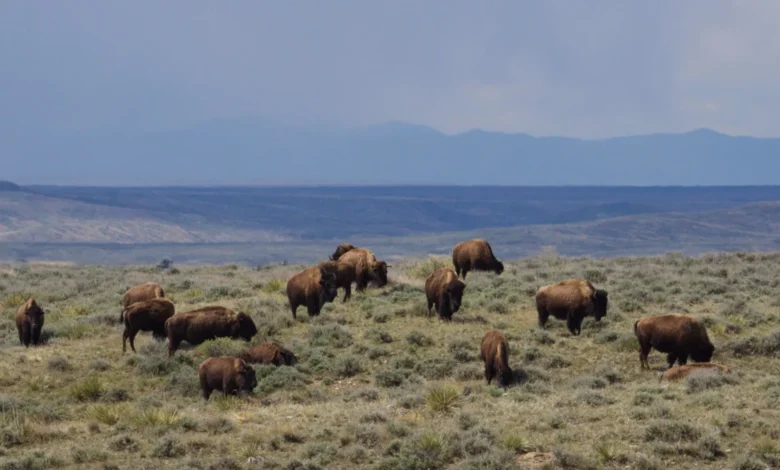
In a significant legal victory for conservationists and tribal partners, U.S. District Court Judge Brian Morris has issued a preliminary injunction preventing the Bureau of Land Management (BLM) from enforcing an order that would have necessitated the removal of nearly 1,000 bison from federal grazing allotments in Montana. The ruling, handed down in mid-September 2026, halts a controversial federal mandate that sought to redefine the parameters of public land grazing, potentially setting a precedent for how conservation-focused agriculture is managed on federal property across the American West.
The dispute centers on American Prairie, a nonprofit organization that manages a vast landscape of both private acreage and federal grazing leases spanning more than 600,000 acres of Montana’s shortgrass prairie. For over two decades, the organization has operated under federal permits that allowed the managed grazing of bison—a keystone species native to the Great Plains. The BLM’s May 2026 directive, which threatened to upend these operations, argued that the Taylor Grazing Act of 1934 authorizes permits exclusively for "production-oriented" livestock, a category the agency claimed did not encompass the conservation-centric mission of American Prairie.
A Chronology of the Regulatory Conflict
The tension between federal regulators and American Prairie did not emerge in a vacuum. The relationship between the two entities has been characterized by shifting administrative priorities and ongoing litigation.
- 2005: The BLM initially grants the first grazing permits to American Prairie, acknowledging the role of bison in the ecological health of the region.
- 2022: After extensive environmental reviews, the BLM concludes that bison grazing significantly improves rangeland productivity and enhances riparian health, effectively validating the ecological benefits of the species on these specific tracts.
- January 2026: Tribal leaders, including J. Garret Renville of the Coalition of Large Tribes, formally express support for American Prairie, highlighting that the organization’s management techniques align closely with traditional tribal herd management practices.
- May 2026: The BLM issues a new order reinterpreting the Taylor Grazing Act. The agency attempts to reclassify authorized livestock as strictly "production-oriented," intended for commercial meat, milk, or fiber output.
- September 13, 2026: Judge Brian Morris rules against the BLM, granting a preliminary injunction that allows the bison to remain on the land while the broader lawsuit proceeds.
The Legal Basis of the Ruling
The core of the legal battle rests on the interpretation of federal law regarding public lands. The BLM argued that its mandate was to prioritize commercial livestock operations. However, Judge Morris found no statutory basis for such an exclusive interpretation. In his written decision, the judge emphasized that the legislative intent behind the Taylor Grazing Act and subsequent land management statutes does not preclude conservation.
"No statutory language or judicial precedent exists that requires a livestock operation to focus exclusively on production and entirely ignore conservation, range improvement, preservation, or other values," Judge Morris stated. He further noted that Congress had historically recognized that livestock management is a multifaceted endeavor, one that can and should include the preservation and thoughtful development of the land.
The judge’s decision highlights a fundamental disagreement regarding the "purpose" of public land. While the BLM sought to draw a hard line between commercial ranching and ecological restoration, the court’s decision suggests that these two goals are not mutually exclusive under existing federal framework.
Ecological Implications and Biodiversity
The ecological stakes of this case are significant. Scientific literature, including research published in the Proceedings of the National Academy of Sciences (PNAS), consistently demonstrates that bison behavior differs markedly from that of domestic cattle. While cattle often exhibit "patch grazing," where they congregate and overgraze specific areas, bison are highly mobile, often covering two to three miles per day.
This migratory behavior prevents the degradation of riparian zones and promotes the growth of a wider variety of native grasses. By moving constantly, bison mimic the natural disturbances that have shaped the North American prairie for millennia. Replacing these bison with cattle—a possibility if the grazing permits were permanently revoked—could lead to increased soil compaction and a loss of biodiversity. American Prairie’s representatives have argued that the removal of these animals would not only be a financial disaster for their organization but an ecological setback for the entire Northern Great Plains ecosystem.
The Role of Tribal Partnerships
One of the more complex dimensions of this case is the involvement of tribal nations. American Prairie has positioned itself as a collaborator with several tribes, providing animals and sharing management techniques aimed at restoring buffalo herds to tribal lands. This partnership is viewed by many as a form of restorative justice, returning a species central to the cultural and spiritual lives of Indigenous peoples to the landscape.
In his correspondence with the Department of the Interior, J. Garret Renville noted that the techniques employed by American Prairie were "largely indistinguishable from the practices and techniques employed by tribal herd managers." This endorsement provided a powerful counter-narrative to the BLM’s assertion that the bison were merely part of a private, non-commercial experiment. The court’s decision acknowledges that the removal of these bison would have a ripple effect, harming the broader, multi-organizational effort to restore bison across the American West.
Official Responses and Future Outlook
The BLM has faced criticism from both sides of the issue. While the Montana Stockgrowers Association and various local ranching groups have voiced support for the BLM’s initial move to limit the permits, the agency now finds itself in a position where its own previous findings—specifically the 2022 report praising the bison’s impact—are being used against it in court.
Alison Fox, CEO of American Prairie, expressed relief following the ruling. "Bison belong on this landscape, and today’s ruling gives them a chance to stay," she said. "For more than 20 years, our bison have grazed these lands under federal authorization and without grazing violations."
The preliminary injunction, however, is not a final resolution. The court limited the protection to the three federal allotments currently occupied by the bison, denying a request to protect three additional, currently vacant tracts. This indicates that the legal battle will likely continue for months, if not years, as the parties litigate the underlying interpretation of the Taylor Grazing Act.
Broader Implications for Federal Land Policy
This case serves as a bellwether for the future of public land management in the United States. As climate change increases the frequency and severity of droughts, the value of resilient landscapes becomes more pronounced. If the courts continue to support the integration of conservation into grazing permits, it could encourage other public land managers to adopt similar, science-led approaches to land use.
Conversely, if the BLM succeeds in future rounds of litigation, the ruling could force a significant shift in how non-governmental organizations interact with federal agencies. It may raise the barrier for entry for conservation-based land management, effectively favoring traditional, high-intensity industrial agriculture over long-term ecological restoration.
For now, the roughly 1,000 bison on the American Prairie remain in their ancestral home. The outcome of the final judgment will not only dictate the future of this specific herd but will likely clarify the extent to which the federal government can prioritize "production" over "restoration" in an era where the health of the nation’s grasslands is increasingly viewed as a matter of national importance. As the legal process unfolds, the eyes of both the conservation community and the agricultural sector will remain fixed on Montana, waiting to see how the judiciary balances the competing demands of history, economy, and ecology.