Japan’s Kaguya Moon Mission: A Milestone in Lunar Exploration That Redefined Our View of the Earth-Moon System

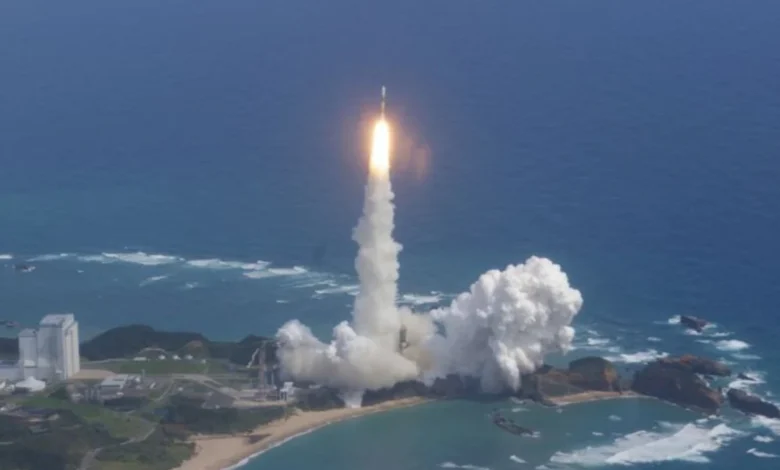
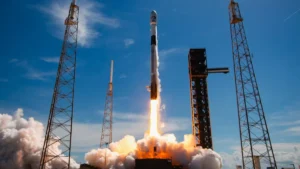
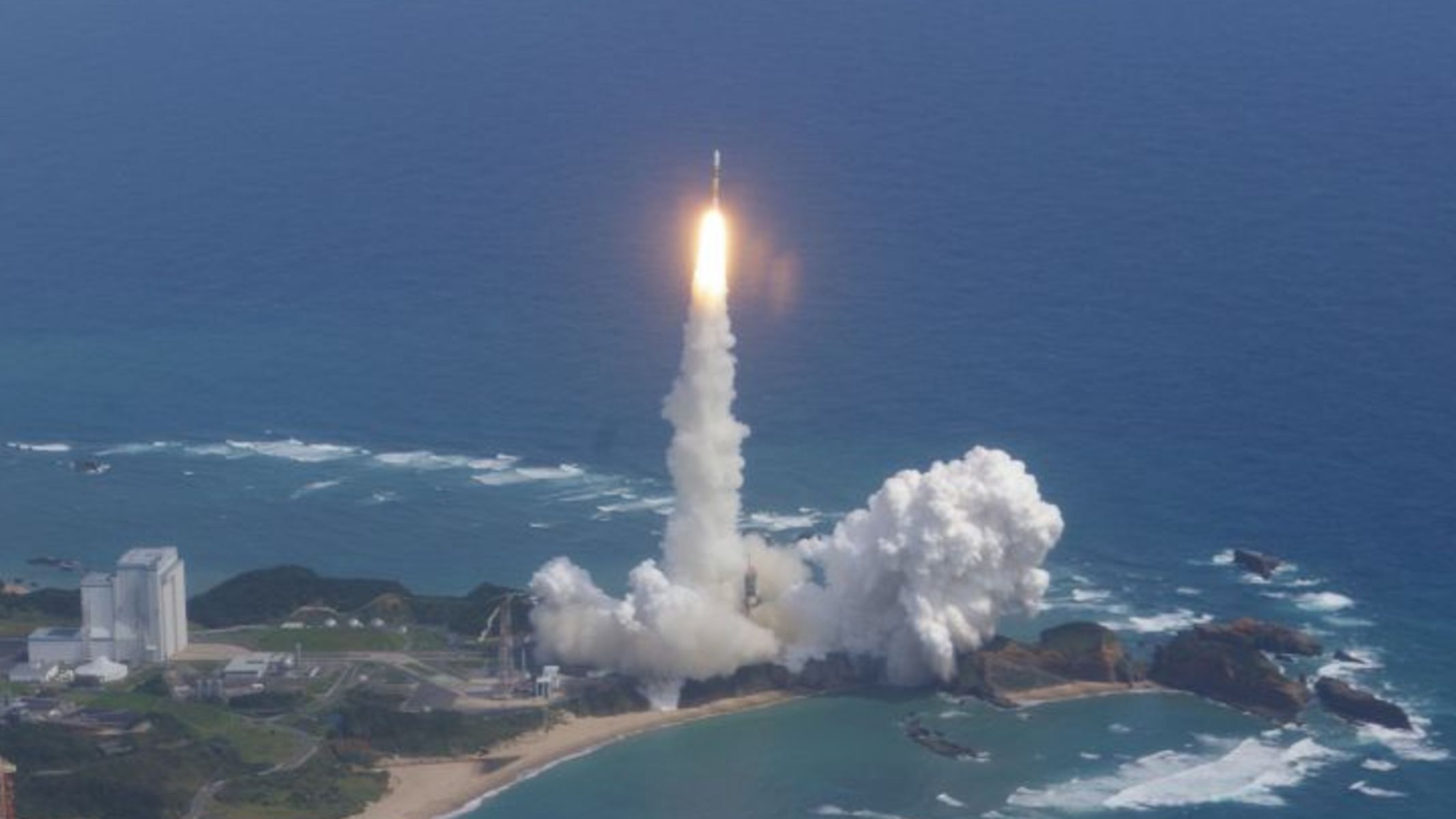
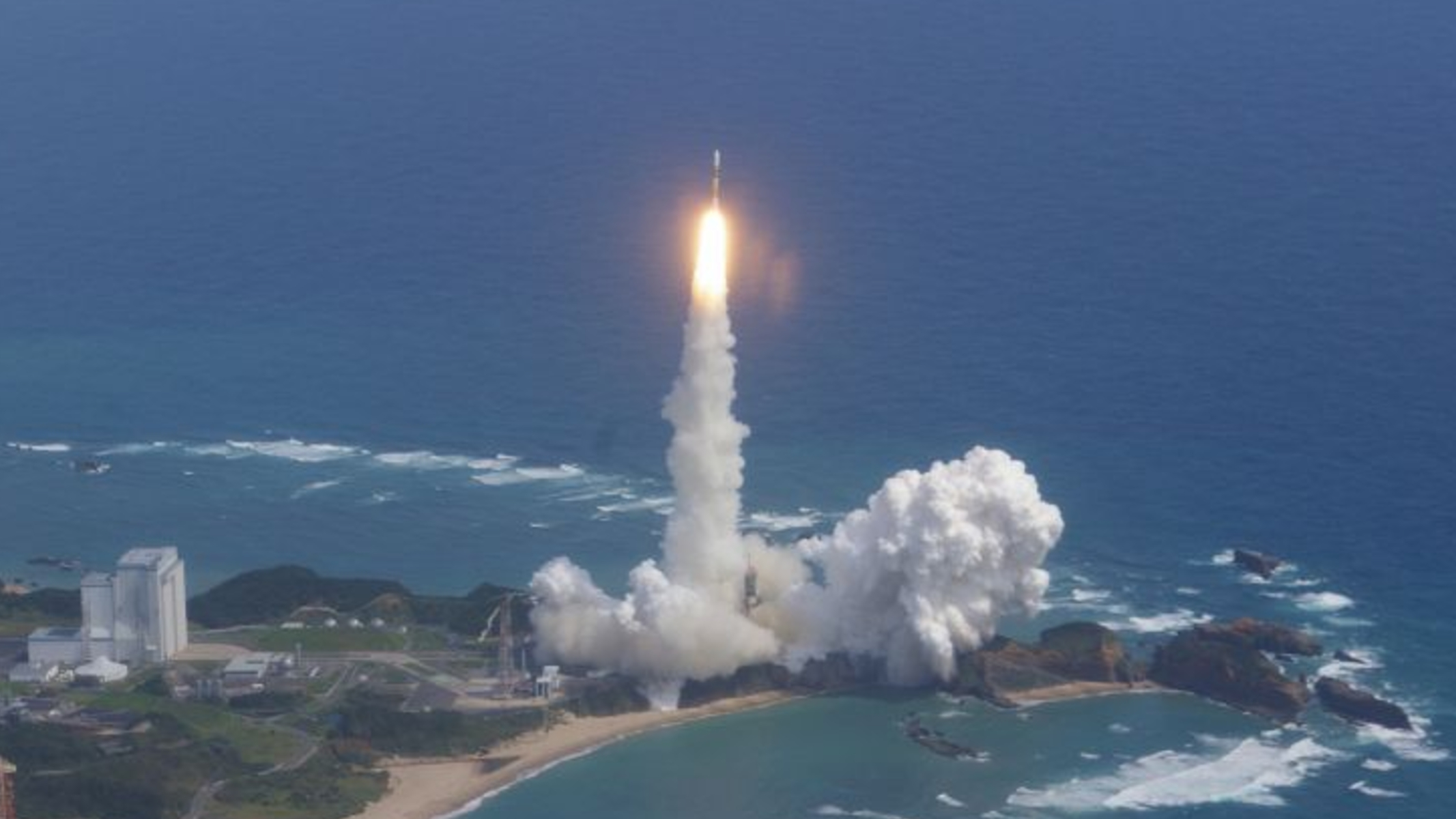
Seventeen years ago, on September 13, 2007, the Japan Aerospace Exploration Agency (JAXA) achieved a monumental milestone in deep space exploration. Liftoff occurred at the Tanegashima Space Center, where a powerful, white-and-orange H-IIA rocket successfully propelled the SELenological and ENgineering Explorer (SELENE)—widely known as Kaguya—into the evening skies of Eastern Standard Time. Locally at the launch facility, the clock read 10:31 a.m. on September 14.
This ambitious initiative marked Japan’s second endeavor to reach Earth’s natural satellite, yet it represented a historic first: the nation’s inaugural dedicated lunar orbiter. Carrying a sophisticated suite of 14 scientific instruments alongside two smaller microsatellites, Kaguya was designed to construct comprehensive topographical maps, analyze the moon’s complex gravitational field, and capture unprecedented high-definition media of the lunar landscape.
The mission not only solidified Japan’s position as a rising spacefaring nation capable of complex interplanetary operations, but it also captured the global imagination by delivering breathtaking cinematic views of the moon and the famous phenomenon known as Earthrise.
Historical Context and The Path to SELENE
To understand the magnitude of the Kaguya mission, one must look back at Japan’s preliminary steps into lunar science. In 1990, JAXA’s predecessor, the Institute of Space and Astronautical Science (ISAS), launched the Hiten spacecraft. Hiten was engineered primarily as a technology demonstrator. Rather than entering a stable lunar orbit, it swung through a highly elliptical geocentric orbit, performing a series of ten lunar flybys before intentionally impacting the lunar surface in 1993. During its journey, Hiten released a smaller sub-satellite named Hagoromo, which successfully entered lunar orbit but suffered a transmitter failure, severely limiting its scientific return.
While Hiten provided valuable trajectory and engineering data, it left Japan eager to accomplish a fully realized orbital science mission. Enter SELENE, later christened Kaguya following a nationwide public poll that honored the legendary moon princess Kaguya-hime from ancient Japanese folklore.
Kaguya was far more than a single spacecraft; it was a tripartite system consisting of a main orbiter and two accompanying sub-satellites affectionately named Okina (a relay satellite) and Ouna (a radio source experiment). Together, this trio was meticulously engineered to decode the internal structure and surface composition of the moon.
Chronology of the Kaguya Mission
The journey of the SELENE spacecraft unfolded over nearly two years of orbital dynamics, data acquisition, and planned operations:
- September 13/14, 2007: Kaguya launches from the Tanegashima Space Center aboard an H-IIA rocket, entering an initial Earth-parking orbit.
- Late September 2007: After looping around the Earth twice to gain momentum, the spacecraft executes a trans-lunar injection maneuver, setting a course for the moon.
- October 3–4, 2007: Kaguya arrives at the moon, successfully executes lunar orbit insertion, and circularizes its path at an altitude of approximately 100 kilometers.
- October-November 2007: The main orbiter successfully deploys its two sub-satellites, Okina and Ouna, into their respective elliptical orbits to facilitate gravitational measurements and communication relays.
- December 2007 – October 2008: The mission enters its primary science phase. High-definition cameras begin broadcasting stunning visuals, while spectrometers and radar sounders map the lunar crust, mineralogy, and subsurface features.
- October 2008: Kaguya successfully completes its primary one-year science mission. JAXA mission planners approve an extended mission phase through early 2009.
- January–February 2009: A faulty reaction wheel begins to degrade spacecraft stability, prompting mission controllers to truncate the extended phase and prepare for a controlled descent.
- February 12, 2009: Kaguya is deliberately commanded to de-orbit, ending its life with a high-speed impact on the lunar surface near Gill Crater.
Scientific Instruments and Technical Objectives
Kaguya’s scientific payload was exceptionally diverse, boasting instruments designed to probe both the shallow regolith and the deep interior of the moon. Among these were X-ray and gamma-ray spectrometers configured to map the elemental distribution of the lunar crust, a lunar radar sounder to peer beneath the surface, and a laser altimeter that mapped topography with unprecedented precision.
The two sub-satellites played a critical role in mapping the moon’s gravity field, particularly across the far side of the moon—a hemisphere perpetually turned away from Earth where tracking spacecraft signals is notoriously difficult. By utilizing Okina as a relay satellite during periods when the main orbiter passed behind the lunar limb, JAXA scientists could continuously monitor Doppler shifts in the radio signals. This technique yielded the most accurate gravity map of the far side of the moon up to that point in history.
Furthermore, Kaguya provided critical optical observations of permanently shadowed regions, such as the interior of Shackleton Crater near the lunar south pole. These observations contributed valuable data to ongoing discussions regarding the presence of water ice trapped in cold traps across the polar regions.
Public Engagement and Visual Legacy
While the raw telemetry, gravity models, and topographical maps were invaluable to planetary scientists, Kaguya’s most enduring legacy among the general public remains its visual catalog. Equipped with two specialized high-definition television (HDTV) cameras—a wide-angle lens and a telephoto lens—the spacecraft provided humanity with its first high-definition perspective of another celestial body.
For decades, the standard visual reference for the lunar surface and Earthrise remained the iconic analog photographs captured by NASA’s Apollo astronauts in the late 1960s and early 1970s. Kaguya shattered that generational gap by broadcasting crisp, high-definition digital video sequences of our home planet rising above the stark, cratered horizon of the grey lunar expanse. These dramatic clips captivated classrooms, science enthusiasts, and media outlets worldwide, rekindling global interest in lunar exploration.
Mission Conclusion and Controlled Impact
By early 2009, operational constraints began to close in on the venerable spacecraft. The failure of a critical reaction wheel—devices used to control the orientation and stability of the spacecraft without expending propellant—significantly compromised JAXA’s ability to maintain precise pointing for its cameras and scientific instruments.
Rather than allowing Kaguya to drift aimlessly as space debris or succumb to uncontrolled orbital decay, mission controllers elected to execute a planned, controlled impact. On February 12, 2009, ground teams sent final commands guiding the spacecraft downward. Kaguya impacted the lunar surface near Gill Crater on the near side of the moon, concluding a brilliant 17-month operational lifespan. Amateur astronomers and professional observatories alike watched for the flash of the impact, marking the fiery end of an iconic mission.
Broader Impact and Implications for Modern Lunar Exploration
The success of the Kaguya mission resonated far beyond Japan’s borders, laying foundational groundwork for the modern renaissance of lunar exploration. The precise topographical and gravitational data returned by SELENE became an indispensable global resource for international space agencies planning subsequent lunar orbiters, landers, and rovers.
As NASA, JAXA, the European Space Agency (ESA), and other international partners now look toward sustainable human habitation through initiatives like the Artemis program, the legacy of Kaguya’s mapping achievements remains vital. Locating safe landing sites, understanding subsurface volatile distribution, and navigating lunar gravity anomalies all trace their modern operational baselines back to the pathfinding data gathered by Japan’s lunar princess.
Kaguya proved that medium-class planetary missions could deliver world-class science while simultaneously capturing the public’s imagination, ensuring that Japan’s contributions to lunar science will be studied and referenced for generations to come.