Anna Biller Confronts Genre Bias and the High Price of Artistic Integrity Following The Face of Horror Premiere

Filmmaker Anna Biller brought her trademark visual splendor and uncompromising thematic weight to the international stage with the world premiere of her latest feature, The Face of Horror, at the Toronto International Film Festival (TIFF) Midnight Madness program. Yet, the screening also brought to light a persistent friction between the director’s serious artistic intentions and the expectations of a traditionally male-dominated genre audience. Known for past works such as Viva (2007) and The Love Witch (2016), Biller has carved out a unique cinematic niche characterized by meticulous production design, vibrant color palettes, and deep explorations of female psychology. However, her latest project has once again sparked vital discussions regarding how genre films directed by women are received, categorized, and critically evaluated by contemporary audiences and programmers alike.
Main Facts of the TIFF Midnight Madness Premiere

The world premiere of The Face of Horror introduced audiences at TIFF to Biller’s unique reimagining of the classic Japanese ghost story Yotsuya Kaidan, transposed to 14th-century England. The film stars Kristine Froseth as Eleanor, a virtuous woman whose secret marriage to a seemingly noble knight, played by Jonah Hauer-King, descends into a harrowing psychological and physical nightmare. The supporting cast features Ellie Bamber as Eleanor’s devoted sister, Beatrice, a character Biller identifies as the traditional "final girl" of the narrative.
Despite an engaged room during the screening, Biller admitted in post-premiere interviews that the late-night festival crowd may not have been entirely aligned with the film’s measured pacing and heavy dramatic core. She noted that certain segments of the audience—colloquially referred to as "dude bros"—appeared to anticipate traditional, high-octane gore and rapid-fire violence rather than the prolonged monologues, rich character development, and deliberate pacing that defined her arthouse approach. According to Biller, the audience’s underlying resistance reflects a broader discomfort with sitting through a narrative deeply anchored in female suffering and systemic misogyny, particularly when packaged inside the safe confines of a genre festival slot typically reserved for unchallenging escapism.
Chronology and Background of Biller’s Career

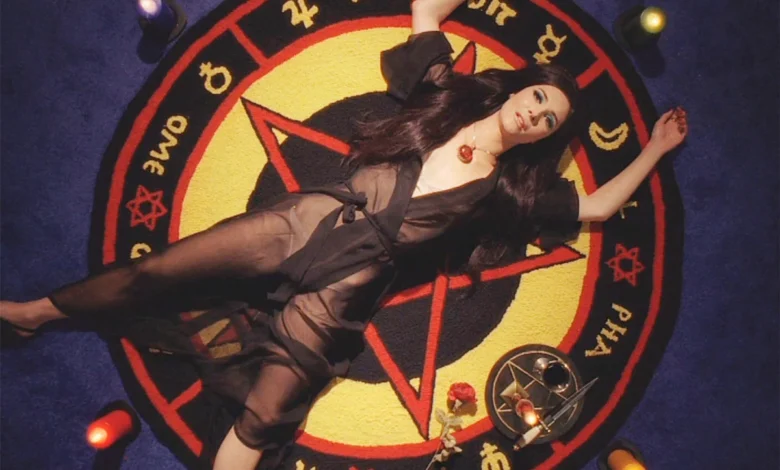
To understand the complex reception of The Face of Horror, it is necessary to examine the trajectory of Biller’s career over the past two decades. Biller emerged as a distinct voice in independent cinema with her 2007 feature Viva, establishing a visual style heavily inspired by vintage Technicolor melodramas, classic Hollywood cinema, and exploitation tropes. Her subsequent 2016 feature, The Love Witch, achieved cult status and earned widespread critical acclaim for its satirical yet sincere examination of female desire, witch culture, and patriarchal dynamics.
Despite the critical success of The Love Witch, Biller faced significant institutional hurdles in translating her artistic acclaim into tangible industry power. Following the release of her second feature, she experienced a prolonged drought in securing financial backing for subsequent projects. Her ambitious Gothic romance screenplay, Bluebeard’s Castle, suffered from distribution and financing hurdles as prospective producers struggled to categorize the work. Facing systemic industry reluctance, Biller ultimately adapted the screenplay into a debut novel published by Verso Books. By her own admission, the roadblocks she encountered nearly caused her to abandon filmmaking altogether. The development and eventual production of The Face of Horror served as a professional line in the sand, representing a high-stakes effort to prove the viability of her distinct directorial voice within the studio and independent financing landscape.
Supporting Data and Production Realities

The production of The Face of Horror also marks a significant operational shift for Biller, who historically operated as an autonomous auteur forced by budgetary constraints to shoulder multiple crew responsibilities. During the production of The Love Witch, Biller famously spent more than two years drafting patterns and personally sewing costumes because she lacked the funding for a dedicated wardrobe department. Critics and casual observers occasionally mischaracterized this hands-on approach as a manifestation of micro-management or control issues, rather than recognizing it as a pragmatic defense of artistic integrity under tight financial limitations.
For The Face of Horror, however, Biller finally secured the infrastructure of a standard professional production. For the first time, she worked alongside a fully staffed costume department featuring cutters, drapers, and stitchers who brought her intricate design sketches to life. This financial and logistical upgrade allowed Biller to lean into her strengths as an auteur while enjoying the collaborative dynamics of a traditional film set. Having previously worked across virtually every technical department in her earlier projects, Biller arrived on set with an intimate, firsthand understanding of her crew’s daily challenges and technical requirements, fostering a deeply collaborative environment that extended to the principal cast.
Official Responses and Artistic Philosophy

Biller’s creative philosophy centers on granting dignity and psychological depth to female characters who are traditionally relegated to decorative or passive roles in genre cinema. Throughout her career, she has pushed back against dismissive critical labels such as "camp," which she argues are frequently weaponized by male-dominated critical establishments to undermine the sincere emotional pain depicted in women-led narratives.
"I do like the word ‘humor’ because there is intentional humor, of course," Biller explained to IndieWire, noting the cathartic release inherent in classic revenge and horror tropes. "But ‘camp,’ I feel like it’s failed seriousness."
She elaborated that categorizing meticulously planned artistic statements as camp gives audiences an intellectual safety valve, allowing them to dismiss the underlying social critique. "There’s a defensiveness. Like, ‘Please don’t take this seriously because if we do, then it indicts us as men.’ And I think especially horror fans, their entertainment is very safe for them because they don’t ever have to see men called out for anything."

This dedication to sincerity is reflected not only in the script and costume design but also in the film’s lighting choices. Biller intentionally utilizes lighting to visually detach her characters from their opulent environments, drawing the viewer’s focus directly to the human soul and the psychological weight borne by the actors. During production, this emotional realism occasionally overwhelmed the cast; Biller recounted an instance where lead actor Kristine Froseth became so overcome with emotion during a particularly bloody sequence that she briefly left the set in tears before returning ten minutes later to complete the take—a moment of shared vulnerability that culminated in mutual tears between director and star.
Broader Impact and Industry Implications
The reception and distribution journey of The Face of Horror highlight ongoing structural challenges within the film industry regarding how genre-bending films directed by women are categorized and marketed. Biller has frequently spoken out about the compartmentalization of festival programming, where her films are often pushed into late-night slots like Midnight Madness because artistic programmers hesitate to evaluate vibrant, highly stylized visual works with the same serious critical lens applied to male-directed prestige dramas.

Despite these industrial hurdles, The Face of Horror stands as a vital testament to Biller’s unyielding artistic vision. By bridging the gap between historical folk horror, medieval misogyny, and modern psychological reality, the film forces viewers to confront uncomfortable truths regarding gender dynamics across centuries. As the film seeks a dedicated U.S. distribution partner following its high-profile premiere at the 2026 Toronto International Film Festival, it leaves an indelible mark on the contemporary horror landscape. Biller’s refusal to dilute her vision or compromise on the emotional validity of her characters cements her status as one of independent cinema’s most uncompromising and essential auteurs, proving that beauty, blood, and profound empathy can successfully coexist on the modern screen.