Inside the Trump Xi State Dinner Guest List A Blueprint of American Power and Corporate Influence

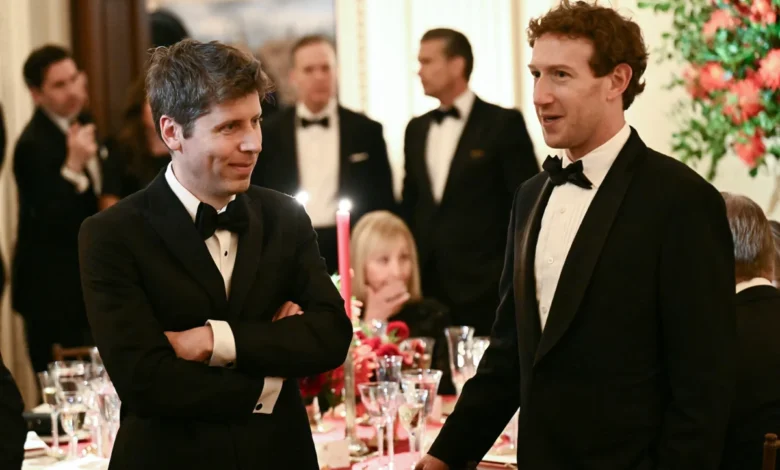
The guest list for President Donald Trump’s high-stakes state dinner with Chinese President Xi Jinping featured just about every notable chief executive officer, billionaire financier, and powerful political figure in the United States. Convened at the White House, the formal banquet served as more than a traditional diplomatic exercise between the world’s two largest economic superpowers. It functioned as an exhaustive roster of the nation’s contemporary ruling class, uniting traditional political leadership with the titans of artificial intelligence, legacy media, Wall Street banking, and the judiciary.
Comprising 134 carefully curated individuals, the event was designed to project both geopolitical strength to Beijing and domestic alignment within the broader MAGA movement. While the overarching objective of President Xi’s visit involved navigating turbulent bilateral relations—spanning trade, semiconductor access, and global security—the composition of the American delegation highlighted the profound intersection of private corporate power and public governance in modern Washington.
Main Facts of the Diplomatic Engagement
The state dinner took place on a Thursday evening during Chinese President Xi Jinping’s official visit to Washington, D.C., which coincided with a major administration-led artificial intelligence summit. The juxtaposition of diplomatic negotiations with a massive gathering of technology leaders underscored how deeply intertwined technological dominance has become with modern foreign policy.
The White House released a guest list that spanned several distinct sectors of American influence:
- The Executive Branch and Judiciary: Alongside President Trump, First Lady Melania Trump, Vice President JD Vance, Second Lady Usha Vance, and Secretary of State Marco Rubio, the room included high-ranking members of the federal judiciary, notably conservative Supreme Court Justices John Roberts, Amy Coney Barrett, and Brett Kavanaugh.
- The Technology Vanguard: The guest list read like a Silicon Valley directory. Long-established figures such as Meta CEO Mark Zuckerberg, OpenAI CEO Sam Altman, Tesla and xAI head Elon Musk, Amazon founder Jeff Bezos, Alphabet co-founder Sergey Brin, and Apple CEO Tim Cook were all in attendance. They were joined by prominent beneficiaries of the recent artificial intelligence boom, including Nvidia CEO Jensen Huang and AMD CEO Lisa Su.
- Financial and Industrial Titans: Wall Street was heavily represented by banking leaders such as JPMorgan Chase CEO Jamie Dimon and Citigroup CEO Jane Fraser. The energy sector featured delegates from major domestic petroleum corporations, including representatives from ExxonMobil.
- Media and Political Influencers: The delegation included prominent conservative media personalities from Fox News, such as Bret Baier, Laura Ingraham, and Jesse Watters, alongside House Speaker Mike Johnson and several key cabinet secretaries and administration advisers.
Chronology and Background Context
The road to the state dinner was paved by months of intense diplomatic positioning and domestic economic policy shifts. Tensions between the United States and China have remained elevated throughout successive administrations, driven by ongoing disputes over intellectual property, supply chain resilience, and the geopolitical status of Taiwan.
In the weeks leading up to the summit, the Trump administration prioritized a dual-track strategy: engaging Beijing in direct, high-level economic dialogue while aggressively mobilizing domestic industrial policy to secure American leadership in advanced technologies like semiconductors and artificial intelligence.
The convergence of tech executives in Washington was anchored primarily by the administration’s newly convened AI summit, a strategic forum aimed at public-private cooperation in next-generation computing infrastructure. By integrating these corporate leaders into a formal state dinner with President Xi, the administration signaled to Beijing that the American technology sector operates as a direct partner in national strategy. Historically, state dinners have occasionally featured business leaders, but the sheer density of market-moving executives at this event marked a distinct escalation in corporate representation at the highest levels of diplomacy.
Supporting Data and Economic Implications
The combined market capitalization of the corporate entities represented at the dinner tables ran into the tens of trillions of dollars, effectively binding the economic output of the world’s most valuable companies directly to the diplomatic outcomes of the summit.
Technology hardware and semiconductor manufacturing dominated the discussions surrounding the guest list. With figures like Jensen Huang of Nvidia and Lisa Su of AMD present, the dinner highlighted the critical chokepoints of the global digital economy. Advanced microchips remain the primary friction point in U.S.-China trade relations, as export controls designed to restrict Beijing’s access to cutting-edge artificial intelligence hardware continue to shape global supply chains.
Simultaneously, the inclusion of banking executives like Jamie Dimon and Jane Fraser reflected Wall Street’s persistent efforts to maintain open financial channels between the two superpowers. Despite geopolitical rhetoric favoring economic decoupling, cross-border capital flows and institutional investments remain deeply integrated.
Official Responses and Public Access
The exclusive nature of the event drew significant attention from independent journalists, watchdog organizations, and media outlets that were not granted access to the proceedings. While prominent conservative commentators and network anchors secured invitations, large segments of the mainstream press corps reported strict limitations on physical access to the venue.
Administration officials defended the guest list as a standard reflection of America’s industrial and political leadership, emphasizing the necessity of private-sector input in navigating complex international trade negotiations. Proponents of the administration argued that including chief executives from critical sectors ensures that economic realities on the ground directly inform high-level foreign policy decisions.
Conversely, government transparency advocates raised concerns regarding the unprecedented concentration of unelected corporate executives, media figures, and sitting Supreme Court justices dining alongside foreign heads of state. Critics noted that such high-level, closed-door interactions risk blurring the lines between public policy formulation and private corporate interests.
Broader Impact and Future Outlook
The Trump-Xi state dinner offered a rare, comprehensive snapshot of contemporary American power dynamics. By gathering the nation’s leading technocrats, financiers, media personalities, and political officials under one roof for a pivotal international summit, the event underscored the reality of modern governance: major national and international decisions are increasingly shaped by an elite coalition spanning both public institutions and private industry.
As the United States and China continue to navigate an era of strategic competition, the outcomes of the backroom discussions held during the banquet will likely ripple through future regulatory frameworks, technology policies, and trade agreements. Whether these public-private alliances successfully yield long-term economic stability and geopolitical security remains to be seen, but the guest list established beyond doubt who holds the levers of influence in Washington’s corridors of power.