Belgium and the World Health Organization Forge Deeper Strategic Alliance to Address Global Health Challenges

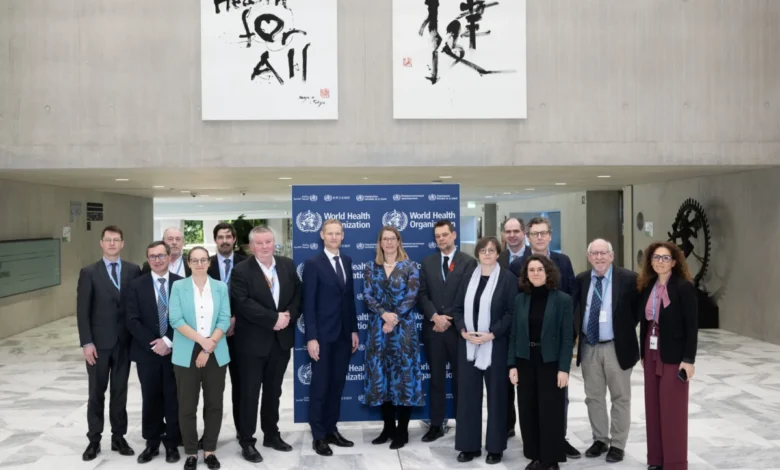
In a decisive move to bolster the international health architecture, Belgium and the World Health Organization (WHO) concluded a three-day high-level strategic dialogue in early March 2025, marking a pivotal moment in their long-standing partnership. The summit, held at WHO headquarters, served as a platform to recalibrate cooperation frameworks, ensuring that Belgium’s development priorities remain seamlessly aligned with the WHO’s 14th General Programme of Work (GPW14). The delegation, led by H.E. Christophe Payot, Ambassador of Belgium to the United Nations and other international organizations in Geneva, included cross-governmental representation from the Belgian Federal government, as well as the Flemish and Walloon regional governments, underscoring the nation’s holistic commitment to multilateral health initiatives.
A Chronology of Collaboration and Strategic Alignment
The dialogue, which took place from March 2 to March 5, 2025, represents the latest chapter in a multi-decadal relationship between Brussels and Geneva. Following Belgium’s influential presidency of the Council of the European Union in 2024—during which global health security and equitable access were central themes—the 2025 dialogue focused on translating political commitments into concrete, field-level outcomes.
The sessions were structured to move from high-level strategic policy discussions toward granular, evidence-based reviews of ongoing programs. Day one focused on the “Access to Medicines” initiative and the broader landscape of pharmaceutical equity. Day two shifted toward health emergency preparedness, covering the contentious and vital negotiations surrounding the global pandemic agreement and the implementation of a “One Health” approach to zoonotic disease mitigation. The final day was dedicated to Universal Health Coverage (UHC) and the long-term sustainability of health systems, with a particular emphasis on the Democratic Republic of Congo (DRC) and Mozambique as primary case studies for regional impact.
Accelerating Equitable Access to Essential Medicines
Central to the discussions was the review of Belgium’s financial and technical support for the WHO’s Access to Medicines program. Data presented during the summit highlighted the necessity of “market shaping”—a strategic approach designed to influence the supply and demand of essential health technologies. By stabilizing markets, the WHO aims to lower costs and ensure that low- and middle-income countries (LMICs) are not sidelined by price volatility.
The WHO utilized Senegal as a primary success story for this initiative. Through the deployment of local production policies, the program has demonstrated that domestic manufacturing capacity is not merely an aspirational goal but a viable strategy for reducing dependence on imported, high-cost pharmaceuticals. The dialogue participants reached a consensus: the sustainability of these programs hinges on the integration of local production into national health supply chains, moving away from purely donor-dependent models.
Strengthening Global Resilience: Emergencies and Pandemic Prevention
The geopolitical landscape of health security has been profoundly shaped by recent crises, including the ongoing humanitarian challenges in Gaza and the post-pandemic recovery phase. The dialogue addressed the WHO’s role in navigating these volatile environments. The presentation on field operations in Gaza served as a sobering reminder of the logistical hurdles involved in maintaining essential health services during active conflict.
Furthermore, the discussion delved into the acceleration of biological risks. With the frequency of zoonotic spillovers increasing due to climate change and human encroachment on natural habitats, the Belgian delegation and the WHO experts emphasized the urgency of the One Health approach. This strategy, which integrates human, animal, and environmental health, is currently being prioritized in the ongoing negotiations for the global pandemic treaty. The objective is to establish a legal and operational architecture that fosters transparency, rapid data sharing, and equitable distribution of medical countermeasures before the next global pathogen emerges.
Universal Health Coverage as the Bedrock of Development
Universal Health Coverage (UHC) remained a primary pillar of the discussions. Since 2021, the UHC-Partnership, supported by Belgian funding, has been instrumental in strengthening primary health care (PHC) systems across Belgium’s partner countries. The participants reviewed the results of this partnership, noting that while progress has been made in institutional capacity building, significant gaps remain in the delivery of mental health services within primary care settings.
In the DRC, for example, the integration of specialized mental health training into primary care clinics has shown early signs of success in addressing the high burden of psychological trauma in conflict-affected regions. The dialogue served to identify how the WHO country office programs could be better harmonized with Belgium’s bilateral cooperation agreements. This alignment is intended to eliminate the fragmentation of aid, ensuring that Belgian development capital is directed toward the most efficient and scalable health interventions.

Official Statements and Institutional Perspectives
The atmosphere of the dialogue was characterized by mutual transparency. Dr. Catharina Boehme, Assistant Director-General for External Relations and Governing Bodies at the WHO, praised the Belgian government’s willingness to engage in candid assessments of its funding impact.
"We thank you for your support, honesty, and strong engagement for global health," Dr. Boehme noted during the closing session. "Your efforts in supporting our work in Mozambique and Senegal are clear examples of the crucial work we accomplish together."
From the Belgian perspective, the partnership is viewed as a strategic necessity in a fractured world. Mr. Koen Van Acoleyen, Minister Counselor at the Permanent Representation of Belgium to the UN, highlighted the complexity of the current landscape: "After listening to the leaders and experts of WHO, we now better understand how they are navigating these challenging times. We are honoured that we can walk this road together."
Mr. Dirk Brems, Director of Thematic and Multilateral Cooperation, reiterated the importance of this relationship for Belgium’s broader development goals, stating, "We recognize WHO as a trustworthy partner in global health. We felt proud hearing how crucial our support is to the Organization and how it is having a positive impact at country, regional, and global levels. It’s important we continue these discussions as we tread uncharted territories."
Analysis of Implications: A Shift Toward Sustained Multilateralism
The implications of this renewed commitment are significant for the international community. By prioritizing the 14th General Programme of Work (GPW14), Belgium is signaling a shift toward long-term institutional stability rather than short-term project-based funding.
The emphasis on “evidence-based approaches” in areas such as Neglected Tropical Diseases (NTDs) and Sexual, Reproductive Health and Rights (SRHR) suggests that the partnership will continue to focus on data-driven interventions. This is particularly relevant in the context of the global health community’s struggle to meet the UN Sustainable Development Goals (SDGs) by 2030. The convergence of Belgium’s regional and federal priorities with the WHO’s global mandate provides a model for other mid-sized donors who wish to exert influence in the health sector through targeted, high-impact multilateralism.
Furthermore, the focus on the Country Cooperation Strategy (CCS) indicates that the future of this partnership will be increasingly decentralized. By empowering WHO country offices to act as the primary interface for bilateral cooperation, the partnership aims to be more responsive to local contexts and political realities in the Global South.
Looking Forward
As the meeting concluded, the focus shifted to the implementation of the next phase of the Belgium-WHO multi-year agreement. With the global health architecture in a state of flux—marked by evolving threats from climate change, antibiotic resistance, and geopolitical instability—the sustained, high-level coordination between Belgium and the WHO acts as a vital anchor. The commitment to a renewed Country Cooperation Strategy will be the primary mechanism for tracking progress in the coming years.
Ultimately, the dialogue did more than just review financial statements; it reaffirmed the necessity of multilateral institutions in an era of global uncertainty. As the delegation returned to Brussels, the consensus was clear: the path toward health equity is not a solitary journey but a collective endeavor that requires the sustained dedication of partners who are willing to navigate the complexities of global health with transparency, pragmatism, and a shared vision for a more resilient future.