Alexander Zverev secures maiden US Open title with clinical victory over Ben Shelton in New York

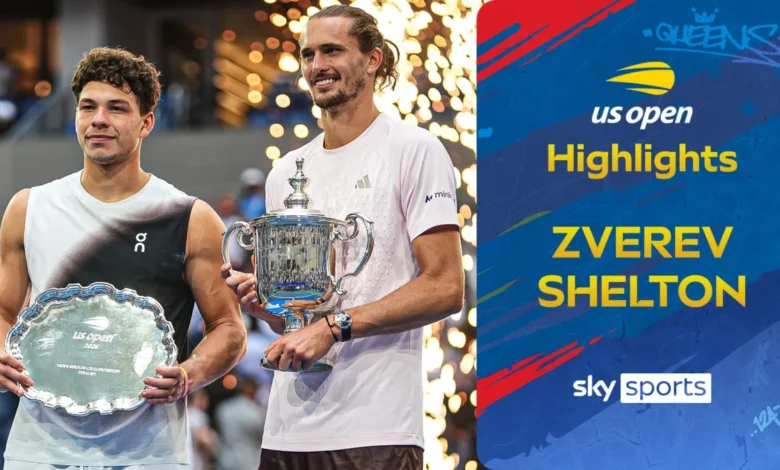
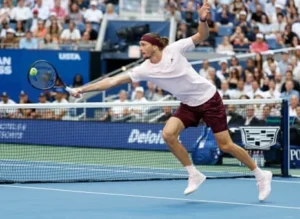
The 2026 US Open concluded on Sunday evening at the Arthur Ashe Stadium, crowning Alexander Zverev as the men’s singles champion after a commanding performance against American hopeful Ben Shelton. In a match that spanned three hours and twelve minutes, the German international dismantled the rising star with a scoreline of 6-4, 7-6(4), 6-3, marking a significant milestone in his career and cementing his place at the pinnacle of professional tennis. For Zverev, the victory represents the culmination of a decade-long pursuit of a Grand Slam title, a journey characterized by near-misses, rigorous rehabilitation, and a relentless refinement of his baseline game.
A Masterclass in Baseline Consistency
From the opening game, Zverev demonstrated a tactical maturity that contrasted sharply with the high-octane, aggressive playstyle favored by Shelton. While the American showcased the explosive serve-and-volley tactics that electrified the home crowd throughout the fortnight, Zverev’s defensive solidity proved to be the decisive factor.
The first set saw Zverev secure an early break in the third game, utilizing his formidable backhand to dictate rallies and neutralize Shelton’s pace. Despite the partisan support for the Atlanta native, Zverev remained composed, maintaining an 84% first-serve win percentage throughout the opening stanza. The second set presented a more formidable challenge, as Shelton elevated his intensity, forcing a tie-break. In the crucial moments, however, it was Zverev’s superior court coverage and error-free tennis that allowed him to clinch the set, effectively breaking the spirit of the younger challenger.
Chronology of the 2026 US Open Men’s Campaign
The journey to the final for both athletes was marked by significant tests of physical and mental fortitude. Zverev entered the tournament as the third seed, carrying the momentum of a successful summer hard-court season. His path to the final included a grueling five-set victory over the defending champion in the quarterfinals and a clinical straight-sets win in the semifinals against a top-ten rival.
Shelton, conversely, became the story of the tournament for the American public. His route to the final was characterized by dramatic comebacks and a series of upset victories against higher-ranked opponents. Below is the key chronology of the men’s singles bracket leading to the final showdown:
- Round of 16: Shelton secures a breakthrough victory against the tournament’s second seed in a marathon four-hour encounter.
- Quarterfinals: Zverev overcomes a two-set deficit to defeat his long-time rival in a match that solidified his championship credentials.
- Semifinals: Zverev breezes past the fourth seed, while Shelton survives a five-set thriller to become the first American male finalist in New York since 2003.
- Final: Zverev defeats Shelton in straight sets to claim his first US Open title.
Statistical Breakdown and Performance Analysis
Data from the match highlights the stark tactical differences between the two finalists. Zverev’s serve remained an impenetrable weapon, recording 18 aces and only two double faults. His ability to convert break points—capitalizing on three of his seven opportunities—demonstrated a ruthless efficiency that Shelton struggled to match.
Shelton, while impressive in his raw power, struggled with unforced errors during critical rallies. The 23-year-old recorded 42 unforced errors compared to Zverev’s 21, a disparity that often proves fatal at the Grand Slam level. Furthermore, Zverev’s success at the net, where he won 78% of points following a serve-and-volley transition, underscored the tactical evolution of his game under his current coaching regime.
Official Reactions and Post-Match Statements
In the post-match trophy presentation, a visibly emotional Zverev acknowledged the difficulty of the path taken to reach this achievement. "I have waited a long time for this moment, and to have it happen here, on the biggest stage in our sport, is a dream I have held since I was a child," Zverev stated. He further credited his team for their persistence during his recovery periods over the last few years, noting that the victory was a collective effort rather than an individual feat.
Ben Shelton, despite the disappointment of the loss, expressed gratitude for the support of the New York crowd and acknowledged the level of tennis displayed by his opponent. "Alexander played a near-perfect match today. I felt like I was competing at a high level, but he was always one step ahead, anticipating my shots and forcing me to play that extra ball. It is a learning experience, and I will be back," Shelton remarked during his press conference.
Broader Implications for the ATP Tour
The victory for Zverev sends a clear signal to the rest of the ATP field as the tour transitions into the indoor season. By securing a major title, Zverev effectively narrows the gap in the world rankings and establishes himself as a primary contender for the year-end championships.
For the American tennis establishment, the result is bittersweet. While Shelton’s run to the final is a clear indicator of the resurgent strength of American men’s tennis, the absence of a homegrown winner at the US Open continues to be a subject of intense national focus. Analysts suggest that Shelton’s performance will likely propel him into the top ten, providing him with more favorable seeding in upcoming tournaments, which is essential for deep runs in high-tier events.
Future Outlook and Tactical Evolution
The 2026 US Open has served as a crucible for the next generation of talent. The transition from the established "Big Three" era to a more fragmented, competitive landscape is now fully realized. Zverev’s win demonstrates that while power is a necessity in the modern game, it is the synthesis of physical longevity, defensive mobility, and mental resilience that ultimately produces champions.
As the professional circuit moves forward, the focus will shift to the European indoor swing. Zverev is expected to take a short period of recuperation before resuming training, with his eyes set on the world number one ranking—a target that is now statistically within his reach before the end of the calendar year.
The tournament organizers have also noted a record-breaking attendance throughout the two weeks, signaling a sustained interest in the sport despite the ongoing changes in player demographics. The success of the 2026 edition of the US Open reinforces the tournament’s status as the ultimate test of endurance, requiring players to balance the blistering heat of the New York late summer with the intense psychological pressure of the season’s final major.
In conclusion, Alexander Zverev’s triumph is more than just a trophy addition; it is a validation of a career-long commitment to the sport. By defeating a motivated and dangerous opponent like Shelton in front of a capacity crowd, Zverev has proven that he possesses the psychological fortitude required to handle the highest level of scrutiny. The tennis world will look toward the coming months with renewed interest, as the hierarchy of the sport continues to shift in response to the performances seen on the hard courts of Flushing Meadows.