Golden State Valkyries even the WNBA Finals at 2-2 with gritty defensive masterclass against Atlanta Dream

The Golden State Valkyries have successfully pushed the 2026 WNBA Finals back to a best-of-three scenario after a pivotal 67-62 victory over the Atlanta Dream on Saturday. In a contest defined by tactical adjustments and a suffocating defensive performance, the Valkyries neutralized Atlanta’s primary offensive engine, Angel Reese, to square the series at two games apiece. As the series shifts back to California for Monday’s Game 5, the momentum—which had been firmly in Atlanta’s favor following a dominant Game 3—has undergone a dramatic, hard-fought realignment.
The Defensive Blueprint: Neutralizing the Star
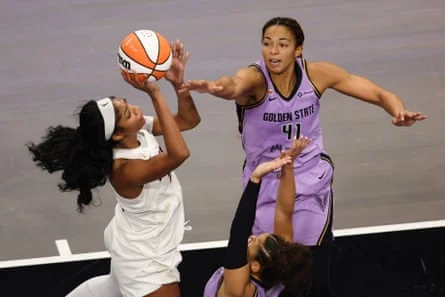
The primary narrative of Game 4 was the Valkyries’ tactical dismantling of Angel Reese, who had been the most influential player in the series leading up to Saturday. Reese, who had averaged a staggering 25.5 points and 14 rebounds in Atlanta’s two previous victories, found herself stifled by a Golden State interior defense led by Kiah Stokes.
Reese’s struggles were statistically significant; she finished the night with just eight points, shooting a dismal 2-for-12 from the field. Throughout the first three games of the series, Reese had secured a double-double in every outing, providing the Dream with consistent second-chance opportunities and interior scoring. In Game 4, however, the Valkyries’ defensive scheme—which emphasized physicality and constant pressure—forced Reese into uncomfortable positions. Her misses included a series of crucial layups in the fourth quarter that could have shifted the momentum back to the home team.
The defensive effort was not merely about individual matchups; it was a collective commitment to limiting the Dream’s offensive rhythm. Golden State’s defensive intensity kept Atlanta to a 33.3% shooting performance from the floor, including a difficult 4-for-23 showing from beyond the arc.
Kiah Stokes: A Historic Presence in the Paint
Central to Golden State’s defensive success was the record-breaking performance of Kiah Stokes. Beyond her three blocks in Game 4, Stokes has become an anchor for the Valkyries throughout this series. With her performance on Saturday, she reached 14 total blocks in the four games, officially eclipsing the WNBA Finals record previously held by legends Brittney Griner and Sylvia Fowles, who each logged 12 blocks in a single series.
Stokes’ impact extended to the glass, where she dominated with 16 total rebounds, eight of which were on the offensive end. By securing these offensive boards, Stokes provided the Valkyries with precious extra possessions, effectively starving the Dream of the fast-break opportunities that had defined their previous victories.
Tactical Shifts and Lineup Adjustments
Facing the prospect of falling into a 3-1 series deficit, Valkyries coach Natalie Nakase opted for a tactical shake-up. By inserting Tiffany Hayes and Kaila Charles into the starting lineup in place of Kayla Thornton and Cecilia Zandalasini, Nakase looked to introduce different energy levels early in the contest.
While the team initially struggled to find an offensive rhythm during the early afternoon tip-off, the move paid dividends once the bench rotation was integrated. When Thornton and Zandalasini entered the game, they sparked an 18-6 run to close out the first half. By the time the halftime whistle blew, Golden State had built a 42-26 lead—the largest deficit the Atlanta Dream had faced at the break during the entire 2026 postseason.
The Second-Half Surge and Final Moments
The third quarter has historically been the domain of the Atlanta Dream throughout this series, as they entered Game 4 having outscored the Valkyries 60-35 in the third frames of the first three games. However, Golden State refused to succumb to the third-quarter slump that had plagued them previously.

The tension reached a boiling point midway through the fourth quarter. After trailing by as many as 16 points, the Dream clawed their way back to a 61-55 deficit. The 17,000-strong sellout crowd at State Farm Arena surged in volume, sensing a comeback. However, Veronica Burton immediately extinguished the rally with a clinical three-pointer.
The closing seconds were a testament to the high-stakes nature of the series. Atlanta’s Rhyne Howard, who led all scorers with 19 points, executed a three-point play with just 28 seconds remaining to pull the Dream within four points at 66-62. In the ensuing scramble, Burton hit one of two free throws to ice the game, and a final defensive stand by the Valkyries prevented the Dream from narrowing the gap further.
Contextualizing the Series
The 2026 WNBA Finals have been a study in contrasts. Game 1 saw Golden State take the early initiative, but the subsequent two games in Atlanta were characterized by overwhelming offensive displays from the Dream, culminating in a 97-71 blowout in Game 3.
The Game 4 victory was not just a win on the scoreboard; it was a psychological victory for a Golden State squad that had been criticized for a lack of physicality. Following the Game 3 defeat, Valkyries players spoke candidly about the necessity of "playing harder" and embracing the grind of a seven-game series. Saturday’s performance was the realization of that goal, as the team focused on ball security, reduced turnovers, and relentless pursuit of loose balls.
Broader Implications and Outlook for Game 5
As the series moves back to California for Monday night’s Game 5, both organizations are facing critical adjustments. For Atlanta, the priority will be restoring the offensive flow that saw them put up 97 points just three days prior. The team’s inability to hit from the perimeter, combined with Reese’s neutralized presence, suggests that Coach and staff will need to find creative ways to create space for their stars.
For Golden State, the objective remains consistency. Having successfully adjusted their starting rotation and tightened their interior defense, the Valkyries have turned a series that appeared to be slipping away into a best-of-three showdown.
The financial and cultural impact of this series has been profound, with viewership numbers for the 2026 Finals hitting new peaks. The return to California on Monday is expected to be one of the most-watched events in WNBA history. With the series now tied, the pressure is squarely on both franchises to secure the advantage before the potential final games of the season.
The schedule for the remainder of the series is as follows:
- Game 5: Monday, Oct 26 – Atlanta at Golden State, 8:00 PM ET
- Game 6: Thursday, Oct 29 – Golden State at Atlanta, 8:00 PM ET
- Game 7 (If necessary): Saturday, Oct 31 – Atlanta at Golden State, 8:00 PM ET
As the teams prepare for the flight back to the West Coast, the atmosphere is one of heightened anticipation. In a league where star power often dictates the outcome, the collective defensive effort of the Valkyries in Game 4 serves as a reminder that championship series are frequently won in the paint, on the glass, and through the tactical adjustments made in the face of adversity. The 2026 WNBA Finals remain wide open, and the coming week promises to be a defining chapter in the league’s history.
Related posts: