Enzo Maresca Faces the Ultimate Gauntlet: Can He Sustain Manchester City’s Treble-Winning Legacy?

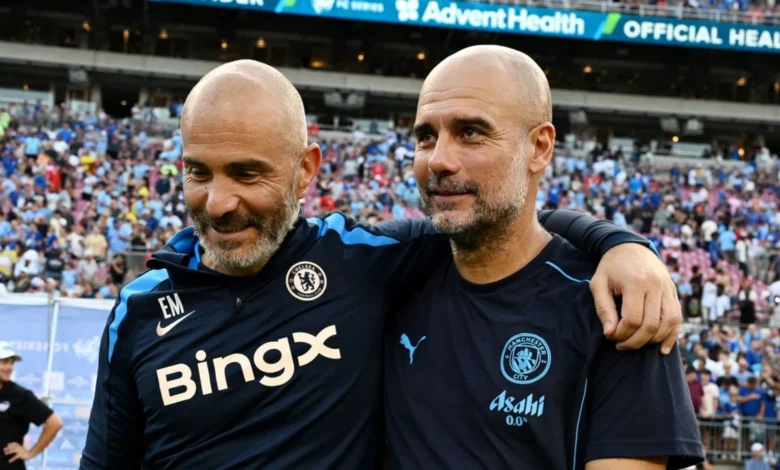
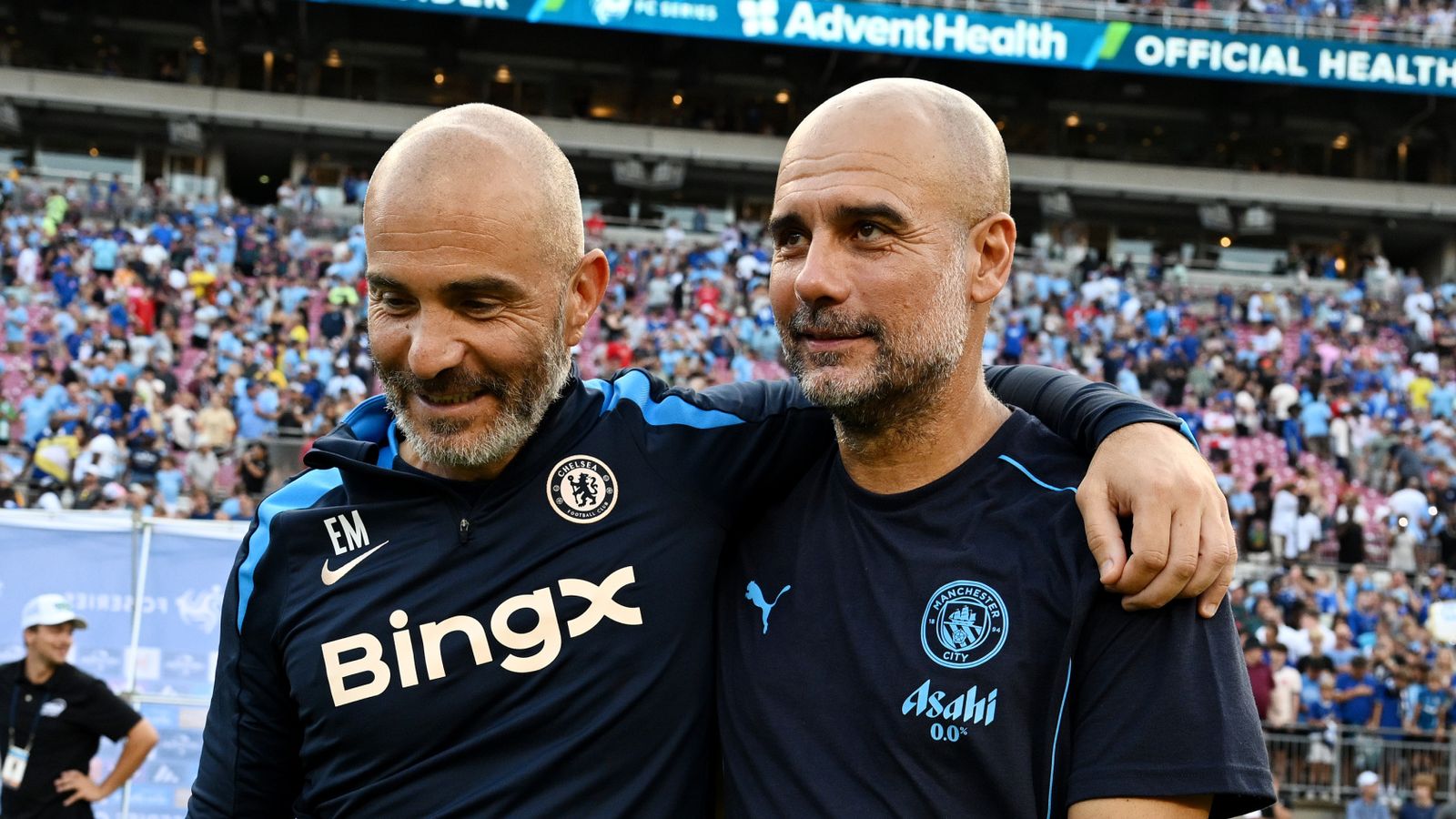
Manchester City embarks on a new managerial era, entrusting Enzo Maresca with the monumental task of succeeding Pep Guardiola. The Italian tactician, a familiar face at the Etihad, returns for his third stint, having previously served as an academy coach and then as Guardiola’s influential assistant during the historic 2022-23 treble-winning season. While Maresca has intimate knowledge of the club’s pursuit of silverware, the question looms large: is he poised to replicate that success on his own terms in the 2024-25 season and beyond? Sky Sports’ Ben Ransom and Laura Hunter delve into the intricacies of Maresca’s appointment, exploring the immediate challenges and the metrics by which his tenure will be judged in the shadow of Guardiola’s seismic departure.
A Sympathetic Opening Fixture List: A Crucial Early Advantage
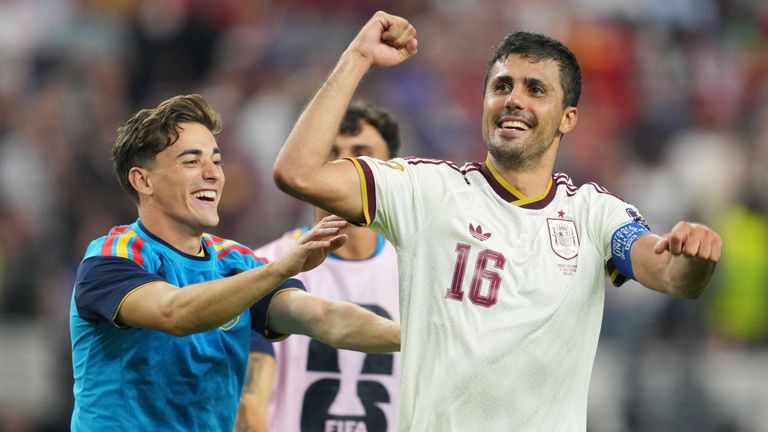
Maresca’s inaugural fixtures present a seemingly navigable path, offering a valuable window to establish his tactical identity and build early momentum. The opening trio of opponents – Bournemouth, Crystal Palace, and Coventry City – provides a less demanding introduction, crucial for integrating new signings and allowing Manchester City’s World Cup contingent to reacclimatize. The scheduling is particularly beneficial for players like Rodri, who endured a grueling World Cup campaign, playing nearly every minute for Spain. This phased return will be vital in mitigating the risk of fatigue and potential burnout for key personnel.
However, this forgiving start also places immediate pressure on Maresca to secure maximum points. The expectation at Manchester City is unwavering: victory. Any deviation from this script in these winnable ties could create an early deficit, a scenario the club can ill afford, especially with formidable clashes against Manchester United and Liverpool on the horizon in September. These marquee fixtures will not only test City’s mettle but also serve as early indicators of Maresca’s impact and the team’s competitive standing.
Inheriting a Masterpiece: The Double-Edged Sword of Guardiola’s Squad
Maresca enters his role acknowledging the "dream situation" he inherits. The squad, meticulously assembled by Pep Guardiola, boasts an unparalleled depth of talent and tactical sophistication. "It provides the consistency I need to do my job effectively," Maresca stated upon his arrival, recognizing the robust foundation laid by his predecessor. This continuity is a significant advantage, allowing him to focus on implementing his own nuances without the immediate necessity of a complete squad overhaul.
Yet, this inheritance comes with a unique set of expectations. The demands placed upon Maresca are intrinsically linked to Guardiola’s reign – a culture of sustained success and trophy acquisition. Unlike Guardiola, who was afforded a degree of autonomy to cultivate his vision over an extended period, Maresca may face a less forgiving timeline. While his relationship with Chairman Khaldoon Al Mubarak is reportedly strong, the ultimate benchmark for success at Manchester City remains clear: trophies. The question of whether Maresca will receive the same latitude as Guardiola, who famously managed on his own terms, is a critical undercurrent to his tenure.
Tactical Evolution: Bridging the Gap Between Guardiola and Maresca
While the transition from Guardiola to Maresca might not be a complete stylistic paradigm shift, subtle but significant differences are anticipated. Both managers champion possession-based football, prioritizing control and aggressive pressing. However, Maresca is perceived to favour a more expansive approach, utilizing high and wide wingers to stretch the pitch. This contrasts with Guardiola’s recent tactical leanings, which often saw wingers tucking inside to create central overloads, fostering fluid positional rotations that blurred traditional roles.
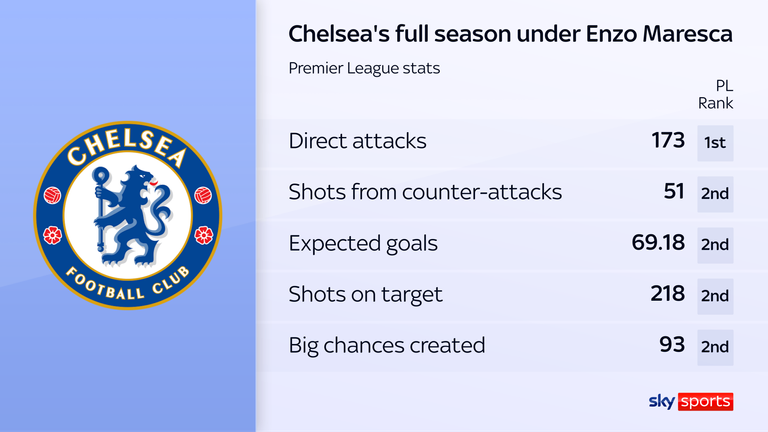
Maresca’s preferred 4-2-3-1 formation, as evidenced by his tenure at Chelsea, suggests a more structured approach, likely leading to more defined player roles. The success of this system hinges on a high-functioning number 10 capable of linking play, a role Cole Palmer excelled in at Chelsea. At Manchester City, Maresca can draw upon the talents of Phil Foden or potentially leverage the emerging skills of Rayan Cherki to fulfill this pivotal position.
The adaptation period for the players is a key consideration. While the core principles of possession and pressing remain, the subtle shifts in attacking structure and positional responsibilities will require assimilation. The fluidity and interchangeability that defined Guardiola’s City may give way to a more regimented yet equally potent attacking strategy under Maresca.
Squad Dynamics: A Blend of Experience and Emerging Talent
Manchester City’s recruitment strategy in recent transfer windows has demonstrated a clear intent to lower the squad’s average age, a trend spearheaded by Sporting Director Hugo Viana. The average age has reportedly dropped from 29 to just over 25. This youth infusion, however, has coincided with the departures of seasoned leaders like Bernardo Silva and John Stones, and previously Kevin De Bruyne, creating a potential leadership void.
Key figures such as Rodri and Ruben Dias remain crucial anchors, while Erling Haaland has increasingly assumed a leadership role. Experienced and stable presences like Marc Guéhi, Josko Gvardiol, and Mateo Kovacic provide a solid spine to the team.
The club’s transfer business thus far has been both costly and astute. The record-breaking acquisition of Elliot Anderson from Nottingham Forest for a reported £116 million underscores a commitment to reinforcing the midfield and future-proofing the squad. The capture of young Jeremy Donga from Leicester City further illustrates this strategy of investing in burgeoning talent.
The club’s transfer wishlist reportedly includes a right-back and a winger. Speculation also surrounds Lille teenager Ayyoub Bouaddi, a player who impressed during the World Cup for Morocco and is also reportedly a target for Arsenal. Potential outgoings could see players like Savinho, Omar Marmoush, Nico Gonzalez, Jack Grealish, Tijjani Reijnders, and Rico Lewis depart, depending on valuations and the club’s strategic priorities. The conclusion of major international tournaments typically accelerates transfer activity, and Manchester City is expected to be active in the market.
The Looming Shadow of the 115 Charges
A significant off-field challenge facing Maresca is the ongoing cloud of the Premier League’s 115 charges. The Italian tactician will inevitably be subjected to intense media scrutiny on this matter, a responsibility he must navigate with diplomatic skill. Pep Guardiola, a master of managing media relations, developed a well-honed ability to control narratives and deflect unwelcome lines of questioning. Maresca, whose public confrontations at Chelsea were primarily centered on footballing matters, will need to develop a similar resilience and strategic approach. The resolution of these charges, if it falls within his first 12 months, will undoubtedly shape the initial perception of his tenure.
A Premier League in Flux: An Opportunity for Maresca
Maresca’s arrival at Manchester City coincides with a period of significant managerial upheaval across the Premier League’s elite clubs. This reshuffling creates a dynamic and unpredictable landscape, presenting an opportunity for ambitious managers to make their mark. The perceived stability and established success of Manchester City under Guardiola now falls to Maresca in a league where rivals are also undergoing transitions.
At Liverpool, Arne Slot takes the helm, while Xabi Alonso’s impressive work at Bayer Leverkusen has seen him appointed at Chelsea. Even Manchester United, under the guidance of Michael Carrick, faces its own period of adjustment. This era of managerial uncertainty across the top tier provides a fertile ground for Maresca to assert his authority and establish Manchester City’s continued dominance. The league’s natural order is being recalibrated, and for Maresca, it is a scenario that is very much "sink or swim." The club, aware of this shifting dynamic, views it as a strategic advantage to capitalize on.
The Ultimate Test: Sustaining Excellence in the Post-Guardiola Era
The fundamental challenge for Enzo Maresca is to not only maintain but evolve Manchester City’s legacy of winning. The club has cultivated a culture where silverware is not merely a goal but an expectation, and anything less is unlikely to be tolerated long-term. Fans at the Etihad Stadium demand not only entertaining football but, above all, victory. The delicate balance between aesthetic appeal and consistent success, a challenge that reportedly tested Maresca at Chelsea, will be under intense scrutiny at Manchester City.
His appointment marks the first time since the Abu Dhabi takeover that the club’s long-term strategic direction feels less defined. The singular focus on luring Pep Guardiola to England a decade ago has been achieved and surpassed. Now, the question is "where next?" Maresca, drawing on his experience as a player and coach, and his intimate understanding of Manchester City’s winning formula, must now forge his own path, aiming to etch his name into the club’s storied history while navigating the immense pressure and expectations that come with managing one of the world’s elite footballing institutions.
Maresca is scheduled to hold his first press conference as Manchester City manager on Friday, July 26th. Sky Sports will provide comprehensive coverage through a dedicated live blog.
Related posts: