Nelson Racing Engines Launches the Intercooled Outlaw 427 for High-Performance Enthusiasts Seeking Street-Legal Power

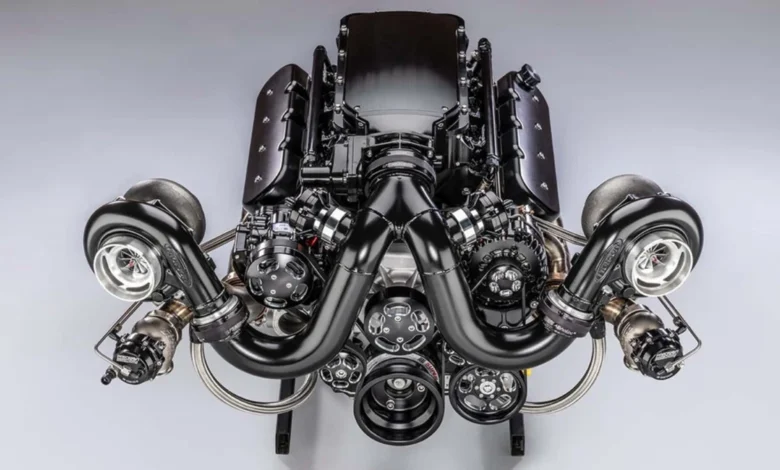
The pursuit of four-digit horsepower figures has long been the domain of dedicated race cars, requiring specialized high-octane fuels, rigorous maintenance schedules, and frequent teardowns. However, California-based Nelson Racing Engines (NRE) has recently shifted the paradigm for high-performance automotive powerplants with the release of the Intercooled Outlaw 427. This LS-based V8 engine is engineered to bridge the gap between track-only performance and street-legal convenience, offering 1,200 horsepower on standard 91-octane pump gasoline. By eliminating the necessity for race fuel, the company aims to provide a more accessible, albeit high-end, solution for custom car builders and enthusiasts looking for extreme output without the logistical burden of constant race-fuel management.
Architectural Foundation and Engineering Specifications
While the name "427" may evoke memories of classic big-block engines from the 1960s, the Outlaw 427 is a modern masterpiece of General Motors’ LS architecture. Displacing 427.7 cubic inches—approximately 7.0 liters—the engine is built upon a reinforced aluminum block designed to withstand the immense mechanical stresses associated with forced induction.
The engineering team at Nelson Racing Engines has incorporated a suite of high-strength components to ensure structural integrity under load. The engine features a balanced billet crankshaft, forged connecting rods, and custom-engineered pistons. This rotating assembly is complemented by an advanced six-bolt cylinder head design, which provides a significantly more robust clamping force than the standard four-bolt LS configuration. This is critical for maintaining head gasket integrity when the twin turbochargers begin to build boost.
The compression ratio is set at 9.0:1, a strategic choice that balances the engine’s thermal efficiency with its ability to run on lower-octane pump gas without suffering from pre-ignition or detonation. This design choice highlights NRE’s focus on drivability; by keeping the compression manageable, the engine remains reliable during extended use, such as cruise-ins or long-distance touring, while still possessing the headroom to generate massive power.
Forced Induction: The Mirror Image Advantage
At the heart of the Outlaw 427’s performance capability is a pair of NRE’s proprietary 72.0-millimeter Mirror Image Generation 2 turbochargers. The "Mirror Image" technology is a hallmark of Nelson Racing Engines’ design philosophy. By utilizing turbos that spin in opposite directions, the intake and exhaust plumbing can be kept symmetrical. This symmetry is not merely aesthetic; it improves airflow efficiency and simplifies the engine bay packaging, which is often a point of contention when fitting twin-turbo setups into tight chassis configurations.
These turbochargers utilize billet compressor wheels, which offer a superior strength-to-weight ratio compared to cast wheels, allowing for faster spool times and reduced turbo lag. To regulate the massive influx of air, the system is equipped with high-flow wastegates and precision blow-off valves. These components ensure that the boost pressure is managed effectively, preventing compressor surge and maintaining a consistent power curve throughout the rpm range. When pushed to its maximum potential on high-octane racing fuel, the engine is capable of producing up to 1,500 horsepower, though it remains factory-calibrated for 1,200 horsepower on 91-octane pump gas.
The Evolution of the LS Platform
The emergence of the Outlaw 427 is the latest chapter in the long-standing evolution of the GM LS engine platform. Since its introduction in the late 1990s, the LS engine has become the industry standard for engine swaps and high-performance builds due to its compact dimensions, lightweight aluminum construction, and an unparalleled aftermarket support network.
In the early 2000s, LS tuning was largely focused on naturally aspirated power, with enthusiasts experimenting with camshaft profiles and intake manifold designs. By the mid-2010s, the focus shifted toward forced induction as the cost of turbocharging components decreased and the knowledge base for tuning modern engine management systems grew. Today, builders are no longer content with "off-the-shelf" crate engines. They demand bespoke, dyno-proven solutions that can perform reliably at output levels that were previously considered impossible for a street-driven vehicle. Nelson Racing Engines has effectively capitalized on this trend by delivering a "turn-key" solution that removes the guesswork from the building process.

Rigorous Quality Control and Testing Protocols
One of the defining aspects of the Outlaw 427’s value proposition is the inclusion of factory-level dyno-testing. Every unit is built to order and undergoes a comprehensive break-in and tuning process on an engine dynamometer before it is crated and shipped to the client. This level of quality assurance is critical for high-horsepower engines, where a minor calibration error during the initial startup can lead to catastrophic failure.
By testing the engine under load, NRE ensures that the fuel mapping, ignition timing, and boost controllers are synchronized perfectly. This "dyno-proven" status provides peace of mind to the customer, who receives not just a collection of parts, but a verified, functional power unit that is ready for installation. This approach mirrors the practices of premium automotive manufacturers, albeit tailored to the specialized world of custom high-performance vehicle building.
Economic Implications and Market Positioning
The starting price of $41,999 for the Intercooled Outlaw 427 places it firmly in the premium category of the crate engine market. To put this in perspective, that figure represents a significant percentage of the cost of a high-end luxury vehicle. However, the market for such an engine is not the casual hobbyist; it is the dedicated enthusiast building a "pro-touring" car or a custom muscle car where the engine is the centerpiece of the build.
When considering the cost of building a 1,200-hp engine from scratch—including the purchase of a high-quality block, billet internals, custom turbos, fabrication of exhaust manifolds, custom tuning, and the labor hours involved in assembly and testing—the $41,999 price tag becomes much more justifiable. It represents a "buy-in" that eliminates the risks and delays associated with sourcing parts and finding a competent engine builder to manage a complex forced-induction project.
Broader Impact on the Automotive Customization Scene
The availability of engines like the Outlaw 427 signals a maturation of the aftermarket automotive industry. As emission regulations tighten and the automotive landscape shifts toward electrification, the demand for high-output internal combustion engines is becoming more focused on quality and extreme performance. Enthusiasts are choosing to invest more heavily in single, high-quality components that offer longevity and "plug-and-play" reliability.
Furthermore, the success of the LS platform in these extreme applications demonstrates the enduring relevance of traditional combustion technology. While the automotive industry at large is pivoting toward hybrid and battery-electric vehicles, the niche market for high-horsepower, gasoline-burning engines continues to innovate, finding new ways to extract efficiency and power from the internal combustion cycle.
For the builder, the Intercooled Outlaw 427 represents the pinnacle of what is currently possible with a street-legal, pump-gas setup. It provides a level of power that exceeds that of many hypercars, yet retains the operational characteristics that make it suitable for use in a variety of platforms, from classic Chevrolets to modern custom builds. Whether this engine is installed in a track-day car or a weekend cruiser, its presence under the hood serves as a testament to the engineering prowess required to make 1,200 horsepower both accessible and manageable.
As the industry looks toward the future, projects like the Outlaw 427 underscore the importance of precision engineering in the custom car space. It is a reminder that even in an age of rapid technological transition, there is still a significant and thriving market for high-performance mechanical engineering that pushes the limits of what a street-legal vehicle can achieve. The team at Nelson Racing Engines has effectively positioned their latest creation not just as an engine, but as a gateway to an extreme level of performance that, until recently, was reserved for the most elite tiers of the racing world.