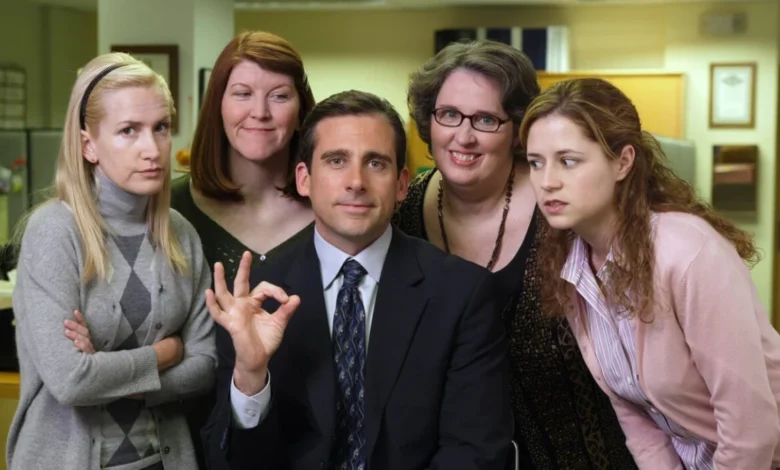
More than a decade after wrapping its landmark nine-season run on NBC in 2013, The Office remains an undisputed cultural titan. Fueled by continuous syndication and lucrative streaming deals, the mockumentary sitcom has cemented its place as a cornerstone of modern television. With the exception of universally dreaded milestones like season six’s "Scott’s Tots"—famously ranked among the most agonizingly awkward episodes in television history—millions of viewers cycle through endless re-watch loops of the Scranton branch’s daily exploits. Yet, even the most dedicated fans eventually exhaust the standard viewing cycle, prompting a search for adjacent cinematic and television media that capture the same unique blend of cringe comedy, workplace satire, and mockumentary framing.
For audiences seeking to bridge the gap between re-runs, a curated selection of feature films offers the exact comedic styling, corporate absurdity, and character-driven awkwardness that defined the beloved series. Leading this cinematic extension is David Brent: Life on the Road, a film that dives directly back into the cringe-inducing universe that originally inspired the American adaptation.
The Evolution of Workplace Satire: Bridging Scranton and Slough
To fully appreciate the cinematic extensions of workplace comedy, one must look at the historical trajectory of the genre. Greg Daniels’ American adaptation of The Office was heavily indebted to the original 2001 British series created by and starring Ricky Gervais and Stephen Merchant. While the U.S. version ultimately softened its edges over nine years—evolving Michael Scott from a genuinely pathetic, mean-spirited manager into a lovable, albeit misguided, eccentric—the original UK iteration leaned heavily into unrelenting awkwardness.
Ricky Gervais’ character, David Brent, served as the blueprint for Steve Carell’s Michael Scott. Brent’s desperate need for validation, tone-deaf musical performances, and utter lack of self-awareness set a high-water mark for cringe comedy. In 2016, Gervais revisited the character in David Brent: Life on the Road, shifting the narrative lens from a stagnant office environment to the grueling reality of a faded corporate drone attempting to chase past glories.
In the film, Brent is no longer managing a paper company branch; instead, he is grinding away as a regional sales representative for a cleaning products company, subjected to the same indignities and casual cruelty from younger co-workers that his own staff once endured. Rather than inspiring personal growth, this stagnation drives Brent to liquidate his pension fund, hire a backing band of cynical professional musicians, and finance a doomed musical tour across the UK.
For fans of the U.S. series, the film acts as a vital missing link. It showcases the same documentary crew filming a subject who desperately wants to be perceived as a visionary artist rather than a middle-aged failure. Over the runtime, Brent is slowly humanized, mirroring the character arc that transformed Michael Scott into a sympathetic figure. The film is currently available for streaming on Netflix, offering a direct lineage back to the mockumentary roots of the franchise.
Cinematic Explorations of the 9-to-5 Grind: Office Space
While mockumentaries capture the stylistic formatting of The Office, other cinematic masterpieces have brilliantly skewered the psychological toll of corporate bureaucracy. Released in 1999 and directed by Mike Judge, Office Space remains the definitive cinematic text on the soul-crushing nature of late-20th-century white-collar employment.

The film follows Peter Gibbons, a disgruntled software company employee who undergoes a hypnotic therapy session that leaves him utterly devoid of workplace anxiety or motivation. His subsequent refusal to care about corporate mandates, TPS reports, or management restructuring resonates deeply with anyone who has ever spent a Monday morning staring blankly at an Excel spreadsheet.
Office Space mirrors the petty office politics, passive-aggressive management styles, and soul-draining meetings that populated Dunder Mifflin. Characters like the tyrannical efficiency consultant Bill Lumbergh and the stapler-obsessed Milton Waddams reflect the exaggerated yet painfully accurate archetypes found in modern corporate culture. The movie delves into the friction between human individuality and corporate conformity, providing therapeutic laughter for anyone trapped in a cubicle. Viewers can rent Office Space on Amazon Prime Video.
The Mid-Century Corporate Blueprint: The Apartment
Long before paper merchants and software engineers became the subjects of workplace satire, Hollywood explored the transactional nature of corporate advancement. Billy Wilder’s 1960 masterpiece The Apartment stands as a towering achievement in dark comedic social commentary, blending romance and corporate critique with remarkable precision.
Jack Lemmon stars as C.C. "Bud" Baxter, an ambitious clerk at a massive New York City insurance firm. To curry favor with corporate executives and secure promotions, Baxter regularly lends out his Manhattan apartment to his bosses for their extramarital affairs. The arrangement places an immense psychological burden on Baxter, a dynamic that will feel familiar to viewers who watched Jim Halpert or Dwight Schrute navigate the labyrinthine power dynamics of corporate hierarchy.
The film successfully balances farce with genuine pathos, examining how large institutions warp the moral compass of entry-level employees desperate for upward mobility. Its sharp dialogue and cynical view of the American corporate ladder paved the way for modern workplace comedies. Today, The Apartment is available for streaming on Kanopy and Tubi, or for rent on Prime Video.
The Vanishing Era of Corporate Temp Work: Clockwatchers
The 1990s workplace landscape offered unique subcultures that have largely vanished in the modern gig economy, a phenomenon brilliantly captured in the 1997 dark comedy Clockwatchers. Directed by Jill Sprecher, the film explores the daily realities of long-term temporary workers through the eyes of Iris, played by Toni Collette.
Iris takes a temporary clerical job at a mid-sized financial conglomerate, where she bonds with three other displaced temps played by Parker Posey, Lisa Kudrow, and Alanna Ubach. Together, the quartet navigates the marginalization, underappreciation, and bureaucratic absurdities of being at the very bottom of the corporate food chain. While permanent employees enjoy stability and retirement benefits, the temporary workers face constant anxiety about layoffs and office theft.
Clockwatchers captures the specific brand of camaraderie that develops among colleagues who share a mutual disdain for their working conditions—a dynamic that mirrors the friendships forged in the annex of Dunder Mifflin. The film’s examination of corporate indifference provides a darkly humorous look at the psychological toll of precarious employment. Audiences can stream Clockwatchers on Hoopla and Tubi, or rent it via Prime Video.

When Order Breaks Down: Office Christmas Party
For viewers whose favorite episodes of The Office are those where total chaos erupts—such as Michael burning his foot on a George Foreman grill, the chaotic fire drill cold open, or the various disastrous holiday parties—Office Christmas Party (2016) delivers a cinematic escalation of corporate bedlam.
The plot centers on a branch manager who, alongside his chief technical officer, decides to throw an epic, boundary-pushing holiday bash to impress a massive prospective client and save their struggling tech company branch from closure. What begins as a festive gathering quickly spirals into an extravaganza involving heavy property damage, encounters with law enforcement, and multiple hospitalizations.
While the premise is exaggerated for comedic effect, the underlying motivation—the desire of employees to break free from the monotonous constraints of corporate policy—aligns directly with the anarchic spirit of characters like Creed Bratton or the various pranks orchestrated by Jim and Dwight. The film is available to stream on Paramount+ and to rent on Prime Video.
The Mockumentary Masterpiece: Waiting for Guffman
The mockumentary format relies on a delicate balance of improvised dialogue, direct-to-camera confessions, and heightened realism, all of which were perfected by Christopher Guest. Released in 1997, Waiting for Guffman is an essential watch for fans who appreciate the specific interview-segment style of The Office.
The narrative follows a community theater group in the small town of Blaine, Missouri, as they prepare an original musical production to celebrate the town’s sesquicentennial anniversary. The production is spearheaded by Corky St. Clair, an intensely dramatic, delusions-of-grandeur director played by Christopher Guest. St. Clair shares a psychological DNA with Michael Scott: both men possess unwavering confidence in their artistic and leadership abilities despite overwhelming evidence to the contrary, and both view their mundane local groups as professional theatrical troupes.
The film explores the petty rivalries, fragile egos, and eccentric personalities that emerge when ordinary people are given a platform to express their creative ambitions. Featuring an ensemble cast of comedy legends including Catherine O’Hara, Eugene Levy, and Parker Posey, Waiting for Guffman remains a gold standard for cringe-inducing mockumentary comedy. It is available to rent on Prime Video.
Conclusion
As television audiences continue to loop through the 201 episodes of The Office, the appetite for stories exploring the absurdity of modern labor remains insatiable. Whether through the direct continuation of the mockumentary style in David Brent: Life on the Road, the existential white-collar rebellion of Office Space, or the community theater delusions of Waiting for Guffman, cinema offers a rich catalog of alternatives. These films validate the universal truth that while working for a living can be an exercise in frustration, laughing at the collective misery of the 9-to-5 grind remains one of humanity’s most effective coping mechanisms.