The Evolution of Edinburgh Hospitality: A Comprehensive Guide to the Scottish Capital’s Transforming Hotel Landscape

For decades, Edinburgh’s hospitality sector was defined by a measured, traditional elegance. The Scottish capital, long a destination for history enthusiasts and festival-goers, relied on a core group of historic, grand-dame hotels that reflected the city’s neoclassical architecture and stoic, welcoming culture. However, the post-2020 era has seen a marked acceleration in the city’s hotel evolution. This shift is not merely a product of increased tourism volume but a direct response to a broader cultural transformation within the city—a movement driven by a new influx of creative talent, independent artisans, and a demand for flexible, design-led accommodation that mirrors the city’s burgeoning reputation as a modern, cosmopolitan hub.
The current landscape of Edinburgh’s hospitality market is characterized by a "two-tier" expansion: the meticulous restoration of landmark properties and the emergence of innovative, lifestyle-oriented boutiques in formerly overlooked industrial districts like Leith. As Scotland continues to see a record-breaking interest in domestic and international travel, the hotel industry is recalibrating to accommodate a diverse demographic, ranging from long-stay digital nomads to luxury-seeking festival attendees.
The Historic Pillars: Modernizing Heritage
At the center of this transformation remains The Balmoral. As one of Edinburgh’s most iconic landmarks, the hotel’s 190-foot clock tower—infamous for being set three minutes fast to ensure commuters do not miss their trains at the adjacent Waverley Station—serves as a literal and metaphorical anchor for the city. Following a multi-million-pound restoration by the Rocco Forte group, completed in 2025, the property has successfully bridged the gap between Edwardian grandeur and contemporary luxury.
The renovation of The Balmoral is a case study in modern heritage management. Rather than stripping the hotel of its historical context, designers—led by Olga Polizzi—have utilized a palette of Hebridean blues, custom tartans, and creamy neutrals to modernize the aesthetic. This approach acknowledges that today’s luxury traveler expects both the pedigree of a historic building and the functional efficiency of modern technology and spa facilities, such as the Irene Forte wellness center.
The Rise of Lifestyle and Boutique Concepts
While the grand dames hold the center, the periphery of the city center is being redefined by brands such as The Hoxton and Gleneagles Townhouse. The 2022 opening of Gleneagles Townhouse in St Andrew’s Square marked a significant milestone, signaling that the "countryside luxury" model could be successfully exported to an urban environment.
The Hoxton, which opened its doors in Haymarket in the summer of 2024, represents the second tier of this expansion. By repurposing 11 Georgian-style townhouses, the brand has created a "community-first" model that functions as much as a co-working space as it does a hotel. Industry analysts note that this shift toward "hybrid" hospitality—where lobbies function as public social hubs and restaurants cater to local residents as much as guests—is a direct response to the changing work-life habits of the post-pandemic era.
Neighborhood Diversification: The Case of Leith
Perhaps the most notable trend in the current market is the decentralization of tourism. Historically, the Old Town and New Town were the singular focus for hotel developers. Today, the focus has shifted to the waterfront district of Leith. The Pavilion at Lamb’s House stands as a primary example of this movement. By transforming a 17th-century merchant’s house into a high-end private rental, the project developers have tapped into a growing market of travelers who prioritize "living like a local" over traditional full-service hotel stays.
This trend is backed by data from the Scottish Tourism Alliance, which has reported a consistent year-over-year increase in demand for self-catered and extended-stay properties in Edinburgh. The appeal lies in the ability to access local markets, craft bakeries, and artisan studios, which have proliferated in Leith since the completion of the tram extension connecting the district to the city center.
Analyzing the Economic and Cultural Implications
The transformation of Edinburgh’s hotel scene is not occurring in a vacuum. It is closely linked to the city’s broader economic policy and its ambition to remain a premier European destination. The influx of international brands, such as Virgin Hotels, has introduced a competitive pressure that has raised the standard for service design and amenity offerings across the board.
From an economic standpoint, this diversification helps mitigate the seasonality traditionally associated with Edinburgh’s tourism. While the Fringe Festival and Hogmanay remain the primary drivers of occupancy, the growth of the "lifestyle hotel" sector, which focuses on business travelers, weekend city-break visitors, and remote workers, helps maintain steady revenue streams throughout the off-season.
Curated Selection of Key Properties
The market now offers a spectrum of experiences, each tailored to different traveler needs:
- Luxury & Tradition: The Balmoral remains the standard-bearer for those seeking the quintessential, service-heavy Scottish experience.
- Social & Lifestyle: The Hoxton (Haymarket) and Gleneagles Townhouse (St Andrew’s Square) cater to a demographic that values connectivity, design-led aesthetics, and communal dining.
- Self-Catered & Extended Stay: Properties like Eden Locke and the various apartment-style offerings, such as 33 Castle Terrace and Thistle Suites Royal Garden, offer flexibility for families and long-term guests.
- Design-Led & Boutique: Porteous Studio and House of Gods provide highly curated, intimate experiences for travelers looking for a departure from the "cookie-cutter" hotel room.
The Role of Design in Modern Hospitality
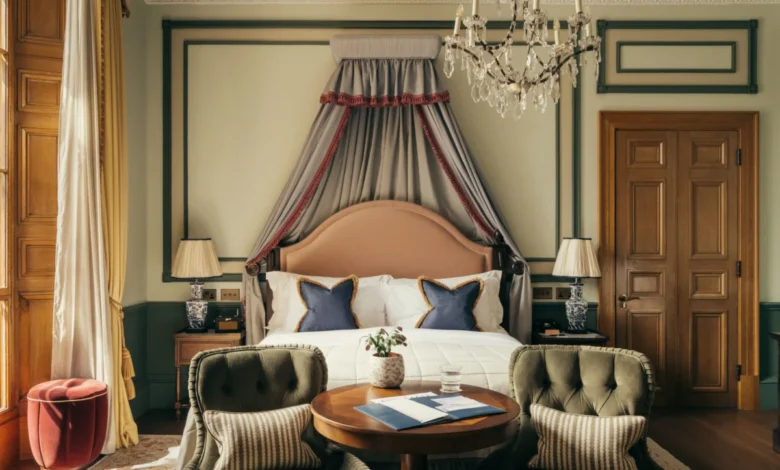
A common thread across these diverse properties is the emphasis on "narrative design." Whether it is the dark, maximalist glamour of House of Gods—which takes its inspiration from the Orient Express—or the monastic, clay-plastered walls of Porteous Studio, there is a clear rejection of mass-produced decor. Developers are increasingly partnering with local architects and craftspeople to ensure that the interior design feels authentic to Scotland’s aesthetic history.
For instance, the use of locally sourced stone, tartan accents, and Victorian-era architectural features at the Market Street Hotel serves to remind guests of their location, even within a sleek, contemporary building. This design-led approach has become a prerequisite for success in a market where guests are increasingly educated about sustainability and craftsmanship.
Future Outlook and Challenges
Despite the optimism surrounding this growth, the industry faces challenges, including the preservation of the city’s UNESCO World Heritage status. New developments are under strict scrutiny to ensure that modern facades do not clash with the historic skyline. Furthermore, as the city moves toward a more sustainable future, hotels are under increasing pressure to improve their energy efficiency.
Many of the older buildings currently being converted into hotels present significant hurdles in terms of retrofitting for modern insulation and heating standards. However, the success of recent projects like the restoration of the India Buildings for the Virgin Hotel shows that with sufficient capital and architectural sensitivity, it is possible to integrate modern comfort into historic structures without compromising their integrity.
Conclusion: A City in Flux
Edinburgh is currently in the midst of a hospitality renaissance. The shift from a reliance on established, static icons to a more dynamic, neighborhood-focused model has made the city more accessible and appealing to a wider range of travelers. While the "grand dame" hotels continue to serve as the city’s historic anchor, the new wave of boutique, lifestyle, and apartment-style properties ensures that Edinburgh remains relevant in a competitive global market.
For the traveler, the result is a city that offers a unique juxtaposition: the ability to step out of a hyper-modern, design-forward suite and, within minutes, find oneself walking the cobblestones of a medieval street. This blend of old-world rhythm and new-world innovation is the defining characteristic of modern Edinburgh, and it is precisely this balance that will ensure the city’s continued success as a premier global destination for years to come.
Related posts: