Why Fitness Enthusiasts Are Taping Their Fitbit Devices to Their Biceps Instead of Wearing Them on Their Wrists

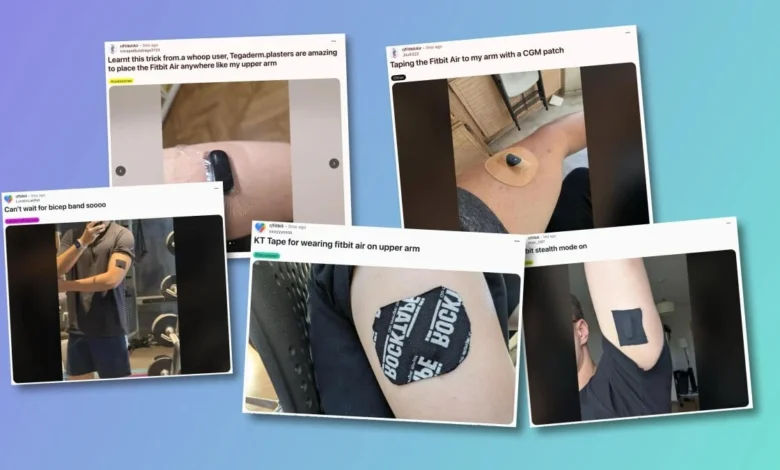
The modern fitness tracking landscape is built on the premise of constant wearability, traditionally anchored to the human wrist. However, a growing subculture of fitness enthusiasts and tech-savvy athletes is challenging this wrist-centric paradigm. Driven by a desire for improved comfort during heavy lifting, combat sports, and specialized training regimens, users of devices like the Fitbit Air are increasingly removing the standard wristbands entirely. Instead, they are securing the hardware directly to their upper arms or alternate body locations using specialized medical adhesives. This unconventional modification highlights a persistent demand in the consumer wearable market for diverse mounting options—such as bicep bands or specialized garments—that major technology manufacturers have been slow to officially provide.
The Origin of the Wristless Trend and Community Experimentation
The phenomenon of moving fitness trackers away from the wrist is not entirely new within the endurance and strength sports communities. For years, alternative hardware ecosystems like Whoop have successfully popularized bicep bands and compression apparel designed to house tracking sensors away from the hands and wrists. This design philosophy recognizes that a wrist-based form factor is often cumbersome. Wrists are heavily utilized during weightlifting, kettlebell training, gymnastics, and combat sports, where traditional watches and bands frequently clash with wrist wraps, cause skin irritation, or sustain impact damage.
Because Google and Fitbit have not yet released an official bicep mount or alternative accessory ecosystem for the Fitbit Air, users have turned to digital forums—most notably the Fitbit Air community on Reddit—to engineer their own solutions. Following in the footsteps of DIY biohackers and athletes who previously experimented with unorthodox placements for various trackers, users began testing common household and medical adhesives to strap the tracker head directly to their skin. While the practice began as a niche experiment, it has quickly evolved into a widely discussed trend among users seeking unhindered range of motion and a truly unobtrusive tracking experience.
Evaluating Adhesive Options: From Athletic Tape to Medical Overpatches
As the trend gained traction across online communities, participants immediately encountered the practical challenge of securing an electronic device to dynamic, sweaty human skin during rigorous physical activity. Early adopters experimented with standard athletic tape and KT tape—the elastic therapeutic tape commonly utilized by physical therapists and athletes to stabilize joints and muscles.
However, practical testing revealed significant limitations with traditional athletic tapes. When subjected to heavy perspiration followed by post-workout showers, standard adhesive strips often begin to curl, peel, and lose their bonding strength within a 24-hour window. Furthermore, because a fitness tracker requires only a relatively small surface area of tape compared to a large muscular stabilization strip, the reduced adhesive surface area struggles to maintain a secure hold under high-stress conditions.
To solve the durability issue, community members and reviewers identified a superior alternative borrowed from the medical community: continuous glucose monitor (CGM) overpatches. CGMs are small, medical-grade sensors typically applied to the back of the upper arm to monitor blood glucose levels continuously. To keep these life-saving sensors securely anchored to patients for up to 14 days through intense exercise, swimming, and daily showers, manufacturers produce heavy-duty, waterproof adhesive stickers known as overpatches.
When applied to a Fitbit Air, these CGM overpatches provide a robust, reliable barrier against moisture and movement. Given that the typical battery life of a Fitbit Air averages roughly one week, a medical-grade overpatch is more than qualified to keep the device firmly attached for the duration of its operational cycle between charges.
Practical Testing: Accuracy, Performance, and Sensor Behavior
To determine whether the DIY bicep-taping method is functionally viable for serious training, tech journalists and fitness testers have begun putting the setup through controlled field evaluations. During running tests utilizing a CGM overpatch on the back of the upper arm, the tracker successfully maintained its position despite heavy perspiration. Heart rate data captured during these sessions demonstrated a high degree of correlation when compared against established chest-strap monitors and baseline wrist measurements.
From a physiological perspective, placing a tracker against the upper arm can offer distinct advantages for optical heart rate monitoring (PPG). The upper arm provides a stable muscle bed, and covering the device with an opaque medical patch effectively blocks out ambient light interference—a known variable that can degrade the accuracy of optical sensors.
Despite these positive readings, the experiment also exposed notable drawbacks regarding activity recognition algorithms. Modern fitness trackers rely heavily on accelerometers and gyroscopes calibrated to anticipate the specific kinematic patterns of human wrists during walking, running, and cycling. Because the upper arm moves differently than the wrist during physical exertion, automated workout detection algorithms often fail to trigger. Testers found that while manual activation of exercise modes successfully logged training sessions, relying on auto-detection while the device was mounted on the bicep yielded inconsistent results.
Implications, Economic Factors, and Removal Challenges
While the practice of taping fitness trackers to the body offers undeniable ergonomic benefits for specific athletic disciplines, it introduces several long-term logistical hurdles for consumers.
First and foremost is the economic consideration. Purchasing medical-grade CGM overpatches on a weekly basis to maintain a wristless configuration adds a recurring operational cost to device ownership. For most users, this expense is difficult to justify unless they face severe occupational wrist restrictions or participate in specialized sports where wristwear is strictly prohibited.
Second, the adhesive strength that makes medical overpatches so effective during workouts creates a formidable challenge during removal. CGM overpatches are engineered to resist peeling for up to two weeks. Because the Fitbit Air requires charging approximately once a week, users must forcibly peel away the heavy-duty adhesive prematurely. This removal process can be painful and taxing on the skin if executed carelessly, prompting experienced testers to recommend removal under warm shower water to safely dissolve and loosen the adhesive bonds.
Broader Industry Implications and Manufacturer Response
The emergence of the "wristless Fitbit" trend serves as a clear indicator of evolving consumer demands within the wearable technology sector. As fitness tracking matures, a significant segment of the user base is rejecting a one-size-fits-all approach to device placement. Consumers increasingly demand modular ecosystems that accommodate diverse training styles, ranging from heavy powerlifting to martial arts and tactical applications.
To date, major manufacturers have been slow to diversify their official accessory lineups beyond standard wrist straps, metal links, and breathable sports bands. While niche brands like Whoop have capitalized on the demand for bicep and apparel integration, mainstream ecosystem giants like Google and Fitbit have yet to officially comment on or address the grassroots community trend of medical-tape modifications.
Industry analysts suggest that consumer behavior of this nature often precedes official product development. If the demand for alternative placement options continues to grow across enthusiast forums, wearable manufacturers may eventually respond by releasing native bicep integration kits or specialized mounting clips. Until such official hardware solutions become commercially available, fitness enthusiasts seeking to liberate their workouts from wrist constraints will likely continue relying on medical adhesives, waterproof overpatches, and a healthy dose of DIY ingenuity.