Garmin Cirqa Smart Band Firmware Update 4.20 Adds Essential Notification Support and Performance Improvements

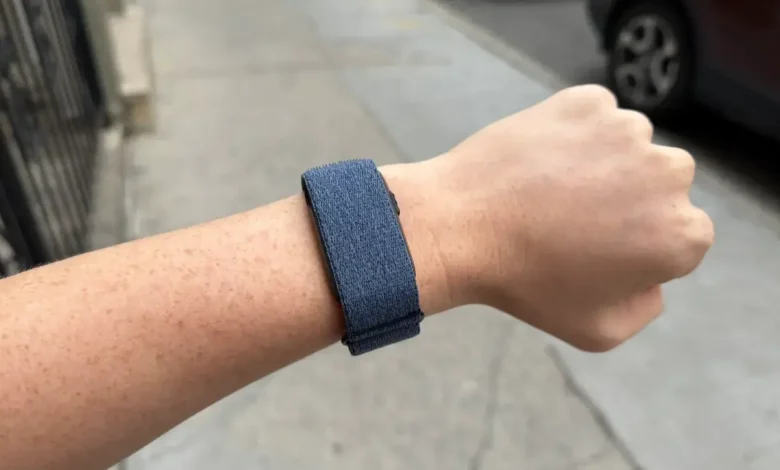
The wearable technology market has experienced a significant shift in how consumers interact with minimalist fitness trackers, particularly with the recent release of Garmin’s screenless Cirqa smart band. Initially lauded for its sleek design, unobtrusive profile, and robust health-tracking capabilities, the device faced substantial criticism from early adopters due to a glaring functional omission: the complete lack of smartphone notification support. Users were forced to rely entirely on their smartphones for calls and texts, as the band offered no haptic feedback for incoming communications.
This friction point was officially addressed by Garmin on October 23, 2026, when the company rolled out firmware version 4.20 for the Cirqa smart band. The update introduces long-awaited haptic vibration support for incoming calls, text messages, and standard smartphone notifications, effectively bridging the gap between a traditional minimalist fitness band and a connected modern wearable. The update has been met with widespread enthusiasm across digital communities, signaling a vital adjustment in Garmin’s product strategy for its screenless device lineup.
Chronology of the Garmin Cirqa Launch and Software Evolution
The trajectory of the Garmin Cirqa illustrates the fast-paced iterative nature of modern consumer electronics, where hardware releases are frequently dependent on rapid post-launch software development.
During the initial hardware rollout, the Cirqa was marketed strictly as a distraction-free, screenless wellness tracker. Its primary value proposition centered on continuous health metrics—such as heart rate monitoring, sleep tracking, and stress analysis—without the cognitive load of constant wrist-based interruptions. However, consumer feedback quickly highlighted that the pendulum had swung too far toward minimalism. Users expressed a strong desire for subtle, non-intrusive haptic alerts to ensure they did not miss critical communications while working out or away from their phones.
By mid-October 2026, Garmin engineers finalized firmware version 4.20 to address these exact pain points. The software package was quietly deployed to user devices and documented on Garmin’s official community support forums under the explicit changelog entry: "Support vibration for smart notifications/incoming calls." Despite the release of the update, legacy documentation, including Garmin’s primary customer FAQ pages, momentarily lagged behind the deployment, explicitly stating that the device lacked notification vibrations. This discrepancy underscored the speed at which the software team moved to satisfy user demand compared to the administrative update of support collateral.
Technical Breakdown of Firmware Version 4.20
Firmware 4.20 is more than a single-feature patch; it represents a comprehensive tune-up for the Cirqa hardware ecosystem. While notification support serves as the headline feature, the update includes several background stability fixes and operational enhancements designed to optimize battery consumption and haptic motor reliability.
To successfully leverage the new notification features, users must ensure their Cirqa band is synchronized with the Garmin Connect application and updated to software version 4.20 or newer. Because the device lacks a physical display screen, configuration must be handled entirely through the companion smartphone application.

Configuring Call and Text Alerts on the Cirqa
Setting up the newly introduced haptic feedback alerts requires navigating the device settings within the Garmin Connect ecosystem. Users must grant the application notification permissions within their smartphone operating system—iOS or Android—and subsequently navigate to the device settings menu within Garmin Connect. Under the "Smart Notifications" tab, users can selectively toggle call alerts, text message notifications, and third-party application alerts.
To ensure optimal performance, technical advisors recommend verifying that global device settings such as "Do Not Disturb," native sleep modes, and aggressive battery-saving protocols are disabled on both the host smartphone and the fitness band itself. Interference from operating system-level power management tools remains a primary reason haptic notifications fail to transmit during initial pairing.
User Reactions and Community Reception
The reaction from the consumer base has been overwhelmingly positive. Within hours of the firmware release, technology forums and dedicated online communities, including the Garmin subreddit, filled with user testimonials confirming the successful deployment of text and call vibrations.
For many users, the addition of haptic feedback transforms the Cirqa from a niche, single-purpose health monitor into a viable daily driver. By retaining its screenless aesthetic while adding essential smartphone connectivity, Garmin has successfully captured a demographic of consumers who desire connectivity without the digital fatigue associated with traditional smartwatches equipped with power-hungry color displays and complex operating systems.
Broader Industry Implications for Screenless Wearables
The rapid adaptation of the Garmin Cirqa highlights a broader design philosophy within the wearable technology sector: the delicate balance between minimalism and functional utility. For years, screenless fitness bands have carved out a loyal following by promising relief from the constant barrage of notifications that characterize modern life. However, complete isolation from incoming calls and text messages proved to be an over-correction that alienated potential buyers who required basic situational awareness regarding communications.
By introducing optional, haptic-only notifications via a software update, Garmin demonstrates a flexible approach to product lifecycle management. Rather than locking features behind subsequent hardware generations, the company has enhanced the longevity and value proposition of an existing product through over-the-air firmware updates. This strategy not only fosters brand loyalty among early adopters but also sets a competitive precedent for other manufacturers operating in the minimalist fitness tracker segment.
As the wearable market continues to mature, consumer expectations demand that even stripped-down, wellness-focused devices maintain baseline utility capabilities. Garmin’s firmware 4.20 update for the Cirqa proves that hardware manufacturers must remain responsive to community feedback, adapting their software ecosystems to meet the practical demands of everyday life without compromising the core design ethos of their products.