The Silent North: Arctic Wildlife Monitoring Collapses Amid Shifting Geopolitical Priorities

For decades, the windswept expanse of Mitivik Island in Canada’s Hudson Bay served as a critical laboratory for understanding the resilience of Arctic life. In the 1990s, as global populations of eider ducks faced a precipitous decline, the Canadian government established a research station to study the birds, working in tandem with Inuit partners from Southampton Island. This collaborative effort yielded vital data on migration patterns, the impact of avian diseases, and the shifting dynamics between predators and prey. However, in 2024, the federal Department of Environment and Climate Change quietly shuttered the station. This closure is not an isolated incident; it represents a broader, alarming trend of retreating scientific presence across the circumpolar region, leaving the world’s most vulnerable ecosystems largely unobserved at the very moment they are undergoing profound, climate-driven transformations.
A Chronology of Declining Oversight
The decline of the Mitivik Island station tracks a broader retreat in Arctic scientific investment. In the 1990s, the station was a beacon of international cooperation, helping researchers identify where eiders spent their winters. This work led to refined hunting regulations in Canada and Greenland that successfully bolstered eider numbers. Yet, the progress was fragile.
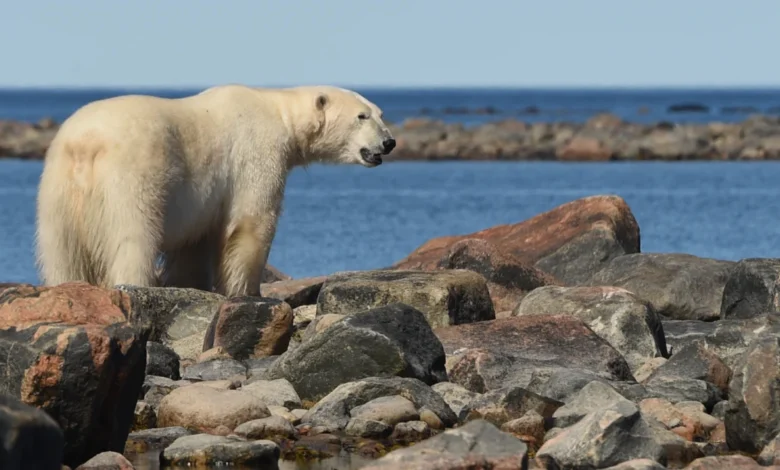
By the early 2000s, new threats emerged. In 2005, researchers identified an outbreak of avian cholera, a disease rarely seen in the high Arctic, which decimated the nesting population. Over the next eight seasons, the colony lost half of its members. Simultaneously, the loss of sea ice forced polar bears—traditionally dependent on ice for hunting seals—onto the land, where they turned to raiding eider nests.
The trajectory of the research station reflects a decade of austerity. In 2024, the station was decommissioned, despite the nesting eider population crashing from a high of 8,000 pairs to mere hundreds. This closure mirrors a wider federal pattern: today, environmental monitoring is active in only three of Canada’s 14 migratory bird sanctuaries. This retreat is compounded by the Canadian government’s 2025 mandate to reduce the Environment and Climate Change workforce by 10 percent, a move that critics argue cripples the nation’s capacity to manage its vast northern territory.
The Financial and Geopolitical Shift
The erosion of Arctic research funding is often framed as a response to the high cost of logistics in remote, hostile environments. However, the underlying cause is a fundamental shift in governmental priorities. Historically, Arctic research budgets were tethered to industrial interests; monitoring wildlife was deemed necessary to assess the environmental impact of oil and gas exploration, pipelines, and road construction.
As the global energy landscape transitioned, the rationale for Arctic funding shifted toward climate change research. Yet, in recent years, that focus has been eclipsed by the resurgence of national security and the global scramble for critical minerals. Governments are now prioritizing the assertion of sovereignty and resource extraction over longitudinal environmental studies. This is exemplified by Canada’s commitment of $405 million toward a new highway to the Arctic coast, a project integrated into a $40 billion strategy to bolster northern presence. In this new era, monitoring the health of an eider colony is viewed as a "nice-to-have" expense, while infrastructure that facilitates resource development is deemed a national imperative.
International Impacts and the Suspension of Collaboration
The crisis in Arctic research is not confined to Canada; it is a circumpolar phenomenon. In Alaska, the suspension of climate-based collaborations with Russia following the 2022 invasion of Ukraine severed access to vast swaths of data from the Siberian Arctic. The subsequent closure of the Arctic Research Consortium of the United States, following the expiration of National Science Foundation grants, has left a significant void in the American scientific network.
Data from the Greenland Institute of Natural Resources further underscores the decline. Between 2021 and 2024, US-led research publications regarding Greenland’s climate fell by 32 percent. Tensions reached a breaking point in July, when the institute temporarily suspended all new collaborations with US partners after political rhetoric from the United States regarding the potential acquisition of the territory. These geopolitical frictions have effectively paralyzed the Arctic Council, the primary international forum tasked with coordinating environmental management, rendering it increasingly ineffective at a time when the region is warming four times faster than the rest of the planet.
Implications for Biodiversity and Human Health
The absence of field researchers creates a "data blackout" that masks the extent of ecological disruption. Currently, at least 96 mammal and bird species in the Arctic are exhibiting anomalous behaviors—migrating earlier, traveling greater distances, or colonizing new, unfamiliar territories. Without scientists on the ground, these shifts remain largely anecdotal.
The implications extend beyond biodiversity. Research conducted at the now-closed Mitivik station revealed complex, hidden dynamics, such as the role of intestinal parasites in mitigating the toxicity of mercury and lead in eider ducks. As permafrost melts, these heavy metals are leaching into the food chain. Because local Inuit populations rely on these birds as a food source, the health of the wildlife is inextricably linked to human public health.
"We need to know more than ever how to respond to a warming Arctic that is affecting almost every facet of life," notes Larry Hinzman, an expert in Arctic change at the University of Alaska, Fairbanks. Hinzman describes the current reduction in monitoring as "unprecedented," warning that the lack of data will lead to poorly informed policy decisions that could result in permanent losses for northern ecosystems.
Official Stance and Future Outlook
Environment and Climate Change Canada has maintained a guarded position regarding the cessation of its research programs. In an official statement, the department asserted that it remains "committed to the long-term conservation of biological biodiversity and abundance." The agency highlighted that it is currently pivoting toward new, technology-driven research programs in partnership with territorial governments and Indigenous organizations.
However, experts remain skeptical. Andrew Derocher, a veteran researcher who has studied polar bears for 40 years, argues that technology is an insufficient substitute for on-the-ground observation. "We’ve pretty much stopped any research beyond the long-term monitoring in Western Hudson Bay," Derocher states, noting that, outside of a few privately funded projects, polar bear research in Canada has essentially hit a wall.
The frustration is shared by scientists like Mark Mallory, who left his position with the Canadian Wildlife Service to pursue academic research. Mallory suggests that the problem is not merely a lack of data, but a failure of political will. He argues that even if scientists were to document further collapses, it is unclear if such evidence would alter the trajectory of government policy.
For the researchers who dedicated decades to the Arctic, the closure of these stations is a profound loss. Grant Gilchrist, the founder of the Mitivik station, continues to monitor the Arctic from alternative sites, such as Baffin Island, where the operational costs are lower and the risk of polar bear encounters is diminished. Yet, he remains haunted by the unknowns. The eiders of Mitivik may have relocated to safer waters, or they may have succumbed to the cumulative pressures of disease, predation, and habitat degradation. Without a sustained, federal commitment to monitoring, the answer—and the ability to intervene—may remain permanently out of reach. As the Arctic continues to warm, the silence left by the shuttered research stations grows ever louder, representing a missed opportunity to understand and protect one of the world’s most critical frontiers.
Related posts: