FBI Director Kash Patel Faces Senate Scrutiny Over Politicization Allegations and Mass Firings of Counterintelligence Experts

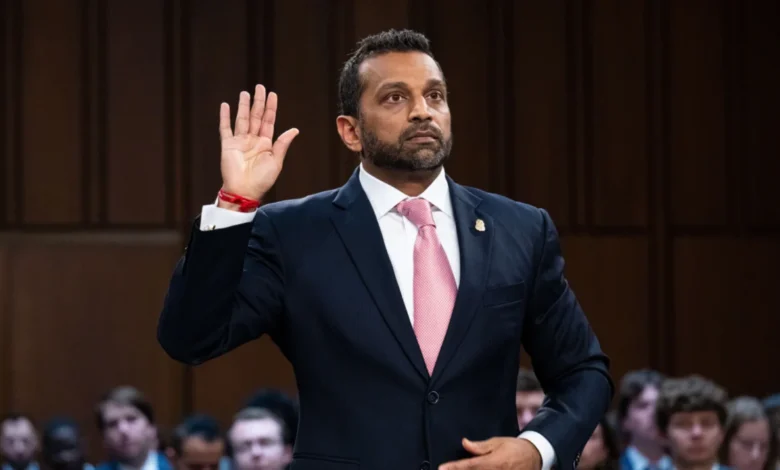
The Federal Bureau of Investigation is currently navigating a period of profound institutional turbulence as Director Kash Patel continues to face aggressive questioning from the Senate Judiciary Committee regarding the systemic dismissal of high-level counterintelligence staff. During a high-stakes oversight hearing held on Tuesday, September 15, 2026, the discussion centered on the controversial termination of over a dozen agents whose professional focus was the monitoring and investigation of Iranian national security threats. The timing of these personnel shifts—occurring just days before the initiation of the Trump administration’s military campaign against Iran in February 2026—has fueled bipartisan concern regarding the prioritization of political retribution over national security imperatives.
A Chronology of Institutional Friction
The discord within the Bureau began to gain public prominence in early 2026, following a series of internal reshuffles that critics characterized as a purge of officials involved in the investigation of President Trump’s alleged mishandling of classified documents. The following timeline outlines the escalation of these tensions:
- March 2026: Three senior FBI agents, who had been integral to the investigation into the former president’s retention of classified materials, filed a class-action lawsuit. The filing alleged that the Bureau had engaged in a targeted campaign of professional retaliation against those who participated in sensitive inquiries regarding the 2020 election and the classified documents case.
- March 2026 (House Committee Hearing): During testimony before the House, Director Patel faced initial inquiries regarding reports of mass firings. He categorically rejected the validity of news reports claiming that the terminated staff were subject-matter experts on Iranian affairs.
- May 2026 (Senate Oversight Hearing): Senator Chris Van Hollen (D-Md.) pressed Patel on the intelligence implications of the dismissals. Patel maintained that the situation was subject to ongoing litigation and refused to provide granular details, doubling down on his previous denials.
- September 15, 2026 (Senate Judiciary Committee): The most recent hearing saw Senator Richard Blumenthal (D-Conn.) directly challenge the Director on the impact of these firings on national security readiness in the lead-up to the conflict with Iran.
The Debate Over Weaponization and Expertise
The core of the Senate’s inquiry rests on the tension between the Director’s stated goal of "de-weaponizing" the FBI and the reality of a depleted counterintelligence division. Senator Blumenthal framed the issue sharply during Tuesday’s hearing, asking: "Do you think firing the president’s political opponents is more important than retaining the decades of experience and expertise monitoring intelligence threats from Iran?"
Director Patel’s response remained consistent with his previous assertions. He disputed the characterization of the fired agents as subject-matter experts, stating, "The individuals you are referring to are not experts. I think what’s most important is to not have a weaponized FBI, and I will endeavor every single day to make sure we have no one there that is doing that."
When pressed by Senator Blumenthal on how the Director reconciles the claim of "de-weaponizing" the Bureau while simultaneously purging employees who were involved in high-profile political investigations, Patel offered a blunt rejoinder: "Simple. If you weaponize law enforcement, you don’t get to work at the FBI." This response, however, failed to satisfy the committee members, who argued that the Director’s inability to provide specific evidence regarding the alleged misconduct of these agents leaves the Bureau vulnerable to charges of institutional bias.
Analyzing the National Security Implications
The dismissal of personnel specialized in Iranian affairs just prior to the February military escalation has raised significant questions about the continuity of intelligence operations. Military analysts note that counterintelligence is a specialized field requiring years of developed human intelligence networks and deep historical context regarding regional actors. When a unit of this caliber is significantly reduced, the "intelligence gap" that follows can result in missed warnings or a weakened capacity to assess the risk of escalation.
Data from the region indicates that the ensuing conflict has been extensive, resulting in thousands of Iranian civilian casualties and the loss of over a dozen United States service members. While the Trump administration has defended its military posture as a necessary response to regional instability, the intersection of these policy decisions with the internal management of the FBI suggests a shift in the federal government’s priorities. If intelligence expertise was sidelined to accommodate a political agenda, it suggests that the executive branch may be prioritizing the ideological alignment of the civil service over the functional, technical requirements of national security operations.
Legal Challenges and Institutional Accountability
The legal landscape surrounding the FBI is currently dominated by the class-action lawsuit brought by the terminated agents. The suit alleges that the firings were not based on performance metrics or misconduct, but rather as a direct response to their participation in investigations into President Trump’s efforts to challenge the 2020 election results.
Legal experts observing the case suggest that the outcome could have long-term implications for the autonomy of the Justice Department and the FBI. If the court finds that the terminations constituted a "retribution campaign," it could necessitate a massive overhaul of personnel policies and potentially result in significant back-pay and damages awarded to the plaintiffs. Furthermore, the case serves as a focal point for legislative efforts in Congress to strengthen whistleblower protections and limit the political influence of the executive branch over career civil servants.
Broader Impact on Governance
The ongoing friction between Director Patel and the Senate Judiciary Committee reflects a broader trend of polarization within federal law enforcement agencies. For decades, the FBI has prided itself on a reputation for non-partisan, evidence-based law enforcement. The current administration’s approach, characterized by a stated intent to root out perceived institutional bias, has led to a fundamental restructuring of the Bureau’s leadership and personnel.
From a governance perspective, the implication of this transition is twofold. First, it signals an era where the boundary between political policy and executive law enforcement is increasingly porous. Second, it highlights a growing divide between the legislative and executive branches regarding the oversight of intelligence-gathering capabilities. As the Senate continues to demand transparency, the administration’s refusal to engage with the substance of these allegations suggests that the conflict is unlikely to resolve in the near future.
The accountability mechanisms inherent in the American democratic system are being tested by this impasse. While Director Patel remains firm in his role, the persistent questioning from the Senate Judiciary Committee underscores the reality that, regardless of the Director’s stance, the perception of a "weaponized" Bureau remains a potent political and institutional issue. As the litigation proceeds and the regional conflict continues, the long-term impact on the FBI’s credibility and operational efficacy will remain a central concern for policymakers and the public alike. Whether the current leadership can restore the internal cohesion of the agency while satisfying the demands of the current administration remains the defining question of Director Patel’s tenure. The public record, for now, remains characterized by conflicting narratives, ongoing litigation, and a Senate body that appears increasingly unwilling to accept the current status quo as a sustainable path forward for the nation’s primary domestic intelligence agency.
Related posts: