From Queens to Global Retail: The Strategic Scaling of holiCHIC and the Philosophy of Seed Funding

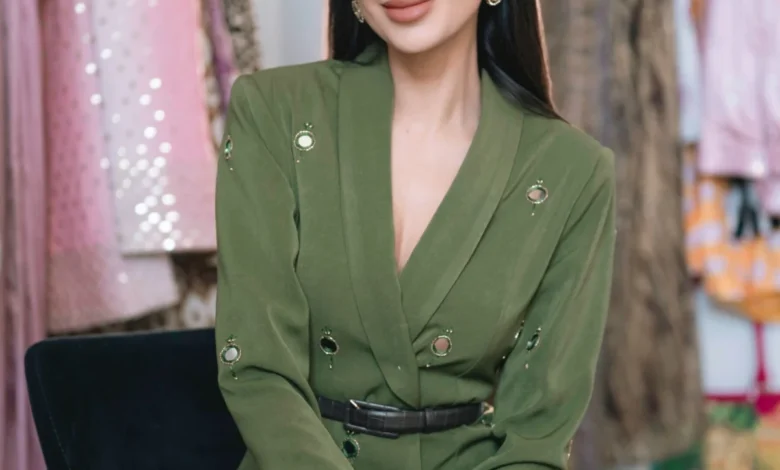
The evolution of modern fashion is increasingly defined by the intersection of cultural identity and commercial viability. For Megha Rao, founder of the fashion label holiCHIC, this journey began as a personal quest for representation in the diverse borough of Queens, New York. By blending traditional South Asian aesthetics—specifically the fabrics and silhouettes of her mother’s saris—with the modern sensibilities of Western denim and leather, Rao created a niche that has transitioned from a small, community-driven project to a multi-million-dollar entity with a significant presence in major retail institutions like Nordstrom and Amazon Fashion. This transformation highlights a broader shift in the retail sector, where brands that cater to specific cultural nuances are finding immense appeal among a mainstream, global audience.
Chronology of a Retail Breakthrough
The trajectory of holiCHIC is characterized by a decade of disciplined, bootstrapped growth before its recent institutional expansion. Rao, leveraging her professional background in finance sales, operated the business with a focus on organic growth and community engagement. The turning point for the brand arrived in 2023, following a persistent campaign to secure a foothold in high-end retail. After months of persistent outreach, Rao successfully negotiated a pop-up residency at Nordstrom’s flagship location in New York City.
The timing of this activation was strategic, coinciding with the Diwali festival, a period of heightened demand for culturally significant apparel. The results were immediate and exceeded the brand’s internal performance metrics, effectively serving as a catalyst for a permanent online distribution partnership with the retailer. This milestone was not merely a revenue success; it served as validation of the brand’s cross-cultural appeal. Data from the post-pop-up period indicated that a significant portion of the brand’s customer base was not of South Asian descent, suggesting that the aesthetic and quality of holiCHIC clothing possessed a universal appeal that transcended its initial target demographic.
Navigating the Shift to Institutional Capital
For nearly ten years, holiCHIC remained entirely self-funded. The decision to pursue external capital—culminating in a $1.5 million seed round finalized in May 2026—was a calculated move to capitalize on the momentum generated by the Nordstrom partnership. Unlike many startups that seek funding to discover a market fit, Rao emphasized that her firm’s transition to venture capital was intended to fuel an existing fire rather than ignite one.
The fundraising process itself offers a case study in strategic partnership. Rather than opting for a syndicate of multiple venture capital firms or a large group of angel investors—which can sometimes lead to diluted control and conflicting strategic mandates—Rao focused on finding a singular partner who aligned with the long-term vision of the company. After a brief vetting process, she secured a $1.5 million investment from a single angel investor. This approach allowed the company to maintain its operational independence while securing the necessary resources to scale production and distribution. Since the infusion of capital in May 2026, the company has reported a 47% increase in sales, providing a quantifiable metric for the efficacy of this growth strategy.
Strategic Allocation of Capital and Market Expansion
The deployment of the $1.5 million seed round is structured around three primary pillars: influencer-led marketing, digital marketplace expansion, and the development of new product lines. In the current retail climate, influencer strategy is no longer optional; it is a primary driver of customer acquisition costs (CAC) and brand sentiment. By focusing on platforms such as TikTok Shop and Amazon Fashion, holiCHIC is positioning itself to capture younger, digitally native consumers who prioritize discovery through social commerce.
Furthermore, the brand is actively expanding its product portfolio. Recognizing that their core female audience often attends events accompanied by partners, the company is doubling down on holiCHIC Men. This expansion is not arbitrary; it is rooted in consumer demand data that suggests a broader appetite for the brand’s signature fusion style across different demographics.
The Global Outlook and Institutional Sustainability
Looking ahead, the brand’s roadmap includes an ambitious international expansion strategy. While the immediate focus remains on consolidating its presence in the United States and Canada, the brand has identified the United Kingdom, India, and the Middle East as high-potential markets. These regions represent significant cultural intersections where the demand for modern, fusion-oriented fashion is currently outpacing supply.
Industry analysts note that the success of brands like holiCHIC underscores a significant evolution in the retail landscape. Legacy retailers are increasingly seeking out "niche-global" brands to inject freshness into their offerings, while these smaller brands utilize partnerships as a shortcut to trust and scale. However, the path to sustainability for such brands remains fraught with challenges, including supply chain management and the maintenance of quality control as volume increases.
Rao’s approach to these challenges is one of caution and measured growth. She has explicitly stated that further funding rounds will not be considered until the company achieves a fivefold increase in revenue. This self-imposed constraint serves as a guardrail against the common pitfall of over-leveraging a business before it has achieved the necessary operational maturity.
Reflections on the Founder’s Journey
The transition from a bootstrapped entrepreneur to the head of a venture-backed enterprise requires a fundamental shift in mindset. Rao acknowledges that the transition from managing a business on a day-to-day basis to managing the expectations of an investor is a significant adjustment. Yet, she maintains that the foundation of the business—the quality of the product and the resonance of the brand’s identity—must remain the priority.
Her advice to other founders is centered on the concept of "momentum-based fundraising." The philosophy is simple: capital should be viewed as a tool to accelerate existing trends, not as a means to create them. By the time a founder reaches the stage of seeking a seed round, they should already have a clear understanding of their product-market fit, their core customer, and their potential for scale.
Broader Implications for the Fashion Industry
The success of holiCHIC serves as a bellwether for the "fusion" fashion movement. As globalization continues to influence personal style, the boundaries between traditional cultural dress and everyday modern wear are becoming increasingly porous. Consumers are no longer restricted to traditional categories; they are actively seeking brands that reflect the complexity of their own identities.
For investors, the retail sector is witnessing a shift away from mass-market ubiquity toward brands that cultivate deep, community-based loyalty. The ability of a brand to prove that it can scale from a local community (in this case, the South Asian diaspora in Queens) to a global retail stage is perhaps the most critical indicator of future success.
The story of holiCHIC is not merely one of retail growth; it is an example of how a clear, authentic vision, when paired with professional rigor and strategic timing, can disrupt established market norms. As the company continues its expansion, its performance will likely be watched closely by both emerging designers and major retail conglomerates, as it represents a blueprint for how cultural identity can be successfully commodified and scaled in the modern age.
In summary, the journey of Megha Rao and holiCHIC demonstrates that while capital is essential for growth, it is the underlying momentum—the consistent, data-backed demand for a brand’s unique value proposition—that dictates the success of a scaling strategy. By focusing on sustainable growth, strategic retail partnerships, and a clear vision for the future, the company has managed to navigate the transition from a niche startup to a global retail contender, setting a template for the next generation of fashion entrepreneurs.