Nintendo of America has officially launched its sweeping "Customer Appreciation Sale," discounting a wide array of first-party digital games, hardware accessories, physical media, and apparel by up to 30 percent. The promotional event, which spans the Nintendo eShop, the official physical Nintendo Store, and major retail partners including Amazon, Best Buy, and Walmart, is scheduled to run through September 26. While the company frames the widespread discounts as a gesture of goodwill toward its loyal consumer base, industry watchers and financial analysts note that the multi-week sale directly follows Nintendo’s receipt of roughly $300 million in government tariff refunds.
The convergence of massive federal regulatory refunds and a major consumer-facing discount event has sparked widespread discussion across the gaming industry. Although promotional sales are a standard fixture of the video game retail calendar—particularly during transitionary periods between hardware generations—the timing and scale of this particular event have drawn considerable scrutiny regarding corporate pricing strategies, international trade policy, and the passing of savings down to everyday consumers.
Background and Context of the Tariff Refunds
The roots of Nintendo’s current promotional leeway stretch back several years through shifting international trade policies and corporate legal maneuvering. In the preceding fiscal cycles, major technology and consumer electronics manufacturers—including Nintendo—faced significant economic pressure due to sweeping import tariffs implemented on goods manufactured overseas, primarily in Asian electronics hubs. These tariffs added substantial overhead costs to the importation of consoles, replacement parts, and physical game media bound for the North American market.
To offset these pressures or absorb the shocks, corporations initially adjusted their operational logistics or moderately recalibrated retail pricing. However, subsequent legal challenges, trade court rulings, and bureaucratic adjustments regarding the precise classification of imported entertainment hardware ultimately cleared the path for massive corporate reimbursements. Nintendo of America successfully secured approximately $300 million in retroactive tariff refunds from regulatory and trade authorities.
While many multinational corporations typically absorb such unexpected financial windfalls into quarterly operating margins, research and development funds, or shareholder dividends, public pressure and changing market optics prompted Nintendo to redirect a portion of these funds toward retail channels. The resulting Customer Appreciation Sale serves as the direct manifestation of these returned funds, effectively offering consumers a rare window into government-to-corporate rebates finding their way back to retail price tags.
Chronology of the Sale and Retail Availability
The promotional rollout commenced mid-September, with Nintendo of America formally announcing the Customer Appreciation Sale on September 14. The campaign was immediately deployed across multiple consumer touchpoints simultaneously:
- September 14: Nintendo of America publishes the official announcement detailing the scope of the Customer Appreciation Sale, highlighting discounts on legacy catalog titles, bundled software expansions, and select hardware accessories. Major brick-and-mortar and digital retailers—such as Amazon, Best Buy, and Walmart—simultaneously update their inventories to match the baseline promotional pricing.
- September 15–20: High-demand first-party titles, particularly those associated with major franchises like The Legend of Zelda, experience a surge in digital and physical sales. Hardware accessories, specifically original Nintendo Switch Pro Controllers, see accelerated purchasing velocity as consumers seek cost-effective alternatives to newer, frequently out-of-stock peripheral generations.
- September 26: The official expiration date for the Customer Appreciation Sale. After this window closes, participating retailers and the digital Nintendo eShop are scheduled to revert all affected software bundles, standalone games, and peripheral devices back to their standard manufacturer-suggested retail prices (MSRP).
Breakdown of Key Discounts and Offerings
The sale structure is heavily skewed toward first-party Nintendo intellectual properties, which traditionally maintain rigid pricing structures throughout their market lifecycles. Third-party titles appear sporadically, but the deepest and most economically significant price cuts apply exclusively to Nintendo’s flagship franchises.
Software and Bundles
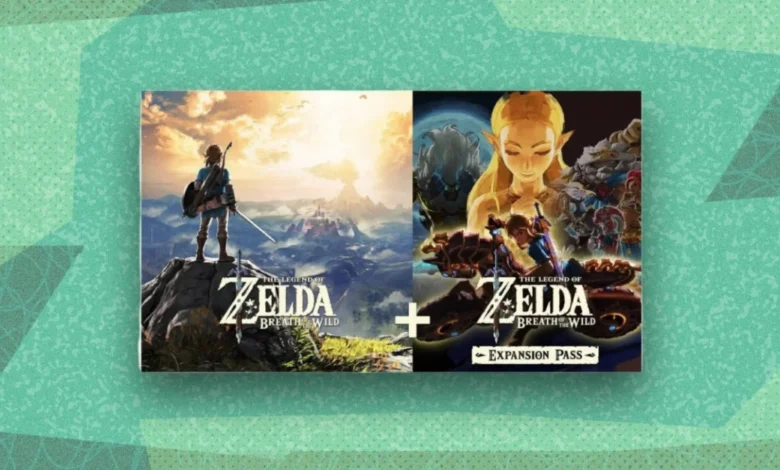
Software discounts reach up to 30 percent off standard retail pricing, a notable departure from Nintendo’s historically conservative discount policies. Among the most prominent offerings is The Legend of Zelda: Breath of the Wild paired with its comprehensive Expansion Pass Bundle. Originally retailing at $79.98, the bundle has seen significant price adjustments across major digital storefronts and physical retailers like Amazon, bringing the cost down to $55.97.

This pricing strategy aligns with an ongoing surge in consumer interest surrounding the broader Zelda franchise, catalyzed by separate announcements regarding upcoming legacy remasters, collector editions, and related hardware preorders. Other foundational Switch titles, including select Mario, Pokémon, and Metroid entries, are similarly participating in the 30 percent markdown event across both physical cartridges and digital eShop redemption codes.
Hardware and Accessories
While the sale heavily favors software, it also addresses the peripheral market, providing crucial relief for consumers navigating hardware generations. With the commercial availability of the newer Nintendo Switch 2 console and its accompanying hardware ecosystem, consumers have faced tight supplies and high initial costs for next-generation peripherals.
Notably, the newer Pro Controller 2—retailing at approximately $90—has suffered from persistent supply chain bottlenecks and rapid sell-out rates. To bridge the gap, the sale features deep price cuts on the original Nintendo Switch Pro Controller. While fully compatible with the newer system architecture, the first-generation Pro Controller has been discounted from its standard $79.99 MSRP down to $55.99.
Additionally, third-party licensed accessories, such as specialized storage and transit cases designed by manufacturers like Funlab, are seeing nominal price reductions. For example, themed carrying cases capable of housing the console, legacy Joy-Cons, Pro Controllers, and charging cables have been discounted to roughly $26.99, down from their regular $29.99 price point. Industry analysts note that while the sale largely bypasses core hardware discounts for the newest console iteration, the peripheral markdowns offer a pragmatic concession to gamers upgrading their setups.
Industry Reactions and Market Implications
The intersection of government refunds and retail sales has sparked broader conversations among economists, trade analysts, and consumer advocacy groups regarding the practical mechanisms of tariff policy.
Critics of historical tariff implementations have long argued that import taxes are ultimately borne by domestic consumers through inflated retail prices. The logic follows that if tariffs artificially raise the baseline cost of bringing goods to market, companies pass those expenses down to the end buyer. Conversely, the refund of those tariffs—and the subsequent creation of a customer-focused promotional sale—provides a rare empirical case study in how corporate entities manage retroactive trade adjustments.
From a public relations perspective, Nintendo’s framing of the event as an expression of "customer appreciation" has been met with mixed reception. While consumers and gaming enthusiasts have broadly welcomed the steep 30 percent discounts on historically price-stable games like Breath of the Wild, financial commentators point out that the company was under no legal obligation to distribute the $300 million refund directly to the consumer base. Choosing to do so via targeted software and accessory sales rather than broad hardware price cuts allows Nintendo to stimulate digital eShop engagement, clear out legacy physical inventory, and foster positive consumer goodwill without sacrificing long-term hardware profit margins.
Furthermore, the timing of the sale highlights Nintendo’s calculated approach to managing software lifecycles during a transitional hardware generation. By discounting premier software titles concurrently with the rollout of new hardware ecosystems, the company successfully maintains high user-base engagement across both legacy and current platforms.
Future Outlook
As the September 26 conclusion of the Customer Appreciation Sale approaches, retail analysts anticipate a final rush of consumer purchasing, particularly for physical bundles and high-demand accessories like the original Pro Controller. Whether this event establishes a precedent for how multinational entertainment corporations handle future regulatory or trade-related financial adjustments remains to be seen. However, for the millions of consumers currently invested in the Nintendo ecosystem, the $300 million tariff refund has translated into a tangible, albeit temporary, reprieve from the traditionally rigid pricing models that define the console gaming market.