The Life and Legacy of Bob Mackie: A Retrospective on the Guru of Glitter and His Quiet Sanctuary

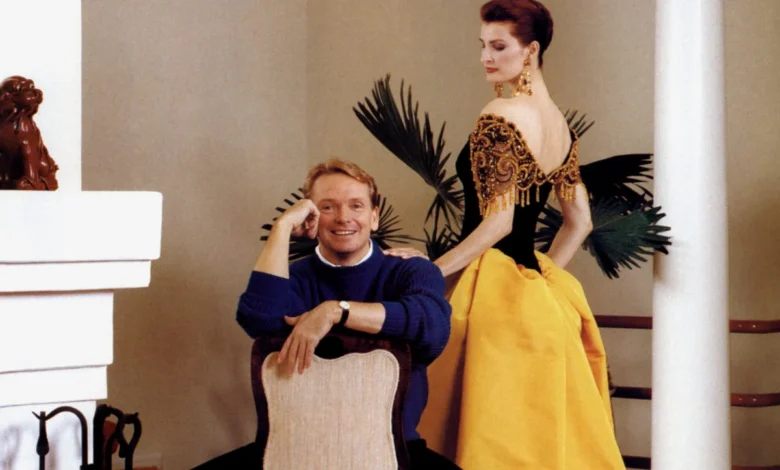
The fashion world is in mourning following the passing of Bob Mackie, the visionary costume designer and couturier who defined the visual identity of American entertainment for over half a century. Mackie, who died at the age of 87, leaves behind a professional legacy marked by nine Emmy Awards and a Tony Award, cementing his status as the definitive architect of Hollywood glamour. While his career was built on a foundation of sequins, feathers, and high-octane theatricality, the man behind the curtain lived a life defined by a profound, almost ascetic, devotion to personal privacy and domestic tranquility.
A Career Defined by Iconic Silhouettes
Bob Mackie’s influence on pop culture cannot be overstated. His career, which began in the early 1960s, saw him become the principal architect of the "star look." He is perhaps best remembered for his long-standing collaboration with Carol Burnett, having designed the costumes for The Carol Burnett Show throughout its 11-year run. His work on that series famously included the "Went with the Wind" sketch, where he created a gown out of window curtains—a masterclass in satire and sartorial wit.
Beyond television, Mackie became synonymous with the aesthetic of Cher. His daring, translucent, and heavily beaded creations for the performer—most notably the outfits worn to the Academy Awards throughout the 1970s and 80s—pushed the boundaries of what was considered acceptable red-carpet attire, effectively inventing the modern "naked dress." His client roster read like a roll call of mid-century and contemporary icons: Diana Ross, Barbra Streisand, Tina Turner, and Bernadette Peters all relied on Mackie to manifest their public personas.

The Chronology of an Icon
Born in 1939 in Monterey Park, California, Mackie’s path to fame was forged in the grueling environment of the Paramount Pictures sketch department. By the mid-1960s, his talent for understanding the mechanics of movement on stage made him an indispensable asset to variety television.
- 1967–1978: Mackie serves as the primary costume designer for The Carol Burnett Show, winning multiple Emmys and establishing his reputation for intricate, humorous, and visually arresting designs.
- 1970s: His partnership with Cher transforms her into a global fashion icon, with Mackie’s designs becoming the benchmark for Las Vegas-style showmanship.
- 1980s: Mackie pivots toward a broader commercial market, launching his own ready-to-wear empire. This transition reflected a "mid-life" desire to leave a more permanent mark beyond the transient nature of television costumes.
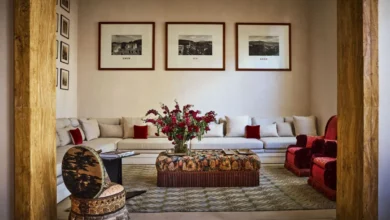
- 1989: Architectural Digest tours his Beverly Hills home, revealing a stark departure from his public persona—a home devoid of the glitter and high-drama characteristic of his work.
- 2002: Mackie receives a Tony Award for his work on the musical The Best Little Whorehouse in Texas: Goes Public.
- 2024: The industry commemorates the passing of a designer whose work bridged the gap between haute couture and stage craft.
The Dual Identity: Public Glitz and Private Calm
The public image of Bob Mackie was one of unadulterated maximalism. His designs were explicitly created for the spotlight—intended to be seen from the back row of a Las Vegas showroom or through the bright, flattening lights of a television studio. However, the domestic life Mackie cultivated in his Beverly Hills residence stood in direct, intentional contrast to this.
In a 1989 interview, Mackie described his home as a retreat, a space designed to facilitate rest rather than to serve as an extension of his brand. Visitors arriving at his door, often expecting to find an extension of his sequined and feathered world, were frequently surprised by the serenity of his living space. The house, designed by a previous owner who was an architect, prioritized natural light and clean lines. Mackie intentionally avoided filling the home with "show business" memorabilia. Aside from a ceramic high-heeled shoe gifted to him by Cher and a few personal photographs, there was almost nothing in the residence to suggest that its occupant was one of the most prolific designers in history.
The Philosophy of "Toys" and Treasures
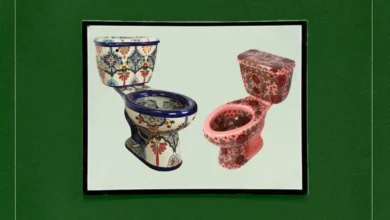
While Mackie eschewed the "glitter" aesthetic in his home, he was not a minimalist in the cold, modern sense. He surrounded himself with what he called "toys"—idiosyncratic objects that held personal meaning. These included a blue-and-black striped wooden tiger from Paris, various folk-art figurines, and an eclectic mix of Balinese, Mexican, and African masks.

This juxtaposition of refined antiques, such as his 18th-century French armoire and Heriz carpet, alongside playful folk art, provided a window into Mackie’s true character. He was a man who understood the mechanics of drama but chose to keep that drama confined to his work. He once stated, "I’ve never liked a lifestyle that reflects the clothes I design—it doesn’t appeal to me."
Professional Impact and Industry Reflection
The implications of Mackie’s career extend far beyond the costumes themselves. He was a pioneer in the democratization of high-end design, eventually expanding his brand to include furs, bridal wear, and swimwear. His shift into the ready-to-wear market was driven by a sense of urgency—a realization that as he entered his middle years, the impermanence of theatrical costumes required a more tangible, lasting business model.
Industry peers have long cited Mackie as the gold standard for "the total look." Costume designers working today, particularly in the realm of music tours and televised awards, frequently cite his ability to marry comfort with spectacle. His work ensured that performers could dance, move, and project charisma while remaining physically supported by the structural integrity of their garments.
Legacy and Memory
As the fashion community reflects on his contribution, the focus is not merely on the beads and the feathers, but on the disciplined, almost academic approach he took toward his craft. Mackie was a bridge between the Golden Age of Hollywood and the modern era of celebrity branding. He understood that a costume was not just clothing; it was a psychological tool used to amplify the persona of the performer.

"Work fuels me," Mackie said in his later years. It was this engine of curiosity and challenge that kept him at the forefront of the industry for decades. His passing marks the end of an era where the designer was as much a part of the performance as the star on stage.
In his final years, Mackie maintained a balance between his demanding work in New York—where he managed his growing business empire—and his sanctuary in California. That home, and the life he built within its walls, serves as a final reminder that the most creative minds often seek the most profound silence. Bob Mackie did not need his home to glitter because he had already spent his life ensuring the world did. His impact remains etched in the archives of fashion history, a testament to a man who understood that while the stage requires brilliance, the soul requires the quiet light of home.