The Ultimate Consumer Guide to Buying Smart Glasses: Navigating the Shift From Novelty Gadgets to Mainstream Face Computers

Artificial intelligence dominates contemporary technology discourse, yet the hardware sector increasingly indicates that smart glasses represent the true vanguard of personal computing’s future. After years of iterative development plagued by clunky designs, poor battery life, and limited utility, smart eyewear has finally evolved into reliable, high-performance hardware. Major global technology conglomerates—including Meta, Apple, and Google—alongside a thriving ecosystem of specialized startups, are heavily investing in an ecosystem where facial computing becomes as commonplace as the smartphone.
However, translating this market momentum into a successful consumer purchase presents a distinct challenge. The current market spans a vast array of styles, technical architectures, and price points, making the process of selecting the ideal pair for a holiday or special occasion deeply daunting. To simplify this process, industry testing and technical evaluations across multiple categories provide a clearer roadmap for identifying the ideal wearable technology for various user profiles.
The Evolution and Current Landscape of Smart Eyewear
The journey of smart glasses from science-fiction novelty to practical consumer electronics has been deliberate and transformative. In the early 2010s, early market entries struggled heavily with public perception, privacy concerns, and severe hardware limitations. Devices attempted to pack too many disparate functions into frames that were bulky, thermally inefficient, and socially intrusive.
Over the subsequent decade, rapid advancements in micro-LED displays, high-density batteries, miniaturized sensors, and localized neural processing units (NPUs) shifted the paradigm. Today’s smart glasses are no longer tethered prototypes or awkward head-mounted displays; instead, they successfully mimic traditional eyewear aesthetics while embedding powerful computing capabilities. Industry analysts project that the global smart glasses market will expand exponentially over the next five years, driven largely by consumer demand for hands-free documentation, augmented reality (AR) productivity solutions, and ambient AI integration.

The term "smart glasses" has become an umbrella designation that is nearly too broad to be analytically useful. Modern iterations generally bifurcate into distinct technical classifications, each serving a fundamentally different user base and use case.
Categorizing the Smart Glasses Market
Understanding the underlying technology requires breaking down the market into four primary categories: audio-first, camera-first, media-first, and heads-up display (HUD) style smart glasses.
Audio-First Smart Glasses
Audio-first wearables essentially integrate high-fidelity open-ear speaker systems and microphones into traditional frame designs. Engineered primarily to stream audio, facilitate hands-free telephone calls, and interface with voice-activated artificial intelligence assistants, these devices rely entirely on a tethered smartphone to manage heavy computational tasks. They deliberately omit visual displays and optical cameras, preserving battery life and avoiding the privacy controversies associated with recording equipment. They appeal primarily to consumers seeking a seamless alternative to traditional in-ear wireless earbuds for podcasts, calls, and ambient daily listening.
Camera-First Smart Glasses
Representing the lion’s share of the current commercial market—approximately 80 percent of total sales—camera-first smart glasses utilize discreet, embedded lenses to capture high-resolution still photographs and high-definition video from a first-person perspective. Despite navigating ongoing societal debates surrounding privacy and surveillance, these devices have captured the attention of major market players like Meta, Apple, and Samsung. They are tailored specifically for content creators, vloggers, and everyday users who wish to document their experiences dynamically without physically pulling a smartphone from their pocket or bag.
Media-First Smart Glasses
Designed to function as portable, high-definition private monitors, media-first smart glasses prioritize visual output. Utilizing advanced optical waveguides or micro-OLED panels, these devices project large virtual screens directly into the user’s field of view. They require a physical or wireless connection to an external host device, such as a gaming console, personal computer, or smartphone, making them exceptionally popular for private media consumption, mobile gaming, and expanding digital workspace ergonomics during travel.

HUD-Style Smart Glasses
Heads-up display (HUD) smart glasses integrate discrete monochrome or low-latency visual projections into everyday frames, allowing users to glance upward or straight ahead to access contextual information. Common applications include turn-by-turn pedestrian navigation, real-time message notifications, teleprompting, and automated speech transcription. Engineered to maintain the aesthetic integrity of standard prescription eyeglasses or sunglasses, HUD-style wearables are built for continuous, all-day utilization by busy professionals and technology enthusiasts.
Top Hardware Recommendations by User Profile
Rigorous real-world testing across diverse operational environments highlights several standout hardware choices currently available on the consumer market, categorized by specific use cases.
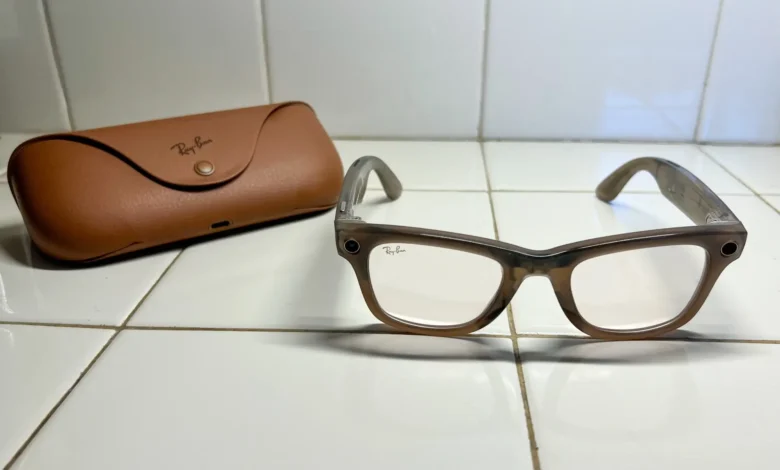
Best Overall and Everyday Option: Ray-Ban Meta Smart Glasses
For general consumers willing to integrate into Meta’s technological ecosystem, the Ray-Ban Meta collection remains the benchmark for everyday smart eyewear. Combining classic, universally flattering aesthetic designs with robust comfort, these frames successfully bridge the gap between fashion and function.
Users can seamlessly capture photos and video streams, play music via discreet open-ear speakers, take telephone calls, and interact directly with Meta’s native artificial intelligence assistant entirely hands-free. While privacy advocates continue to raise valid concerns regarding ambient recording capabilities in public spaces, the hardware execution has proven reliable enough to command a dominant market share among camera-first devices.
Best for Gamers and Frequent Travelers: Xreal XBX a01
Travelers seeking portable entertainment and professionals requiring expanded digital workspace real estate will find significant value in media-first devices like the Xreal XBX a01. By connecting directly to any compatible hardware featuring a USB-C video output—including laptops, tablets, and handheld gaming systems—users gain access to a vivid virtual screen equivalent to viewing a 147-inch high-definition television.

At a competitive price point hovering around $299, these glasses offer an exceptionally cost-effective alternative to bulky virtual reality headsets, making them an ideal companion for long-haul air travel or mobile productivity setups.
Best for Professionals and Tech Enthusiasts: Even Realities G2 Smart Glasses
Professionals who require constant, unobtrusive data access without the distraction of immersive video screens often gravitate toward HUD-style devices such as the Even Realities G2. Eschewing media playback entirely, these glasses deliver a discreet, monochrome heads-up display triggered by a natural upward glance.
The system displays vital information such as maps, schedule notifications, and a suite of specialized micro-applications capable of tasks ranging from real-time language translation to environmental audio identification. Built into frames that look indistinguishable from traditional prescription eyewear, they represent the leading edge of utilitarian wearable computing.
Best for Athletes and Outdoor Enthusiasts: Bleequp Rangers
Active individuals seeking durable, specialized performance gear can look to action-oriented options like the Bleequp Rangers. Priced at approximately $379, these lightweight sports glasses omit complex voice assistants and in-lens displays to focus strictly on rugged outdoor utility.
Featuring open-ear audio, turn-by-turn navigation prompts, an integrated walkie-talkie function, and a 16-megapixel camera capable of recording high-definition action footage, they cater directly to runners, cyclists, and extreme sports enthusiasts. An optional modular battery pack extends continuous recording time up to four hours, addressing the historical power limitations inherent in active wearable technology.

Best for Style-Conscious Consumers: Chamelo Music Shield
For users prioritizing aesthetic versatility above advanced computing power, options like the Chamelo Music Shield demonstrate the growing intersection of fashion and wearable technology. While lacking cameras, artificial intelligence integration, or embedded visual displays, these frames function as premium audio sunglasses featuring electrochromic lenses.
With a simple swipe of a finger along the temple, the lenses dynamically shift from clear to dark, allowing wearers to instantly adapt to changing ambient light conditions or coordinate their eyewear with specific outfits. Though fundamentally a lifestyle novelty, the execution highlights the industry’s focus on blending consumer electronics with traditional accessories.
Market Implications and Future Outlook
The rapid commercial maturation of smart glasses signals a profound shift in how humans interact with digital information. As semiconductor manufacturing tolerances shrink, battery densities improve, and artificial intelligence models become increasingly efficient at running locally on edge devices, the line between traditional eyewear and computing hardware will continue to blur.
However, widespread mainstream adoption will ultimately depend on how the industry navigates critical socio-technological hurdles. Privacy concerns surrounding surreptitious video recording and data collection remain central to public debate, prompting regulatory scrutiny and calls for clearer physical indicator lights on camera-enabled hardware. Furthermore, interoperability between proprietary tech ecosystems will dictate whether consumers can easily integrate diverse hardware brands into their daily workflows.
Despite these challenges, the trajectory is clear. Smart glasses are transitioning rapidly from niche experimentation into foundational personal computing architecture. Whether utilized for hands-free documentation, immersive mobile entertainment, professional productivity enhancement, or athletic tracking, the current generation of hardware establishes a robust foundation for the future of digital connectivity.