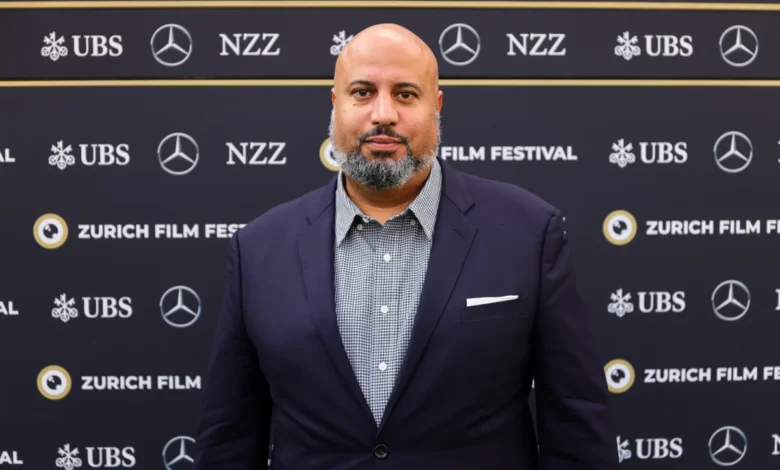
The documentary film Homegrown, directed by Michael Premo and produced alongside Rachel Falcone, offers an unprecedented, fly-on-the-wall perspective of the far-right nationalist group known as the Proud Boys. Filmed over the course of three years leading up to and following the 2020 United States presidential election, the film avoids the traditional tropes of investigative journalism—eschewing voiceover narration and expert interviews—to instead provide a raw, verité observation of three specific members: Chris Quaglin, Thad Cisneros, and Randy Ireland. The film, which recently earned a 2026 duPont-Columbia Award, serves as both a historical record of the lead-up to the January 6, 2021, attack on the U.S. Capitol and a psychological study of the search for belonging in an increasingly polarized America.
The Genesis of a Three-Year Project
Michael Premo’s objective in filming the Proud Boys was not to create an exposé but to understand the internal motivations of men who were becoming increasingly alienated from mainstream political life. Following the 2016 election, Premo observed a growing sense of shock among his peers and a corresponding surge in activity among far-right groups. He sought to bridge the gap between his own experiences as a Black filmmaker and the world of the Proud Boys, who characterize themselves as "Western chauvinists" but have been widely categorized by civil rights organizations and the Department of Justice as a group with deep ties to white supremacy and political violence.
The project began in earnest in the years following 2016. By embedding himself with the subjects, Premo gained access to the private lives of individuals like Chris Quaglin, a New Jersey electrician who would eventually become the film’s central figure. The production was fraught with physical danger and emotional strain, requiring Premo to navigate environments where he was often the only person of color, frequently while wearing protective gear in anticipation of riots.

Chronology of Radicalization
The timeline of Homegrown traces a trajectory of increasing militancy:
- 2016–2019: The formation and growth of the Proud Boys as a street-level organization known for confrontations with left-wing demonstrators. During this time, Premo began building the trust necessary to gain entry into the group’s inner circles.
- 2020: The group intensified its activities, including the burning of Black Lives Matter banners at historic churches in Washington, D.C. This period saw the recruitment and further radicalization of figures like Quaglin.
- January 6, 2021: The culmination of the film’s narrative arc. Premo and Falcone were present at the Lower West Terrace tunnel, capturing the chaos from the inside. Quaglin’s role in this event eventually led to his arrest and subsequent imprisonment.
- 2022–2025: The aftermath for the film’s subjects, including legal consequences for the rioters and the personal unraveling of their lives. The film notes the eventual pardon of Quaglin by Donald Trump in January 2025.
The "Ordinary" Nature of Extremism
One of the most disquieting aspects of Homegrown is its refusal to label its subjects as monsters. Instead, the documentary captures mundane moments: Quaglin preparing a nursery for his incoming son, or the camaraderie shared during bar meetings. This approach challenges the viewer’s tendency to "other" those with extremist views. By presenting these men in their domestic settings, the film forces an uncomfortable realization: that the motivations driving their political violence—a desire for purpose, a feeling of being left behind by a globalized economy, and a deep-seated belief in a failing American system—are not entirely alien to the broader population.
This perspective is bolstered by the story of Thad Cisneros, who attempted to build bridges with Black Lives Matter activists, arguing that both sides were suffering under the same systemic pressures. His eventual ouster from the Proud Boys for these efforts underscores the rigidity of ideological echo chambers, even within groups that claim to prioritize freedom and individual autonomy.
Fact-Based Analysis and Societal Implications
The implications of the documentary extend beyond the actions of the Proud Boys. The film acts as a mirror to the American political climate, highlighting how "quiet" racism and structural inequality create the conditions for radicalization. The Proud Boys, as an organization, utilized a multiracial, "Western chauvinist" rhetoric to recruit men who felt disenfranchised.

Statistically, the rise of such groups has correlated with a significant decline in public trust in democratic institutions. According to reports from the Department of Justice and academic research centers like PolicyLink, the demographic profile of those involved in the January 6 attack was diverse, representing a cross-section of the working and middle classes. The "Homegrown" approach suggests that political violence is not merely a fringe phenomenon but a manifestation of deeper, unresolved national tensions.
Ethical Considerations in Documentary Filmmaking
The production of Homegrown faced significant scrutiny during its development and distribution. Initially, some U.S. film festivals were hesitant to program the work, citing concerns that it provided a platform for hate groups or lacked the necessary moral condemnation. However, following the 2024 election, the appetite for understanding the "other side" shifted, leading to screenings at over 50 festivals.
Premo’s presence as a Black man in these spaces was both an asset and a liability. He was subjected to racial vitriol and threats, yet his willingness to endure these confrontations allowed for a depth of access that few journalists have achieved. His methodology—to listen, observe, and document without interjecting—creates a space where the subjects reveal their true selves, including their contradictions and their capacity for violence.
The Toll of Witnessing
The mental health toll on the filmmakers was severe. Premo, who found it impossible to watch the footage from January 6 for over a year, described the experience as an exhausting test of his emotional boundaries. The process of editing, which required him to revisit traumatic confrontations, necessitated extensive self-care and professional support. His experience highlights the often-unspoken burden carried by documentary filmmakers who embed themselves in volatile, high-stakes environments.

Current Status and Legacy
Today, the subjects of the film have faced drastically different outcomes. Chris Quaglin, after serving time for his involvement in the Capitol riot, was released following a presidential pardon. His life, as documented in the film, has been marked by the loss of his marriage and estrangement from his child—consequences he blames in part on the media coverage. Thad Cisneros, having served two years in prison for aggravated assault, is attempting to move forward, reflecting on his time in the organization with a sense of perspective that remains rare among former members.
Homegrown serves as an essential, if uncomfortable, record of a specific era in American history. By stripping away the editorial filter, the film invites viewers to move past the binary of "good vs. evil" and instead consider the systemic and personal failures that lead individuals toward political extremism. It remains a sobering reminder that the individuals who perpetrate political violence are often, for better or worse, products of the very society they seek to change. As the nation continues to navigate the aftermath of the 2020s, the questions raised by Premo’s work regarding belonging, purpose, and the fragility of democracy remain as relevant as ever. Through the lens of the Proud Boys, Homegrown asks the audience to look at their neighbors and their country, and to decide how to proceed in a landscape defined by deep, and potentially widening, ideological divides.