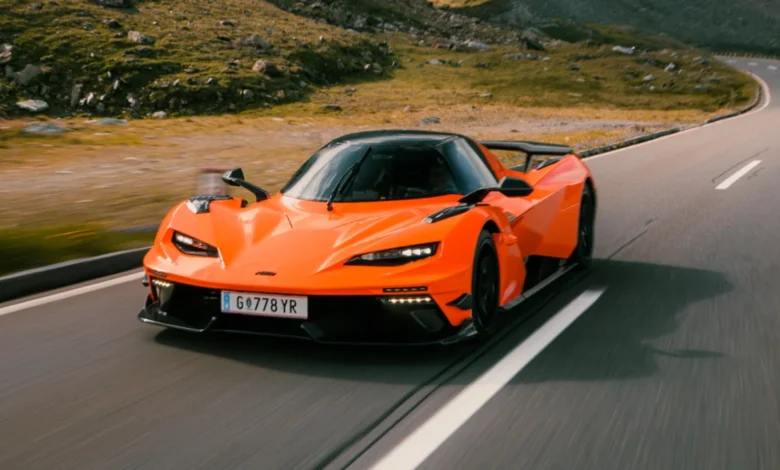
For nearly two decades, the name KTM has conjured images of high-performance dirt bikes, aggressive naked street motorcycles, and dominant off-road racing machines. However, among automotive purists, the Austrian manufacturer has held a different kind of prestige since 2008: that of the X-Bow. For the first time in the vehicle’s long and evolving history, a road-legal production version of the lightweight sports car is officially slated for the United States.
The newly announced U.S.-bound variant, designated the X-Bow GT-XA, represents a significant milestone for the brand. Developed through an exclusive partnership with American importer Carbon Yard, the model aims to clear the notoriously stringent regulatory hurdles required for public road use in the United States. Despite lacking final regulatory approval at the time of announcement, the specialized factory in Graz, Austria, has initiated plans to assemble an initial run of 30 units, with customer deliveries tentatively targeted for 2027. Prospective buyers face an estimated MSRP of $490,000, backed by fully refundable $50,000 reservations held in escrow until the car achieves official U.S. street-legal status.
A Chronological Evolution: From Open-Air Track Toy to Enclosed GT
To understand the weight of the X-Bow’s arrival in America, one must examine its complex lifecycle, which spans nearly twenty years of engineering adaptation.
When KTM launched the original X-Bow in 2008, it shocked the automotive world. Conceived as a minimalist, open-cockpit sports car, it was built around an advanced carbon fiber monocoque developed in collaboration with renowned Italian racing chassis constructor Dallara. Weighing in at an exceptionally light figure, the vehicle featured no roof, traditional windshield, or standard doors. It offered an unfiltered driving experience, earning comparisons to a four-wheeled motorcycle or a street-legal formula racing car. Despite its critical acclaim among European enthusiasts, the vehicle’s lack of modern safety equipment, emissions compliance challenges, and absence of federalized crash-testing kept it off American public asphalt.
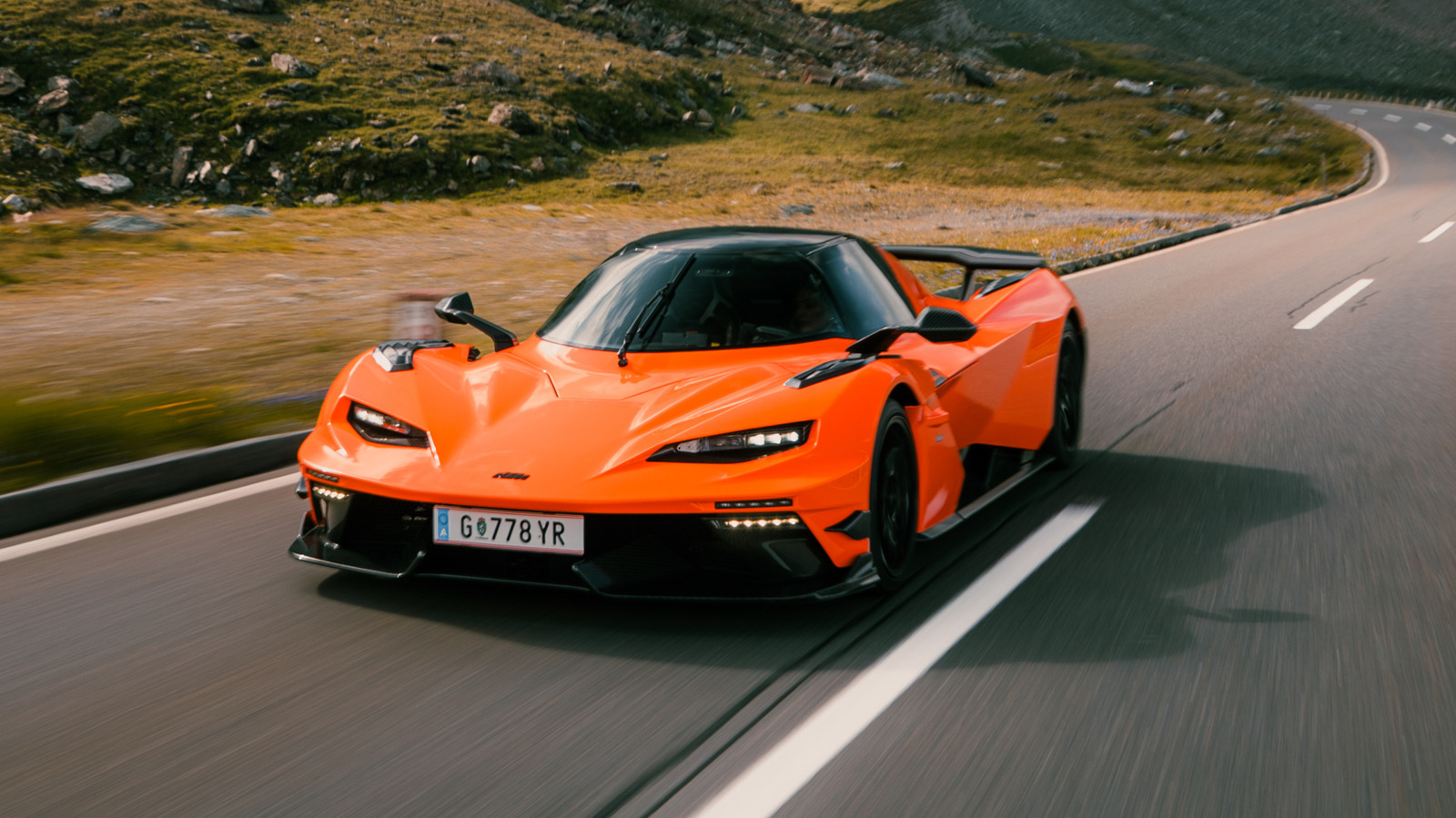
The vehicle’s trajectory shifted significantly in 2015 when KTM expanded its motorsport footprint by introducing a factory-backed racing version for GT4 international competition. Regulatory compliance for closed-cockpit GT racing forced engineers to redesign the upper structure. Because the existing carbon monocoque design made conventional swinging doors structurally impractical, engineers devised a fighter-jet-style sliding canopy that enveloped the cockpit.
This dramatic canopy design eventually transitioned from the racetrack to the consumer market in 2022 with the introduction of the European-market GT-XR. Serving as the direct engineering blueprint for the upcoming U.S.-spec GT-XA, the GT-XR permanently altered the physical footprint of the X-Bow lineage. To accommodate the heavy glass canopy, structural reinforcements, and added creature comforts, the vehicle’s weight grew to approximately 2,760 pounds—more than 1,000 pounds heavier than the featherlight open-top originators.
Technical Profile and the U.S. Regulatory Hurdle
Bringing a low-volume European sports car to the United States is a notoriously complex and expensive endeavor. Federal Motor Vehicle Safety Standards (FMVSS) and Environmental Protection Agency (EPA) certifications require extensive crash testing, emissions verification, and structural compliance that often prohibit small-scale foreign manufacturers from entering the American market.
To navigate these challenges, KTM has partnered with Carbon Yard to secure the necessary exemptions and compliance certifications for the GT-XA. Because the vehicle’s final regulatory approval remains pending, the structured timeline allows the Graz assembly facility to build the first 30 units while regulatory paperwork winds its way through federal agencies.
While comprehensive technical specifications for the U.S.-spec GT-XA have not yet been finalized, the vehicle is expected to inherit the core mechanical architecture of its European sibling, the GT-XR. In European guise, the X-Bow utilizes an Audi-sourced, turbocharged 2.5-liter inline-five-cylinder engine that channels robust power through a seven-speed dual-clutch transmission to the rear wheels. For the American market, KTM has confirmed at least one specific adaptation designed for daily usability: a front-axle lift system. This mechanism is intended to help drivers clear speed bumps, steep driveways, and uneven municipal infrastructure—a necessary concession for a low-slung track-day car destined for public streets.
Industry Implications and Corporate Restructuring
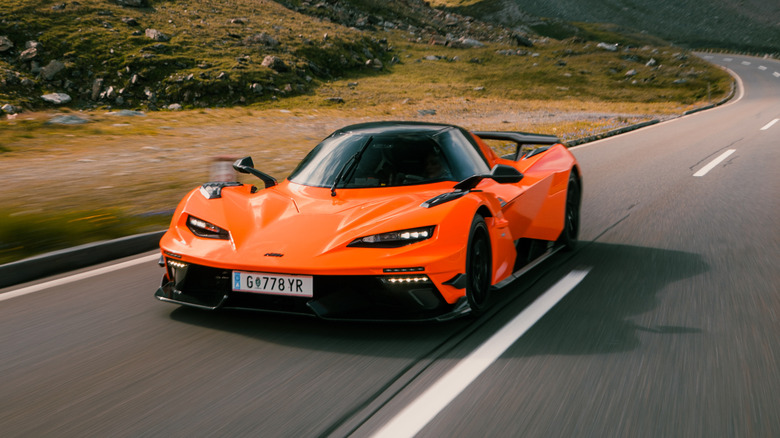
The announcement of the U.S.-bound X-Bow arrives during a period of significant corporate transition for its parent organization. Following extensive financial restructuring within KTM AG, which saw the brand split divisions and rationalize expenses to stabilize its core motorcycle business, the X-Bow operation was spun off into an independent corporate entity with dedicated ownership. This structural separation has allowed the specialized sports car division to pursue niche, high-margin international ventures independently of the mass-market motorcycle manufacturing side.
The entry into the United States market carries profound implications for the brand’s positioning. At an anticipated price point approaching half a million dollars, the GT-XA enters a rarefied segment dominated by boutique supercar manufacturers and low-volume track-focused exotics from brands like Porsche, McLaren, and Lotus.
Market Reception and Enthusiast Perspectives
Reactions among automotive enthusiasts regarding the X-Bow’s evolution have been mixed. Purists who revered the original 2008 model often view the transition toward a heavier, canopy-equipped grand tourer as a departure from the raw, mechanical purity of the original concept. Concerns regarding emergency egress—specifically the difficulty of escaping an overturned vehicle featuring a fighter-jet-style canopy without trackside marshals present—remain a frequent point of discussion among safety-conscious drivers.
Conversely, market analysts note that the addition of a roof, a windshield, climate control, and a front-axle lift system drastically broadens the vehicle’s appeal to affluent American buyers who demand a baseline of weather protection and usability. By bridging the gap between uncompromising track performance and grand touring capability, KTM and Carbon Yard are positioning the GT-XA not merely as a track toy, but as a legitimate, albeit radical, road-going exotic.
As development continues and the first batch of 30 vehicles moves closer to its projected 2027 delivery window, all eyes will remain on federal regulatory offices to see when—and under what final technical specifications—the KTM X-Bow will officially rubber-meet-road in the United States.