The Unlikely Odyssey of Aren: A Persian Leopard’s Struggle for Survival Across Fractured Caucasus Borders

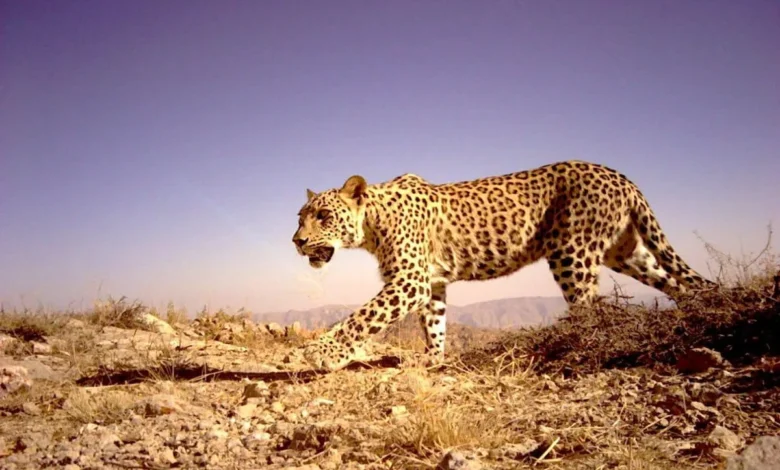
In the rugged, high-altitude landscapes of the Caucasus, where the borders of Georgia, Armenia, Azerbaijan, and Russia converge, an elusive and endangered predator has become a symbol of both environmental resilience and the lingering scars of human conflict. The Persian leopard, a subspecies scientifically known as Panthera pardus tulliana, is teetering on the brink of regional extinction. With fewer than 1,100 individuals estimated to remain in the wild across their entire global range, the survival of the subspecies is a precarious endeavor. Yet, a specific leopard named Aren has captured the attention of conservationists, having completed an arduous 240-kilometer journey through mountainous, snow-covered terrain—a feat made even more harrowing by the fact that he is presumed to have navigated this distance on only three legs.
A Chronology of a High-Stakes Migration
The story of Aren began in the Vayots Dzor province of south-central Armenia, within the Arpa Protected Landscape. Originally monitored by the World Wide Fund for Nature (WWF) as a healthy, four-limbed adult, Aren was a subject of interest due to his frequent use of a local cave system, which served as a natural shelter and a strategic point for camera trap documentation.
The chronology of his transformation and movement is as follows:
- Initial Discovery: Conservationists first documented Aren in the Arpa region, where he was observed in prime physical condition. Researchers believe he likely migrated into Armenia from the Azerbaijani exclave of Nakhchivan, a region known for its small but vital leopard population.
- The Injury: Sometime between his first sightings and his subsequent reappearance, Aren suffered a catastrophic injury resulting in the loss of a limb. Experts in the field, including those from the Centre for Biodiversity Conservation and Research (NACRES), point to the dense networks of landmines scattered across the borders of the Caucasus—remnants of decades-old geopolitical conflicts—as the most probable cause of his condition.
- The Long Trek: After disappearing from his home base in Armenia, Aren was documented again in the Ijevan Forest in northern Armenia. He eventually pushed further north, crossing into Georgia and navigating the difficult Trialeti Ridge before arriving at Algeti National Park.
- The Rare Sighting: Aren’s presence in Georgia was confirmed through a stroke of serendipity. He was captured on a standard perimeter CCTV camera designed to monitor the reintroduction of the Caucasian deer, rather than by specialized wildlife surveillance.
The Geopolitical Landscape of Conservation
The Caucasus region presents a unique set of challenges for wildlife management. The landscape is not merely a collection of national parks; it is a fractured zone marked by historical animosities, military tensions, and significant physical barriers.
The presence of Soviet-era infrastructure further complicates the survival of large mammals. Thousands of kilometers of "Sistema" fencing—barbed-wire barriers originally designed to signal unauthorized movement to border guards—still crisscross the region. While the electrical components of these fences are largely defunct, the physical structure remains a lethal obstacle. Bears, deer, and leopards frequently become entangled in these barriers, leading to severe lacerations, entrapment, and death.
Beyond the fencing, the prevalence of landmines creates a "no-man’s-land" for both humans and wildlife. While some observers have theorized that these dangerous zones might inadvertently protect wildlife by deterring human hunters, conservationists like Hana Raza of Leopards Beyond Borders reject this premise. The presence of mines prevents meaningful human monitoring, complicates necessary habitat management, and poses an indiscriminate threat to all fauna, as evidenced by the high rate of injury observed in local predator populations.
Data and Environmental Implications
The rarity of the Persian leopard in this region cannot be overstated. Over the past two decades, official records indicate that Georgia has logged only three confirmed sightings, while Armenia has recorded only ten. The fact that three of these sightings—including Aren—involved leopards missing a limb suggests that the threat of landmines and traps is not an isolated anomaly but a systemic danger.
The implications for the regional ecosystem are profound. The Persian leopard acts as an "umbrella species." By protecting the leopard and its habitat, conservationists inadvertently protect the entire biological diversity of the region, including the bezoar goats, deer, and smaller carnivores that form the food chain. When an apex predator is removed from this system, the balance of the ecosystem shifts, often leading to an overpopulation of mesopredators like wolves, which can further destabilize the environment and increase human-wildlife conflict as animals move closer to villages in search of food.
The Role of Grassroots Conservation
With institutional funding for regional conservation under pressure, the burden of monitoring has fallen upon small, dedicated NGOs. NACRES, formerly the Noah’s Ark Centre for the Recovery of Endangered Species, is a prime example of the "skeleton crew" model of conservation. Led by zoologist Bejan Lortkipanidze, the organization operates with a staff of just three, yet maintains a rigorous field presence.
Lortkipanidze’s approach to conservation emphasizes the importance of community engagement. In interviews regarding the potential for future efforts, he noted that if resources were not so severely constrained, the priority would be education and outreach. By working with remote communities in areas like the Tusheti region, conservationists aim to teach residents how to coexist with leopards, provide mitigation measures for livestock protection, and reduce the likelihood of retaliatory killings.
Retaliatory killings remain a significant threat to the species. When leopards, driven by hunger or fragmented habitat, prey on livestock, the loss of income for impoverished farmers often leads to the use of poison or illicit snares. These actions are rarely reported, making it difficult for scientists to gauge the true extent of the mortality rate, but the impact is undoubtedly significant.
A Moral Imperative for Hope
The persistence of a three-legged leopard traversing 240 kilometers of hostile, high-altitude terrain is a biological anomaly that has left researchers questioning the limits of feline endurance. However, it also serves as a poignant reminder of the adaptability of nature when faced with the absolute worst of human instinct.
Journalist Kayleigh Long, who has documented these efforts, argues that the story of the Persian leopard in the Caucasus is ultimately one about the potential for a more just world. "If people are able to cooperate and recognize that we are a part of nature and that this is our environment, we all have to get along with nature and with each other," she noted.
For the researchers at NACRES and their counterparts in the wider conservation community, the goal is not merely to keep a few leopards alive. It is to foster an environment where borders do not represent a final barrier to survival. While the lack of funding and the persistence of conflict zones cast a long shadow over the region, the survival of individuals like Aren provides a fragile, yet necessary, glimmer of hope. As the international community grapples with environmental crises, the efforts to save the Persian leopard serve as a microcosm for the global need to bridge the gap between human geopolitical interests and the fundamental requirements of the natural world.
The story of Aren is not just about a survivor; it is a call to acknowledge that the healing of the land requires the same level of tenacity, coordination, and, ultimately, moral imperative that this three-legged leopard has displayed in his own remarkable odyssey.
Related posts: