Michigan Voters to Decide on Landmark Ballot Initiative Aimed at Curbing Utility Influence in Politics

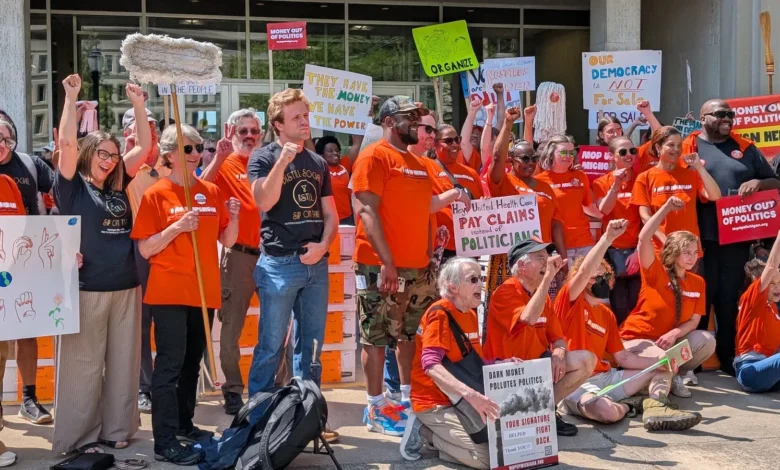
When 83-year-old Sam Getsinger looks toward the horizon, she does not just see her five grandchildren; she envisions the civic and environmental landscape they will inherit. For Getsinger, a resident of northern Michigan, safeguarding that future requires a functioning and responsive democracy. Driven by this conviction, she spent months traversing her community, knocking on doors, and engaging neighbors in conversations about a burgeoning movement to restrict the political footprint of the state’s dominant electricity and gas utilities.
Getsinger found a receptive audience. Across her region, residents expressed widespread frustration with the outsized political influence wielded by corporate utility providers—an influence they believe directly correlates with rising utility bills, frequent power grid failures, and sluggish transitions toward renewable energy. Her grassroots volunteerism embodies a statewide sentiment that has culminated in a high-stakes electoral showdown. As voters head to the polls next week, Michigan stands at the vanguard of a national debate over corporate spending in elections, testing the legal and constitutional boundaries of state-level campaign finance reform.
The Roots of Public Discontent: Rates, Reliability, and Climate Goals
The momentum behind the ballot initiative—formally known as Proposal 2—did not materialize in a vacuum. It represents the boiling point of years of consumer dissatisfaction regarding the cost and reliability of Michigan’s electrical grid. State residents currently endure some of the highest utility rates in the United States, coupled with some of the least reliable service records nationwide.
Over recent years, severe weather events, including compounding ice storms, heavy winter blizzards, and unexpected tornado strikes, have subjected hundreds of thousands of Michiganders to prolonged, multi-day power outages. Compounding this frustration is the rapidly expanding footprint of energy-intensive data centers across the state, which has placed additional strains on municipal infrastructure and resources.
At the same time, Michigan has codified aggressive environmental targets, including a state mandate requiring utilities to source 100 percent of their electricity from clean and renewable energy portfolios by 2040. However, progress toward these goals has frequently stalled in the state legislature. Environmental advocates and consumer watchdogs attribute these legislative bottlenecks to heavy lobbying by investor-owned utilities. Industry opposition has routinely watered down or blocked progressive environmental measures, such as community solar expansion bills and "polluter-pay" legislation that would mandate corporate cleanup of toxic industrial sites.
"Everything is more expensive," said Christy McGillivray, co-chair of Michiganders for Money Out of Politics, a diverse grassroots coalition that spearheaded the effort to place the proposal on the ballot by gathering an impressive 560,000 signatures. "The quality of service is worse, and we are dealing with more air and water pollution as a result of utility influence in Lansing. So we have to put a stop to it."
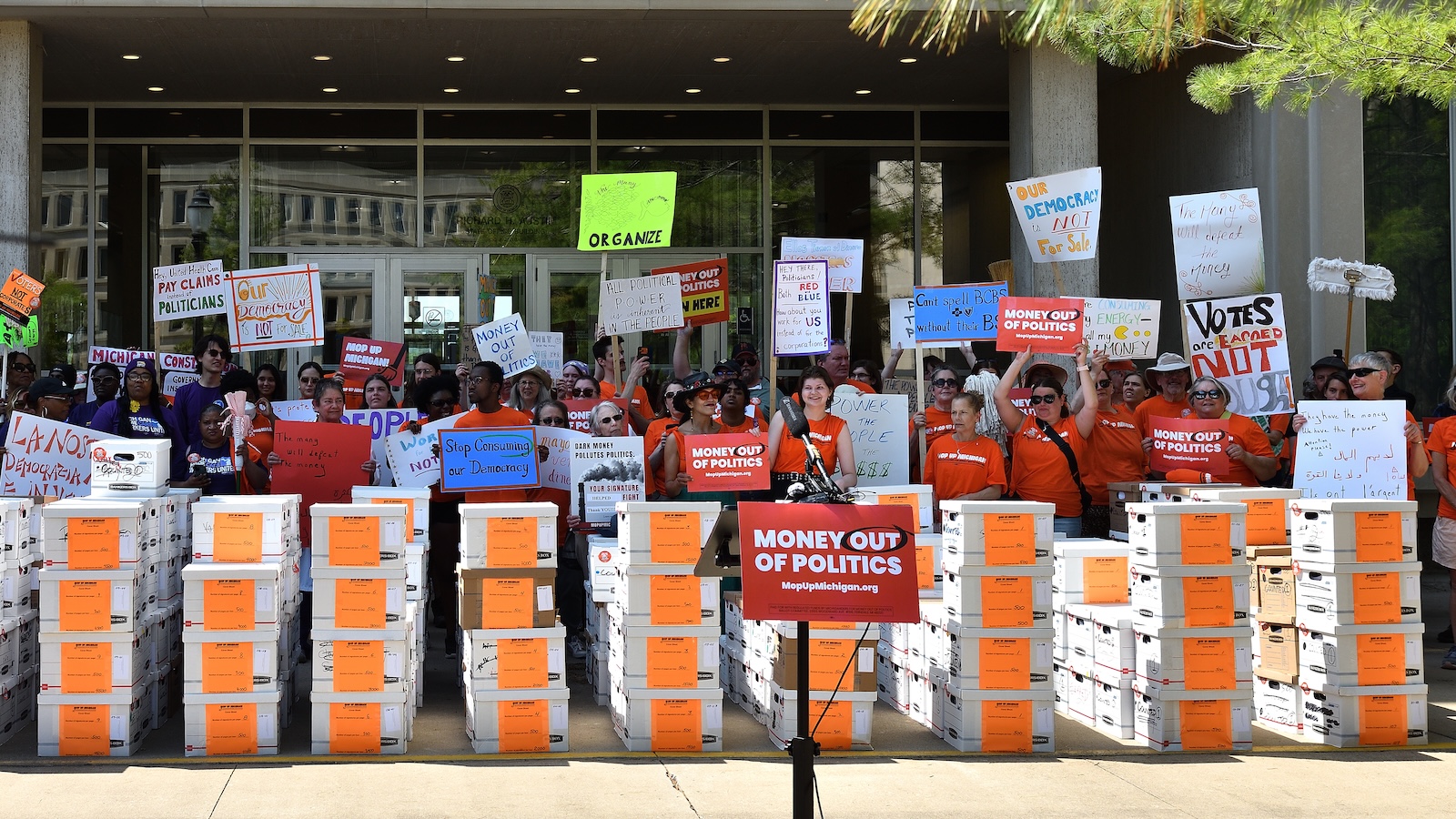
Proposal 2: Anatomy of a Sweeping Campaign Finance Reform
Proposal 2 is engineered to close critical loopholes in Michigan’s existing campaign finance framework. While Michigan law already prohibits direct corporate contributions—including those from investor-owned utilities—to political candidates, companies have long routed funds through political action committees (PACs), nonprofit organizations, and independent expenditure committees.
According to financial disclosures tracked by the Michigan League of Conservation Voters, state lawmakers and political committees from both major parties accepted $421,000 in corporate utility donations last year alone. In the 2022 midterm election cycle, those contributions surpassed $1.6 million across state and local municipal races.
If approved by voters, Proposal 2 would implement several unprecedented restrictions:
- Ban on Utility-Funded PAC Contributions: Utility-operated political action committees would be barred from making direct contributions to political campaigns.
- Executive and Family Restrictions: The measure extends its prohibitions to utility executives, corporate board members, and their immediate family members, preventing them from making direct campaign or party contributions.
- Broader Government Contractors: These restrictions would similarly apply to corporate executives and family members of any entity holding state or local government contracts valued at more than $250,000.
- Increased Transparency: The initiative mandates stricter reporting requirements for online political advertising and closes loopholes governing the financing of political messaging.
Proponents argue that these sweeping measures are necessary to untangle the legislative process from corporate self-interest. "Nothing happens in our state legislature if regulated gas and electric utilities don’t greenlight it," McGillivray asserted.
A Chronology of Resistance and Political Shifts
The path to Proposal 2 reflects a notable evolution in Michigan’s political climate regarding corporate money. For decades, alignment with major utility providers was standard, uncontentious operating procedure for lawmakers in Lansing.
That dynamic began to shift perceptibly in 2025, when the Michigan League of Conservation Voters introduced the "No Utility Money Challenge," urging candidates for state office to pledge refusal of campaign contributions from utilities or associated PACs. Initially, fewer than 10 candidates signed the pledge. As public scrutiny intensified, however, that figure experienced a dramatic surge, with 126 candidates across the political spectrum eventually committing to the challenge.
"These pledges are reflective of how toxic utility money has become, and that’s new," noted Karlee Weinmann, a research and communications manager at the Energy and Policy Institute. "It used to not even be controversial in the state capitol to be connected with the utilities as a lawmaker."

Despite this growing political vulnerability, previous legislative attempts to curb utility influence through statutory changes repeatedly failed in the statehouse, prompting activists to bypass the legislature entirely and take the issue directly to the ballot box.
Opposition Arguments: Free Speech Concerns and Out-of-State Influence
As election day approaches, opponents of Proposal 2 have mounted a vigorous countercampaign, arguing that the measure infringes upon constitutionally protected free speech rights and creates an uneven playing field.
The primary opposition arm, a group named Protect MI Free Speech, was established following the initial introduction of the ballot measure in 2025. Campaign finance disclosures compiled by the Michigan Transparency Network indicate that the group has raised approximately $851,000, with roughly $232,000 originating directly from utility interest groups. By contrast, the pro-reform coalition Mop Up Michigan has raised upwards of $8.7 million from individual donors and voter interest groups.
John Sellek, spokesperson for Protect MI Free Speech, contended that the initiative utilizes legitimate public frustration over living costs as a vehicle for a broader punitive agenda. He argued that the measure unfairly penalizes individuals "simply because of who they are related to or contract with."
Major utility providers have echoed these constitutional and practical concerns. Katie Carey, a spokesperson for Consumers Energy—one of the state’s largest publicly regulated utilities—maintained that the company strictly complies with all existing campaign finance regulations and reports its political expenditures with complete transparency.
Furthermore, opponents warn that the ballot measure will produce unintended consequences. "Mop Up Michigan’s approach won’t eliminate money in politics," Carey cautioned. "It will simply shift influence away from Michigan companies and toward wealthy national donors and special interests."
Broader Legal Implications and the National Context
Michigan’s referendum arrives amid a broader national reassessment of corporate political spending. While 21 states currently ban direct corporate contributions to political campaigns, none have attempted to draft restrictions as comprehensive as Proposal 2, nor have they specifically singled out the utility sector for such rigorous scrutiny.
Other states are similarly testing the boundaries of campaign finance reform. In Hawaii, lawmakers enacted legislation in 2026 designed to halt all political spending by both corporate and nonprofit entities—a law that has already drawn legal challenges from the U.S. Chamber of Commerce. Meanwhile, voters in Montana will weigh a similarly ambitious ballot initiative, and states such as Colorado, Connecticut, and Maine have moved to restrict utilities from funding lobbying efforts using ratepayer funds.
Should Michigan voters approve Proposal 2, the measure will almost certainly face immediate judicial challenges, testing the outer limits of state authority under prevailing federal jurisprudence.
For half a century, federal court rulings—culminating in the landmark 2010 Citizens United v. FEC decision by the U.S. Supreme Court—have established that political spending constitutes a protected form of free speech under the First Amendment, and that corporations possess speech rights comparable to individuals. Consequently, state and federal governments retain severely restricted legal mechanisms to regulate corporate election expenditures.
Legal experts note that while governments may prohibit direct corporate contributions to prevent corruption or its appearance, they cannot prevent corporations from funding independent political action committees. Furthermore, governments face near-total prohibitions on regulating independent expenditures, such as uncoordinated political advertising campaigns funded by unlimited corporate or nonprofit contributions.
Karley Abramson, a research associate at the Citizens Research Council of Michigan, suggested that even if the ballot initiative survives anticipated courtroom challenges, corporate interests may simply adapt. "If one avenue is closed off to them, they can redirect that money to other entities that can effectuate pretty much the same goal," Abramson observed.
Yet, proponents remain unfazed by the prospect of protracted litigation and systemic limitations. Organizations like the Michigan League of Conservation Voters argue that even an imperfect reform serves a vital communicative and foundational purpose.
"This is a really solid first step in starting to kind of push forward some more transparency," said Nick Dodge, senior director of programs for the Michigan League of Conservation Voters. For supporters like Sam Getsinger, the vote represents a necessary declaration of intent—a clear message to lawmakers and corporate entities alike that the status quo of political influence is no longer acceptable to the electorate.
Related posts: