New York Finalizes Nation-First All-Electric Building Mandate to Phase Out Fossil Fuels in New Construction

New York has officially solidified its position as a national leader in climate policy by becoming the first state in the United States to implement a comprehensive ban on fossil fuel equipment in most new construction projects. The landmark transition, finalized in late July 2025, follows the State Fire Prevention and Building Code Council’s formal approval of the All-Electric Buildings Act. This regulatory milestone sets a definitive timeline for phasing out gas-powered furnaces, water heaters, and stovetops in favor of electric alternatives like heat pumps and induction ranges. The move is designed to drastically reduce the state’s carbon footprint while simultaneously addressing public health concerns and long-term energy affordability for residents.
The finalization of these rules represents the culmination of a multi-year legislative and legal battle. Originally passed by the New York State Assembly in 2023, the All-Electric Buildings Act faced significant pushback from fossil fuel industry groups and real estate developers. However, a series of recent court victories and the formal adoption of the code by state regulators have cleared the path for enforcement to begin as early as December 31, 2025. By mandating that new structures rely entirely on the electrical grid, New York aims to decouple its building sector from the volatile natural gas market and align its infrastructure with the state’s aggressive goal of reducing greenhouse gas emissions by 85% by 2050.
Implementation Timeline and Building Classifications
The new mandate is structured to allow the construction industry and the electrical grid time to adjust to the increased demand for electrified infrastructure. The implementation schedule is divided based on the size and usage of the proposed buildings. According to the State Fire Prevention and Building Code Council, the first phase of the rollout begins on December 31, 2025. Starting on this date, all new residential buildings up to seven stories tall must be built without fossil fuel hookups. This category includes the vast majority of single-family homes and mid-sized apartment complexes currently under development across the state.
In addition to residential units, small-to-medium commercial and industrial buildings—specifically those under 100,000 square feet—must also comply with the all-electric requirement by the end of 2025. For larger-scale projects, the state has provided a longer lead time. Commercial and industrial buildings exceeding 100,000 square feet, such as high-rise office towers, large warehouses, and massive retail centers, will have until 2029 to meet the requirements. This staggered approach acknowledges the greater engineering complexities involved in heating and cooling massive structures using solely electric heat pump technology.
The mandate specifically targets "initial construction," meaning it applies to new permit applications submitted after the effective dates. It does not currently require existing buildings to swap out their gas appliances, though climate advocates suggest that retrofitting the state’s aging building stock remains the next major hurdle in New York’s decarbonization strategy.
Addressing Exemptions and Technical Challenges
While the All-Electric Buildings Act is expansive, it includes several critical exemptions to ensure that essential services and specialized industries are not adversely affected by the transition. These carve-outs were a point of intense negotiation during the legislative process. Exemptions apply to facilities where all-electric solutions are currently deemed technically or economically unfeasible, or where fossil fuels are necessary for specific industrial processes.
Exempted categories include:
- Medical Facilities: Hospitals and urgent care centers are permitted to maintain gas-powered systems for backup power and specialized medical equipment.
- Laboratories: Facilities requiring precise temperature controls or high-heat bunsen burners for research may still utilize gas hookups.
- Commercial Kitchens and Restaurants: Professional chefs and restaurant owners argued successfully for exemptions, citing the specific heat requirements for certain cuisines and the high cost of industrial-scale induction equipment.
- Agricultural Buildings: Structures used for farming operations, including greenhouses that require significant heating, are currently exempt.
- Crematoriums and Laundromats: These facilities, which rely on high-intensity thermal energy, are also excluded from the initial mandate.
Despite these exceptions, the vast majority of New York’s future housing and office supply will be forced to innovate. State officials have emphasized that as technology improves, these exemptions will be periodically reviewed to determine if all-electric alternatives have become viable for those sectors.
Environmental Imperatives and the Emissions Gap
The driving force behind the All-Electric Buildings Act is the urgent need to mitigate climate change. In New York, the "built environment"—the collection of homes, offices, and industrial sites—is the single largest contributor to greenhouse gas emissions. Data from the New York Department of Environmental Conservation indicates that buildings account for approximately 31% of the state’s total emissions. This figure is primarily driven by the combustion of natural gas, oil, and propane for space heating and water heating.
Methane, the primary component of natural gas, is a potent greenhouse gas that traps significantly more heat in the atmosphere than carbon dioxide over a 20-year period. Beyond the emissions from combustion, the infrastructure required to deliver gas to buildings often suffers from leaks, further exacerbating the climate crisis. By cutting off the demand for gas at the source—new construction—New York is effectively preventing decades of future emissions from being "locked in" to the state’s infrastructure.
Furthermore, the transition to all-electric buildings is expected to have immediate benefits for indoor air quality. Numerous scientific studies have linked gas stoves to increased levels of nitrogen dioxide and particulate matter, which are known triggers for respiratory issues such as asthma, particularly in children. Public health advocates have hailed the new rules as a victory for vulnerable communities that disproportionately suffer from poor air quality in urban environments.

Economic Impact and Consumer Savings
While critics of the mandate have expressed concerns regarding the upfront cost of electric heat pumps and induction stoves, recent data suggests that the long-term economic benefits for consumers may outweigh the initial investment. A study by the New Buildings Institute found that constructing 100% electric single-family homes can actually be cheaper than building conventional gas-powered homes. The savings, estimated between $7,500 and $8,200 per home, stem from the elimination of gas piping, meters, and the associated labor costs required to connect a building to the fossil fuel grid.
For the residents themselves, the financial outlook is equally promising. Analysis shared by Canary Media suggests that the transition could reduce energy usage in New York homes by approximately 17%. Over a 30-year period, this efficiency is projected to save the average household nearly $5,000 in utility bills. As the state continues to transition its electrical grid to renewable sources like wind and solar, the cost of electricity is expected to become more stable compared to the volatile prices of fossil fuels, which are often subject to global geopolitical shifts.
Legal Battles and the Berkeley Precedent
The path to finalizing the All-Electric Buildings Act was fraught with legal challenges. In 2023, the fossil fuel industry and various building associations filed lawsuits attempting to block the law. Their primary argument rested on a federal ruling from the U.S. Court of Appeals for the Ninth Circuit, which overturned a similar gas ban in Berkeley, California. In the Berkeley case, the court ruled that the city’s ban was preempted by the federal Energy Policy and Conservation Act (EPCA), which gives the federal government the authority to set energy efficiency standards for appliances.
However, New York’s legal strategy differed from Berkeley’s. Rather than banning the appliances themselves, New York updated its statewide building codes to regulate the infrastructure of the buildings. In July 2025, the U.S. District Court for the Northern District of New York ruled in favor of the state, declaring that New York has the authority to regulate building construction for the purposes of safety and environmental protection.
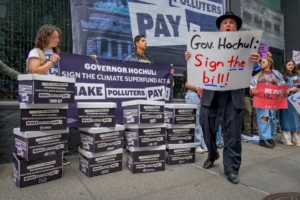
Dawn Wells-Clyburn, executive director of PUSH Buffalo, celebrated the ruling, stating that it sent a "powerful message" that the health and well-being of communities take precedence over industry profits. Despite this victory, industry groups have reportedly petitioned the U.S. Department of Justice to intervene, suggesting that the legal saga may not be entirely over.
The Role of New York City as a Catalyst
The statewide mandate follows in the footsteps of New York City’s Local Law 154, which was passed in 2021 and began phasing out fossil fuels in new buildings within the five boroughs. The success and feasibility of the city’s program served as a proof-of-concept for the state legislature. By observing how developers in the nation’s largest city adapted to all-electric requirements, state lawmakers were able to refine the All-Electric Buildings Act to address specific regional concerns, such as the performance of heat pumps in the colder climates of Upstate New York.
Modern cold-climate heat pumps have proven to be highly effective even in sub-zero temperatures, dispelling myths that electric heating is only suitable for warmer southern states. As New York scales this technology statewide, it is expected to create a surge in demand for green-collar jobs, including HVAC technicians specializing in heat pump installation and electricians capable of upgrading building panels to handle higher loads.
Broader Implications and National Influence
New York’s move is being watched closely by other states and municipalities across the country. While dozens of cities in California, Washington, and Massachusetts have passed local ordinances, New York is the first to achieve a comprehensive statewide mandate through legislative action. This sets a significant precedent for states like Washington and California, which have faced similar legal hurdles in their attempts to phase out gas.
The shift in New York is also likely to influence the manufacturing sector. As one of the largest economies in the world, New York’s demand for electric appliances will likely drive down costs through economies of scale, making all-electric construction more accessible for other regions.
"When New Yorkers come together, we can win even in the face of opponents with an almost-limitless budget," said Alex Beauchamp, Northeast region director at Food & Water Watch. Beauchamp and other advocates emphasize that while the All-Electric Buildings Act is a massive win, it is only one piece of the puzzle. The next phase of the climate fight in New York will likely focus on the NY HEAT Act, which aims to align utility regulations with the state’s climate goals and facilitate the decommissioning of aging gas infrastructure.
As December 31, 2025, approaches, the real estate and construction industries are now in a race to adapt. Architects and engineers are redesigning blueprints to accommodate all-electric systems, and the state is ramping up incentive programs to assist developers with the transition. For New York, the era of fossil-fuel-dependent housing is coming to a close, replaced by a vision of a cleaner, more electrified future.
Related posts: