The struggle to save the Mekong River’s last Irrawaddy dolphins amidst ecological collapse and economic uncertainty

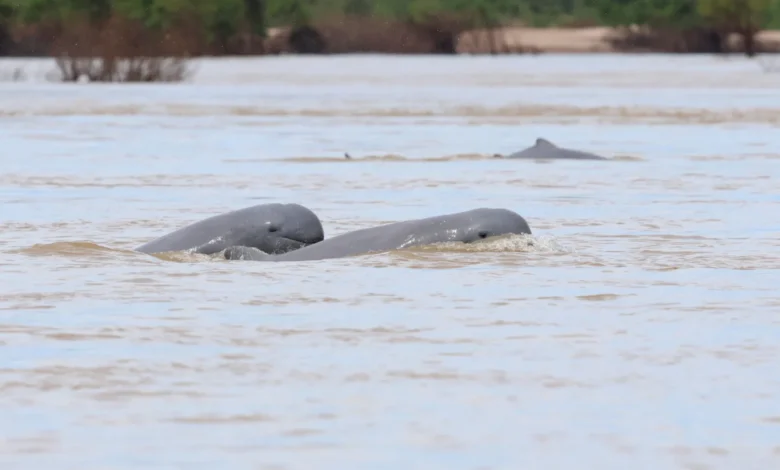
At nine in the morning, the Mekong River is already sweltering, the surface mirroring the relentless glare of the Cambodian sun. Heang Koeurn, a veteran boatman, kills his motor and allows his vessel to drift into the silence of the Kampi pool. For 11 years, this has been his ritual. He sits with elbows locked on his knees, eyes darting across the water, searching for the telltale gray arc of an Irrawaddy dolphin (Orcaella brevirostris). When a dorsal fin finally breaks the surface, the tourists on board—a mix of international travelers and domestic sightseers—react with a collective gasp of wonder. For Koeurn, however, the appearance of the dolphins is more than a spectacle; it is the heartbeat of his community’s survival and a fragile testament to an ecosystem under siege.

The Mekong River, often described as the "Mother of Waters," serves as a vital artery for millions across Southeast Asia. Yet, this lifeline is currently suffering from a compounding ecological crisis. The survival of the Irrawaddy dolphin, a species once abundant throughout the river’s delta and tributaries, is now hanging by a thread. As their numbers dwindle, the cultural traditions and economic livelihoods of the riverine communities that depend on them are facing an existential threat.
A Population in Freefall: A Historical Context
The plight of the Irrawaddy dolphin in the Mekong is a story of long-term decline. In the late 1990s, scientists estimated that approximately 200 of these unique freshwater cetaceans inhabited the Cambodian stretch of the river. Today, that number has collapsed to just over 100. The species has been entirely extirpated from much of its historic range, including the Tonle Sap Lake and the lower reaches of the Mekong Delta.

The decline is not a recent phenomenon but the result of decades of anthropogenic pressure. Historically, the dolphins were subject to direct hunting, but modern threats have shifted toward accidental entanglement in gillnets and the degradation of the river’s hydrology. The Kampi pool, a 60-meter-deep sanctuary, remains one of the last three critical deep-pool habitats that provide the necessary refuge for these mammals. However, these pools are no longer the safe havens they once were, as human encroachment and industrial development continue to shrink the space available for the dolphins to thrive.
The Impact of Infrastructure and Hydrology
The proliferation of hydroelectric dams is arguably the most significant structural threat to the Mekong’s biodiversity. To date, more than 160 dams operate along the river and its tributaries, including 13 major mainstream projects. While these dams do not physically strike the dolphins, they fundamentally alter the river’s character.

Dr. Ian Baird, a professor of geography at the University of Wisconsin-Madison, has extensively documented the impact of these projects. He explains that while dams aren’t "killing" dolphins directly, they are effectively starving them. By changing the flow, timing, and sediment load of the river, dams disrupt the breeding cycles of the fish species that dolphins rely on for food. Furthermore, the loss of seasonally flooded forests—which act as nurseries for river fish—has led to a significant drop in prey availability. For a population already suffering from low genetic diversity, this nutritional stress acts as a multiplier, reducing the reproductive success of the remaining adults.
The Frontlines: Illegal Fishing and Law Enforcement
While habitat loss is the slow-acting poison, gillnets and electrofishing are the acute threats. Veang Tino, a patroller at the Kampi Conservation Centre, notes that the primary cause of mortality is incidental entanglement. When a dolphin, particularly a calf, becomes trapped in a gillnet, the outcome is almost invariably fatal.

In response to this, the Cambodian government, with support from the World Wide Fund for Nature (WWF), established protected core habitat zones in 2012. These zones span a 180-kilometer stretch of the river across Kratie and Stung Treng provinces. Despite these protections, enforcement remains a daunting challenge. The year 2022 saw the confiscation of over 36,000 meters of illegal gillnets and 7,000 fishing hook nets.
The task is as dangerous as it is difficult. Kem Sophat, a river guard, describes the physical risks involved in confronting illegal fishers who often operate under the cover of darkness and occasionally carry weapons. The economic reality for these guards is also dire; they earn between $5 and $7.50 per day, often utilizing their own boats and paying for their own supplies. The disparity between the importance of their mission and the resources provided to them highlights a critical gap in the conservation strategy.

The Economic Cost of Extinction
The extinction of the Irrawaddy dolphin in the Anlong Chheu Teal pool, which straddles the border between Laos and Cambodia, serves as a grim preview of what could happen elsewhere. The last known dolphin in this section, nicknamed the "lonely dolphin," was found dead in 2022 after being entangled in fishing gear.
The aftermath was immediate. Phoy Vanna, a community leader in the area, reports that tourism revenue plummeted by 60% following the loss. The village, which once relied on the dolphins to draw visitors, now struggles to attract interest in the remaining natural landmarks like flooded forests and waterfalls. The community has resorted to displaying the bones of the "lonely dolphin" in a local hall—a haunting monument to a lost heritage. This transition from a living, breathing natural wonder to a museum display illustrates the tangible economic cost of failed conservation.

Signs of Resilience: A Glimmer of Hope
Despite the bleak data, there is evidence that the population is fighting back. In June of this year, conservationists confirmed the birth of six new calves across the Kratie and Stung Treng provinces. This development, which has pushed the estimated population to 118, serves as a powerful signal that the species is still capable of recovery if the threats are systematically addressed.
I Sanaroth, the fisheries chief in Kampi, emphasizes that these births are the direct result of intensified patrol efforts and community engagement. The Fisheries Administration (FiA) has partnered with international NGOs to launch initiatives that provide alternative livelihoods for fishing families, aiming to reduce the economic necessity of fishing in protected zones. The objective is to transition the community from being users of the river to stewards of its inhabitants.

The Broader Implications for the Mekong
The survival of the Irrawaddy dolphin is inextricably linked to the broader health of the Mekong River Basin. As Frances Gulland, chair of the U.S.-based Marine Mammal Commission, aptly puts it: "We lose them, we lose a species… which is like losing a star from the sky."
The dolphins are an "indicator species," meaning their health reflects the health of the entire river. If the dolphins cannot survive in the Mekong, it suggests that the ecosystem is no longer capable of supporting the diverse life forms—and the human populations—that have relied on its bounty for centuries.

The path forward requires a multi-faceted approach. First, there must be a rigorous enforcement of existing bans on illegal fishing gear, supported by adequate funding for the brave individuals patrolling the river. Second, regional cooperation between Cambodia, Laos, and other Mekong nations is essential to mitigate the downstream effects of hydropower development. Finally, the integration of local communities into the conservation narrative is non-negotiable. Without the active support of those who live along the banks, no top-down mandate can fully succeed.
As the sun sets over the Kampi pool, the boats return to the shore. For the residents of Kratie, the sight of a dolphin is a reminder of a past where the river was bountiful and a future that is still, perhaps, within reach. The battle to save the Irrawaddy dolphin is more than a fight for a single species; it is a fight for the integrity of one of the world’s most important river systems. Whether this battle results in a resurgence or a slow fade into memory will depend on the commitment of governments, international bodies, and the local communities working together to ensure the "stars of the Mekong" do not flicker out forever.